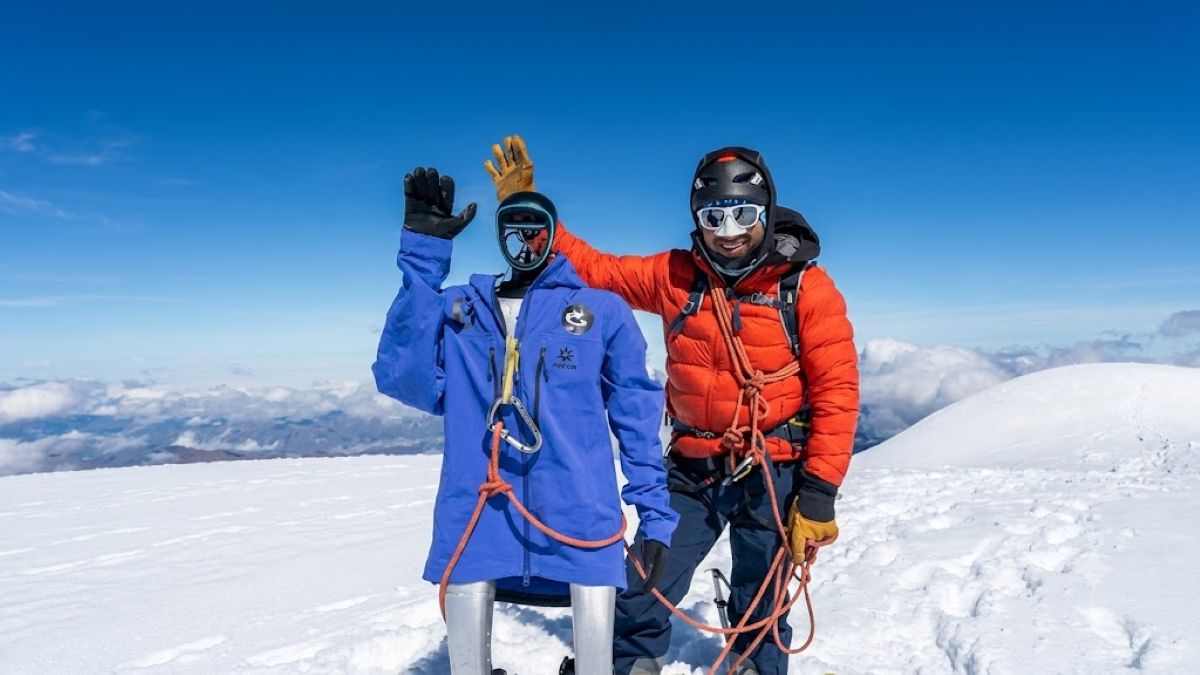
Polished demo videos make humanoid robots look ready for anything, but Pemba just faced the ultimate stress test. This modified Unitree G1 robot recently climbed to 6,200 meters on Ecuador’s Chimborazo volcano—higher than Denali—as part of an ambitious “Triple Crown” expedition that aims to eventually test robotic capabilities on Mount Everest itself.
The 16-hour push up Chimborazo revealed both promise and current limitations. Pemba walked autonomously across moderate slopes under 30 degrees, navigating snow and ice at crushing altitude where electronics typically fail.
But on steeper, technical terrain—the sections that separate real mountaineering from hiking—human team members had to carry the robot. This highlights how far we remain from truly autonomous mountain exploration, though it represents significant progress from controlled laboratory environments.
Engineering for the Death Zone
Conservation engineer aims to replace fixed sensor networks with mobile robotic platforms
Pablo Berlanga Boemare of Geologic Dome didn’t choose mountains for spectacle. His background includes conservation work with the World Wildlife Fund in Congo Basin and Amazon rainforest, where vast networks of fixed cameras and sensors monitor wildlife and illegal logging.
The vision: mobile humanoid platforms could eventually roam these areas autonomously, gathering environmental data and replacing expensive, inflexible sensor networks.
That requires robots that actually work outside climate-controlled labs. Chimborazo’s extreme conditions—temperatures that plunge past -40°C, thin air, unstable terrain—stress-tested custom thermal management systems designed to keep batteries and electronics functional while motors shed heat under exertion.
Previous cold-weather testing in China’s Altay region had already proven the base Unitree G1 platform could operate down to -47°C, providing a foundation for high-altitude modifications.
Regulatory Mountain to Climb
Nepal authorities require new framework before approving Everest robotic trials
The team’s Everest ambitions face an unexpected obstacle: Nepal has no legal framework for robotic climbers. Authorities want new regulations covering everything from route priority to rescue obligations before approving trials between Base Camp and Camp IV at nearly 8,000 meters.
It’s like trying to get permission for the world’s first autonomous car when traffic laws only mention horses. The regulatory challenge may prove more daunting than the technical hurdles.
Whether Pemba ever reaches Everest’s death zone remains uncertain. But the Chimborazo expedition proves humanoid robots are finally leaving demo halls for real-world environments where failure means more than a reset button.
Like those early iPhone prototypes that couldn’t handle a phone call, today’s limitations reveal tomorrow’s engineering challenges—and the eventual path to robots that work where humans fear to tread.