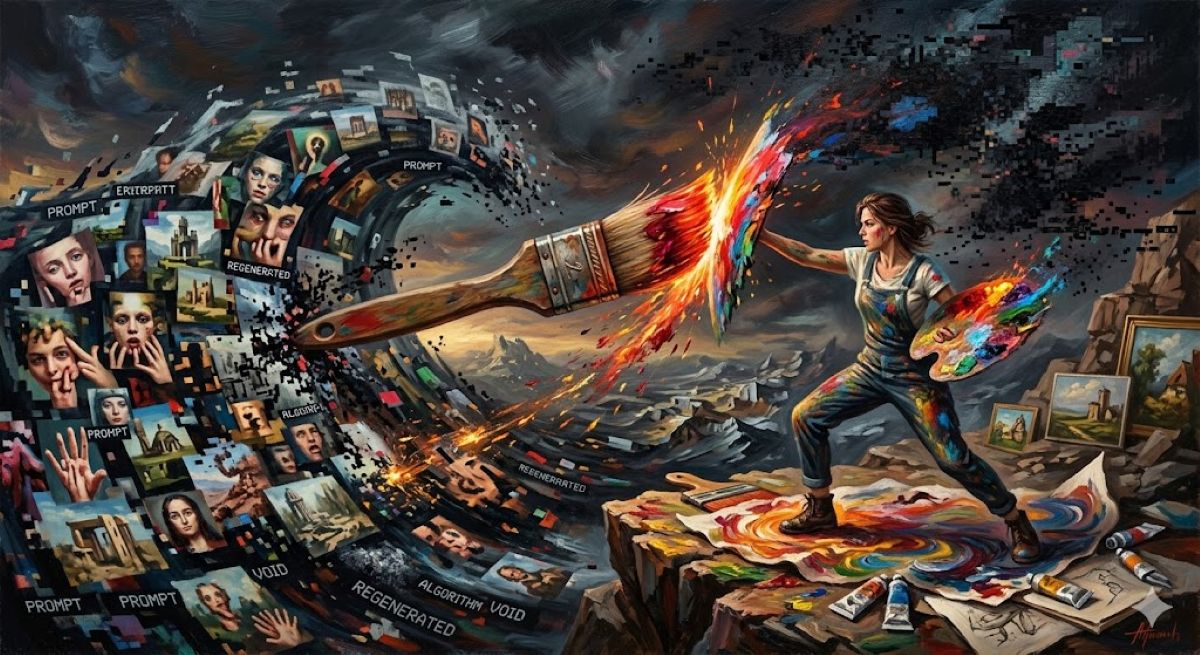
While AI churns out pristine imagery at inhuman speed, a growing rebellion of creatives is embracing the opposite approach: deliberately rough, visibly handmade work that screams human authorship. You’ve probably encountered this tension already—scrolling past another eerily perfect AI-generated ad, then stopping dead at something that looks refreshingly imperfect.
The Scribble Revolution
Artists are making work that celebrates visible flaws as resistance to machine polish.
This aesthetic rebellion transforms imperfection into political statement. Visible brush strokes, wobbly lines, and analog textures become signatures of human craft in an increasingly automated landscape. The movement deliberately rejects AI’s suffocating smoothness in favor of work that announces its human origins through intentional roughness.
Creative teams across industries are embracing painstaking analog processes. Stop-motion animation, hand-drawn illustrations, and conspicuously imperfect design elements signal authentic human creation. This approach treats visible flaws not as mistakes to eliminate, but as proof of human authorship worth preserving.
Industry Pushback Gains Momentum
Thousands of creatives are organizing formal resistance to AI adoption in commercial work.
The backlash extends far beyond individual artistic choices. Creative professionals are forming organized opposition to generative AI in commercial contexts. This resistance includes:
- Formal letters
- Industry advocacy
- Public campaigns designed to preserve human creativity in publishing, advertising, and entertainment
Yet tension persists within creative industries. Some argue AI tools can streamline production workflows, while critics describe AI systems as exploiting copyrighted work and threatening artists’ livelihoods. Organizations are responding by establishing policies that restrict AI use for marketing images and social media content.
Your Visual Culture Is Changing
Brand teams face mounting pressure to choose authenticity over efficiency.
This creative rebellion affects more than gallery walls—it’s reshaping how companies approach visual identity. Publishers and ad agencies increasingly face demands to disclose AI use or adopt conspicuously handcrafted aesthetics to signal authenticity. The cultural parallel mirrors photography’s impact on painting, pushing artists toward interpretation over mechanical reproduction.
Whether “anti-slop“ becomes a lasting design language or faces its own backlash remains unclear. But right now, visible humanity carries premium value in our AI-saturated media environment. The question isn’t whether machines can create—it’s whether we still value the irreplaceable messiness of human hands at work.