




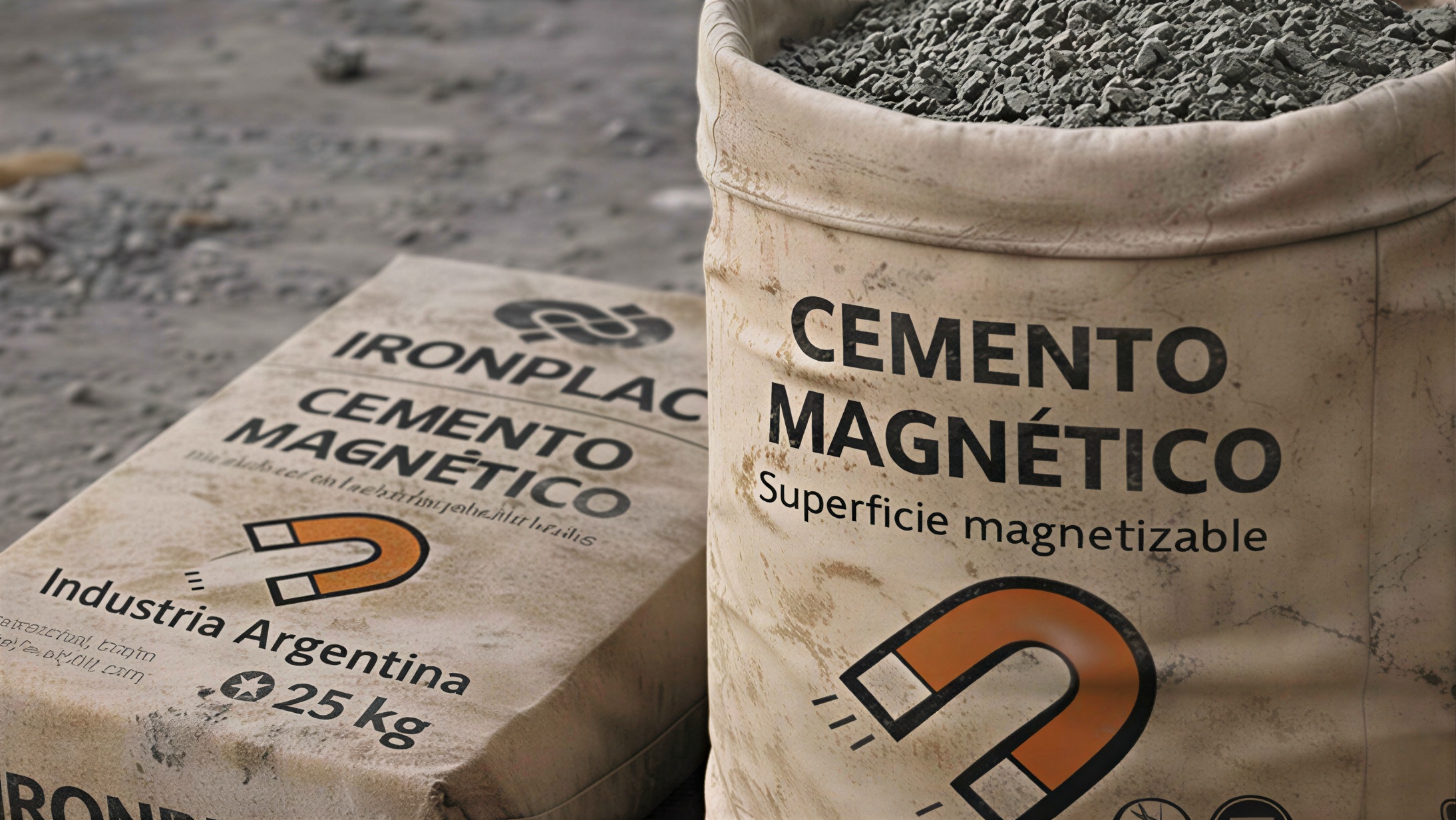
Drilling holes destroys rental deposits and relationships with landlords, but Argentine inventor Marco Agustín Secchi’s magnetic cement could end that anxiety forever. The 29-year-old industrial engineering student developed Ironplac, a magnetizable wall system that lets you hang, move, and remove objects without hammers, screws, or plastic anchors. Unlike those flimsy adhesive hooks that fail spectacularly at 3 AM, Ironplac creates passive ferromagnetic surfaces that only respond when magnet-equipped items touch them.
How Magnetic Walls Actually Work
No electricity required—just cleverly embedded ferrous fillers that turn cement into a giant magnetic board.
Secchi’s system uses mineral and ferrous fillers mixed into standard cement or board materials. You can apply it as a final finishing coat from prepared bags or install magnetizable panels in dry construction. The result looks and feels like any normal wall—paintable, smooth, neutral—but holds magnets with surprising strength. Demonstrations show the surface gripping tools, kitchen utensils, and even knives, proving this isn’t just a novelty coating for refrigerator poetry.
From Workshops to Rental Properties
Early pilots suggest applications everywhere from maker spaces to apartments where drilling isn’t allowed.
Picture your entire garage wall becoming a tool organization system, or classroom displays that rearrange without destroying paint jobs. Office co-working spaces could reconfigure layouts weekly instead of calling contractors. The technology works for both residential and commercial projects, enabling users to “configure the walls to your style” according to Secchi. No more choosing between functional storage and keeping security deposits intact.
Still Waiting for the Real Test
Promising demos don’t answer crucial questions about durability, cost, or building code compliance.
Ironplac remains in prototype phase with pilot installations ongoing and patent filings through the World Intellectual Property Organization. Critical unknowns include maximum load capacity, long-term durability under repeated repositioning, and performance in humid environments like bathrooms. The formula stays confidential while Secchi seeks industrial partners, meaning pricing and commercial availability remain unclear. Details about building code compliance also remain murky.
The Bigger Picture on Adaptable Spaces
Small innovations like magnetic walls could chip away at construction’s massive waste problem.
The EPA reported approximately 600 million tons of construction debris in 2018, much from premature renovations and reconfigurations. While magnetic cement won’t solve climate change, it aligns with growing interest in adaptable interiors that extend building lifecycles. If Ironplac scales successfully, it could spawn entire ecosystems of magnetic-compatible hardware—shelving, lighting, cable management—designed for walls that finally work with you instead of against you.


























