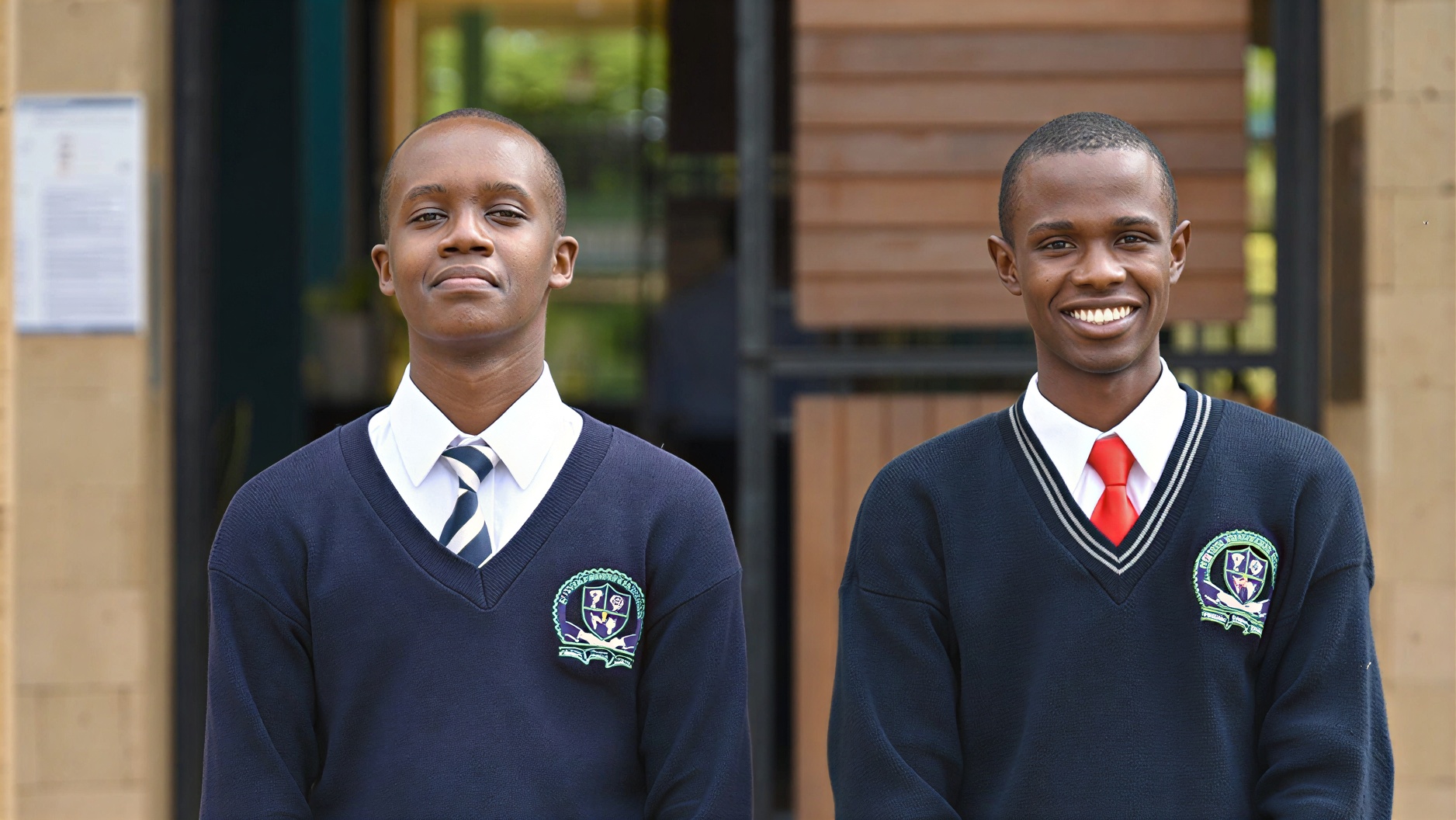
A 93.3% reduction in PM2.5 particulate emissions. Not from a corporate R&D lab. Not from a billion-dollar startup. From two 17-year-olds, five Nairobi minibuses, and a pile of farm waste. Fredrick Njoroge Kariuki and Miron Onsarigo, students at M-PESA Foundation Academy in Kiambu County, Kenya, built HewaSafi — Swahili for “clean air” — a vehicle exhaust filtration system tested on matatus along the Thika Road corridor, with sensors recording pollution data every six hours under real traffic conditions, according to Mongabay. The results have implications well beyond Nairobi.
What’s Inside HewaSafi
Five compartments, a Kenyan farm’s worth of materials, and one surprisingly elegant piece of engineering.
Cracking open the device reveals something like a Lego set assembled from local harvest scraps. Five sequential filtration compartments channel exhaust through:
- Maize cobs and coconut shells converted into activated carbon media
- Steel mesh
- Copper
- Recycled battery components
- Living spirulina algae that absorb gases at the back end
PM2.5 — particles fine enough to slip past your lungs and into your bloodstream — gets trapped across multiple stages rather than leaving one filter to do all the work.
Kariuki has had chronic lung disease since age 10 and still takes weekly medication — this was personal before it was a prototype.
The Numbers That Matter
The cost and performance figures are where HewaSafi’s case becomes hard to dismiss.
At 16,288 Kenyan shillings (~$126), HewaSafi costs less than a third of conventional filters in this market, which run around 50,000 KES (~$390). The performance backs up the price:
- 93.3% PM2.5 reduction
- 42% drop in carbon monoxide
- 21.4% CO₂ absorption
Earth Prize panel chair Agustín Ocaña Escobar called it “a tangible technical pathway using materials that are locally accessible, including agricultural waste and algae,” according to Mongabay. The project won the Africa regional Earth Prize 2026, netting $12,500 and a shot at the $100,000 global award.
Africa’s transport sector has long needed scalable, affordable emissions solutions that don’t depend on imported hardware. HewaSafi’s expansion playbook is straightforward:
- 1,200 units produced through local artisans
- A partnership with a matatu owners’ association representing around 8,000 drivers
- Installations on roughly 200 vehicles in the next phase
The longer-term vision is a franchise model, letting entrepreneurs across Africa manufacture filters using whatever agricultural waste grows locally — think of it as the Substack model for cleantech, but with coconut shells instead of newsletters. Worth flagging: pilot results haven’t undergone independent peer review, and long-term durability data remains pending.
The WHO estimates air pollution kills approximately 4.4 million people prematurely each year. HewaSafi won’t fix that alone. But the raw materials for a meaningful start were already sitting in the field, waiting to be burned or discarded. Kariuki’s goal is blunt: no other child should suffer what he did.