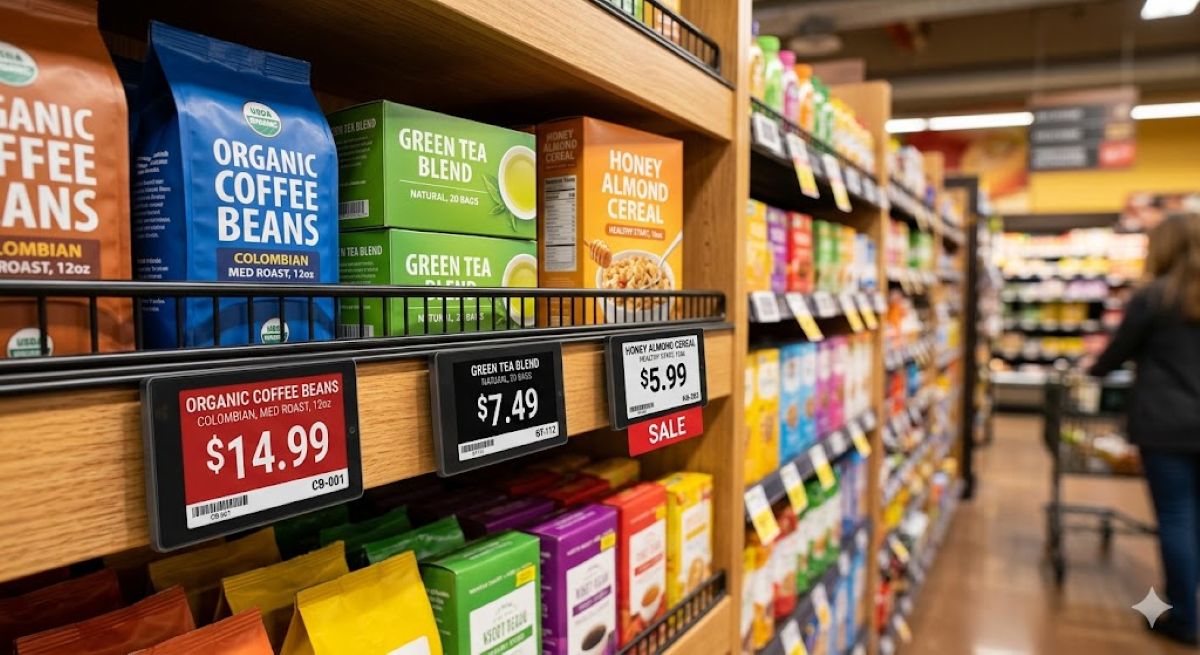
Your grocery bill keeps climbing, and now digital price tags are spreading through supermarket aisles like a technological rash. Turns out, most Americans want these electronic shelf labels banned before retailers get any bright ideas about surge pricing your milk. New polling shows 67% of Americans favor outlawing digital price tags in grocery stores entirely—a remarkable rejection of retail tech that promises efficiency but delivers anxiety.
Public Fears Digital Tags Mean Higher Prices
The numbers tell a stark story about consumer trust. GBAO Strategies polling for the United Food and Commercial Workers union found 68% of Americans worry surveillance pricing will increase costs, while only 5% expect lower prices. Even more telling: 58% say they’d be less likely to shop in stores with electronic shelf labels. That’s not just skepticism—that’s active resistance to what retailers frame as inevitable modernization.
What Surveillance Pricing Actually Means for Shoppers
Electronic shelf labels are networked displays that replace paper price tags, updating remotely across entire stores. Surveillance pricing goes further, using personal data—your location, purchase history, browsing habits—to set individualized prices. Think Uber surge pricing, but for essentials like bread and baby formula. While dynamic pricing feels normal for concert tickets or flights, applying it to groceries hits different when you’re already stretching every dollar.
States and Feds Are Taking Notice
Maryland just passed the nation’s first law banning surveillance-data-driven dynamic pricing in grocery stores, though it stops short of outlawing the hardware itself. The proposed federal Stop Price Gouging in Grocery Stores Act would ban both electronic shelf labels in large stores and surveillance pricing outright. Meanwhile, the FTC opened an investigation into surveillance pricing, ordering data from companies like Mastercard and pricing software providers.
Industry Claims It’s All About Efficiency
Walmart and Kroger insist they don’t use surge pricing, positioning their electronic shelf label rollouts as operational improvements rather than price manipulation tools. Recent academic research from economists at UT Austin, UC San Diego, and Northwestern backs this up, finding “virtually no surge pricing” in over 100 stores that deployed digital tags. The Food Industry Association argues these labels don’t collect personal data or track shoppers—they just display prices more accurately and reduce labor costs.
The gap between capability and current practice matters. Electronic shelf labels create the infrastructure for personalized pricing, even if most retailers aren’t using it that way yet. Public opinion suggests Americans want guardrails installed before the technology evolves, not after your cereal starts costing more during breakfast rush hour.