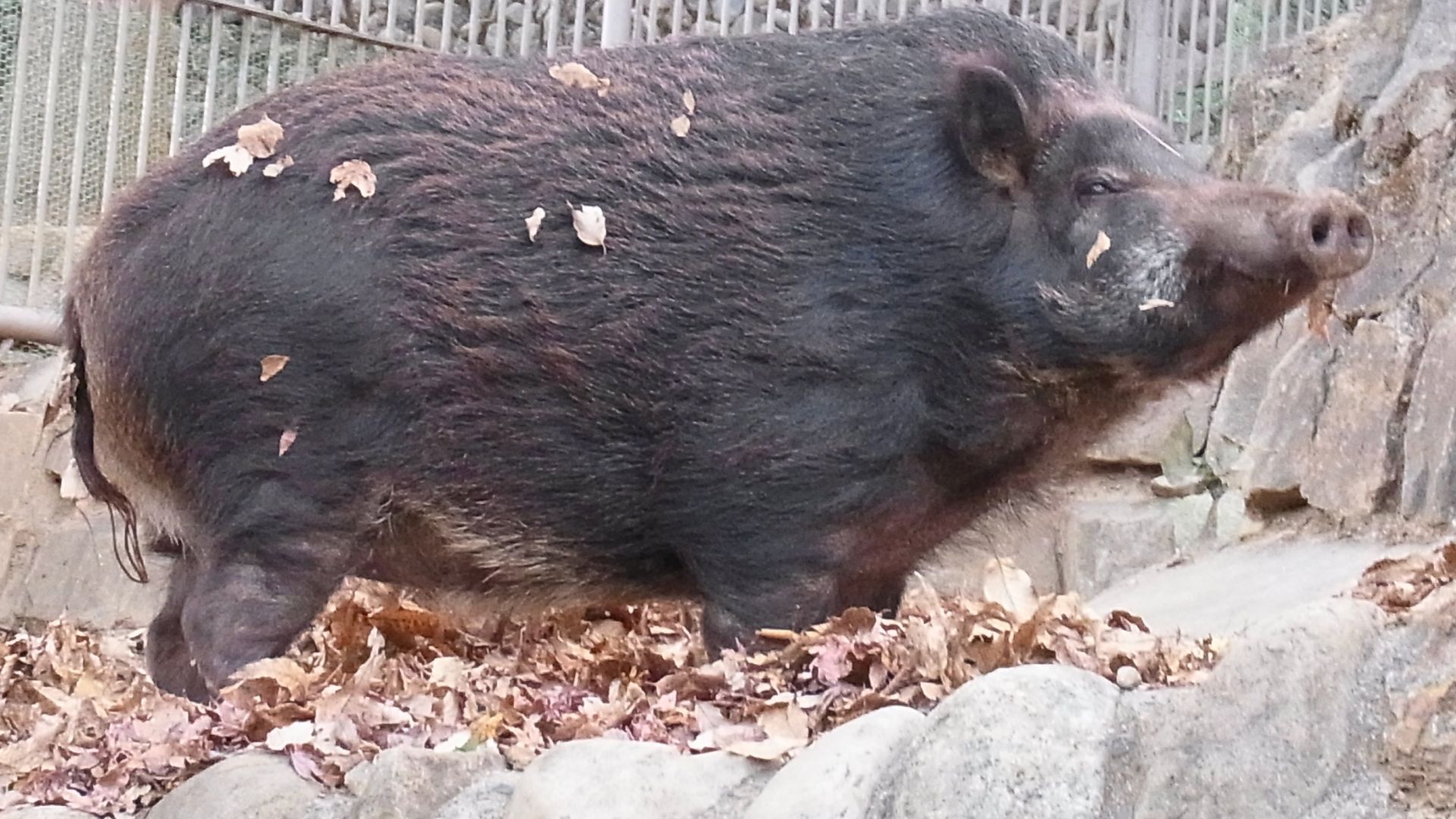
Ghost hogs roaming through radioactive ruins sounds like science fiction, but the real story behind Fukushima’s “mutant super pigs” is stranger than any B-movie plot.
The Real Cheat Code Isn’t Radiation
These hybrid animals used domestic pig genetics to turbocharge their reproduction rates.
You’ve probably seen the viral footage—hulking wild boars trotting through abandoned Fukushima streets like something out of a post-apocalyptic fever dream. Headlines scream about “radioactive mutants” and “nuclear hogs,” but here’s what the clickbait missed: these animals aren’t glowing monsters from a Marvel comic.
They’re something more unsettling—a biological success story born from disaster. When the 2011 tsunami triggered Fukushima’s nuclear meltdown, 164,000 residents fled their homes. Thousands of domestic pigs escaped abandoned farms and bred with expanding wild boar populations in the suddenly human-free landscape.
The result? Hybrids that inherited domestic pigs’ year-round breeding cycle—a genetic advantage that makes wild boars’ seasonal reproduction look quaint by comparison.
Ten Generations in the Time of Three
New genetic research reveals how domestic maternal lineages are accelerating population explosions.
Scientists from Fukushima University and Hirosaki University analyzed DNA from 191 wild boars and 10 domestic pigs collected between 2015 and 2018. Their findings, published in the Journal of Forest Research, confirm what researchers suspected: domestic pig maternal lineages have embedded themselves permanently in the wild population through mitochondrial DNA inheritance.
“The rapid reproductive cycle of domestic swine is inherited through the maternal lineage,” explains lead researcher Shingo Kaneko. While typical wild boars cycle through roughly three generations, these hybrids—turbo-charged by domestic genetics—can produce ten in the same timeframe.
Co-author Donovan Anderson notes that the domestic swine’s year-round reproductive cycle has been “successfully integrated into the wild population.”
A Global Preview, Not Just Japanese Problem
This hybridization pattern threatens ecosystems wherever feral pigs meet wild boars.
The broader implications extend far beyond Japan’s exclusion zone. Feral swine already cause $3.4 billion in annual damage across the United States alone, destroying crops and disrupting ecosystems.
Kaneko emphasizes that this reproductive acceleration “likely occurs in other regions globally where feral pigs and wild boars interbreed.”
Fukushima’s abandoned landscape created perfect conditions for this genetic experiment, but the mechanism—escaped domestic pigs hybridizing with wild populations—happens anywhere human pressure drops and containment fails. As some Fukushima areas gradually reopen, managing these fast-breeding hybrids becomes urgent.
The real mutation here isn’t radiation-induced superpowers—it’s evolution happening in fast-forward, with consequences that stretch far beyond any exclusion zone.