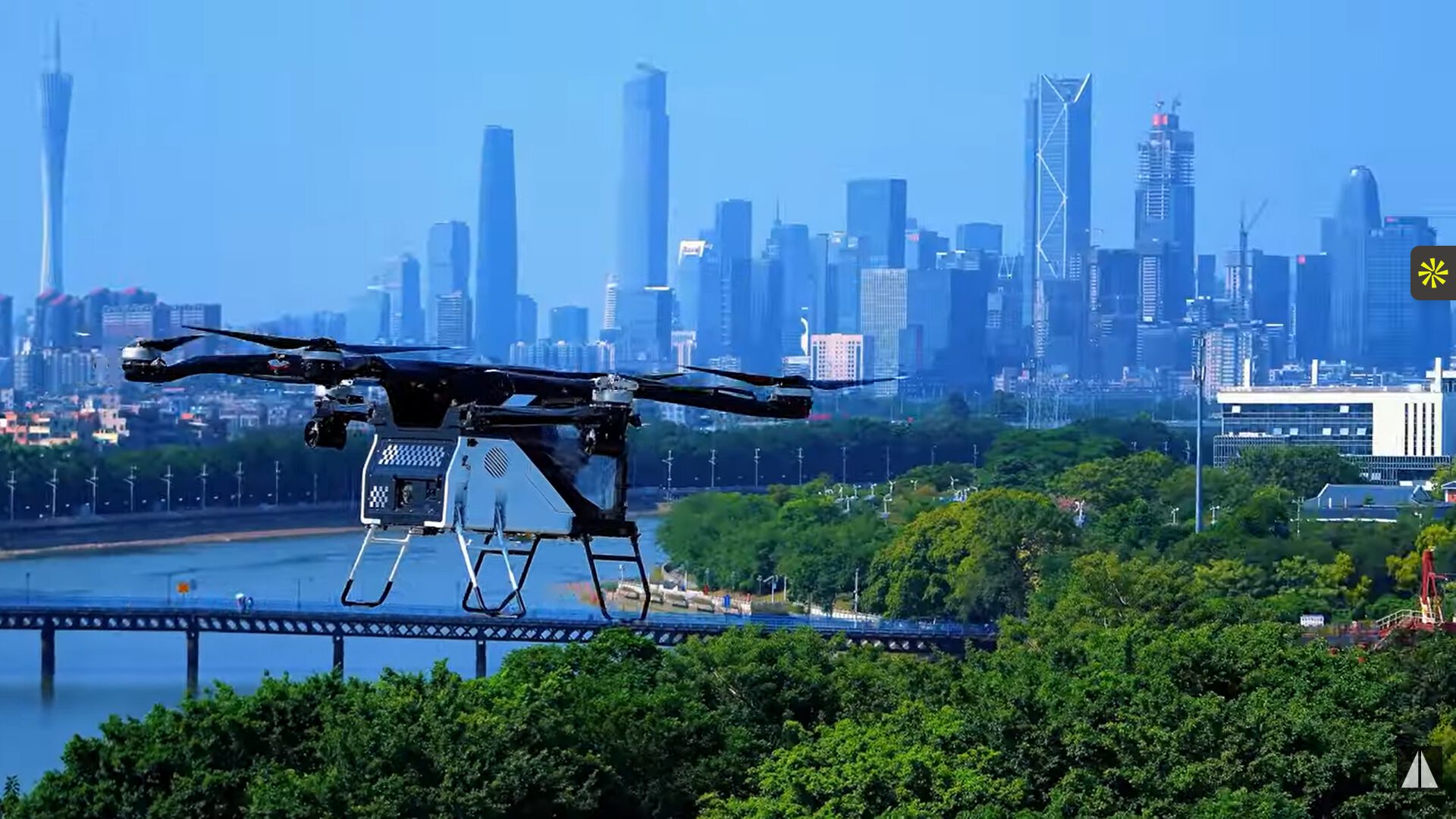
Reality bites when your quarter-million-dollar flying car can’t legally fly passengers. Xpeng’s Aridge division targets 2027 deliveries for their Land Aircraft Carrier—a modular system pairing a six-wheeled ground vehicle with a detachable two-seat eVTOL aircraft. Your deposit might secure early delivery, but certification gaps mean initial ownership looks more like an expensive hobby flying than daily commuting.
Factory Production Meets Modular Innovation
Guangzhou facility churns out eVTOLs while perfecting the carrier concept.
The Guangzhou factory already produces around 20 eVTOLs with capacity for 10,000 annual units. This isn’t vaporware—the modular system actually works. The ground vehicle handles the heavy lifting: six wheels, a range-extending internal combustion engine delivering 600-mile range, and integrated charging for the 700kg aircraft module.
The eVTOL itself packs 50kWh of battery power for 30km flights, charging from 30% to 80% in just 18 minutes. Think Tesla Cybertruck meets Star Wars landspeeder, minus the sci-fi reliability.
Seven Thousand Preorders Chase Limited Use Cases
Early adopters pay premium prices for tourism flights and logistics hops.
Over 7,000 preorders (mostly Chinese buyers) validate demand at 2 million yuan per unit—roughly $150,000 to $300,000 depending on configuration. You’re not buying practical transportation; you’re purchasing experiential luxury. China’s massive low-altitude infrastructure investment creates the playground these vehicles need, with cities like Shenzhen installing 1,200+ landing pads.
Early owners will likely use their flying cars for:
- Tourism excursions
- Short-range logistics
- Weekend adventures
Essentially treating aviation like boating.
Certification Reality Check
Aviation rules separate private ownership from passenger service dreams.
Here’s where dreams meet bureaucracy. China’s Civil Aviation Administration requires both Airworthiness Certificates and Air Operator Certificates for public passenger service. Private deliveries can happen pre-approval, but you can’t start an air taxi service from your driveway.
Early use cases remain constrained:
- Personal flights
- Tourism operators with proper licensing
- Specialized logistics
The gap between owning a flying car and operating one commercially spans years, not months.
Xpeng eyes 50% non-China revenue eventually, but certification timelines vary globally. If you’re considering early adoption, understand you’re buying into an exclusive club with beautiful toys and serious operational limitations. The future of personal aviation is arriving—just not as quickly as the marketing suggests.