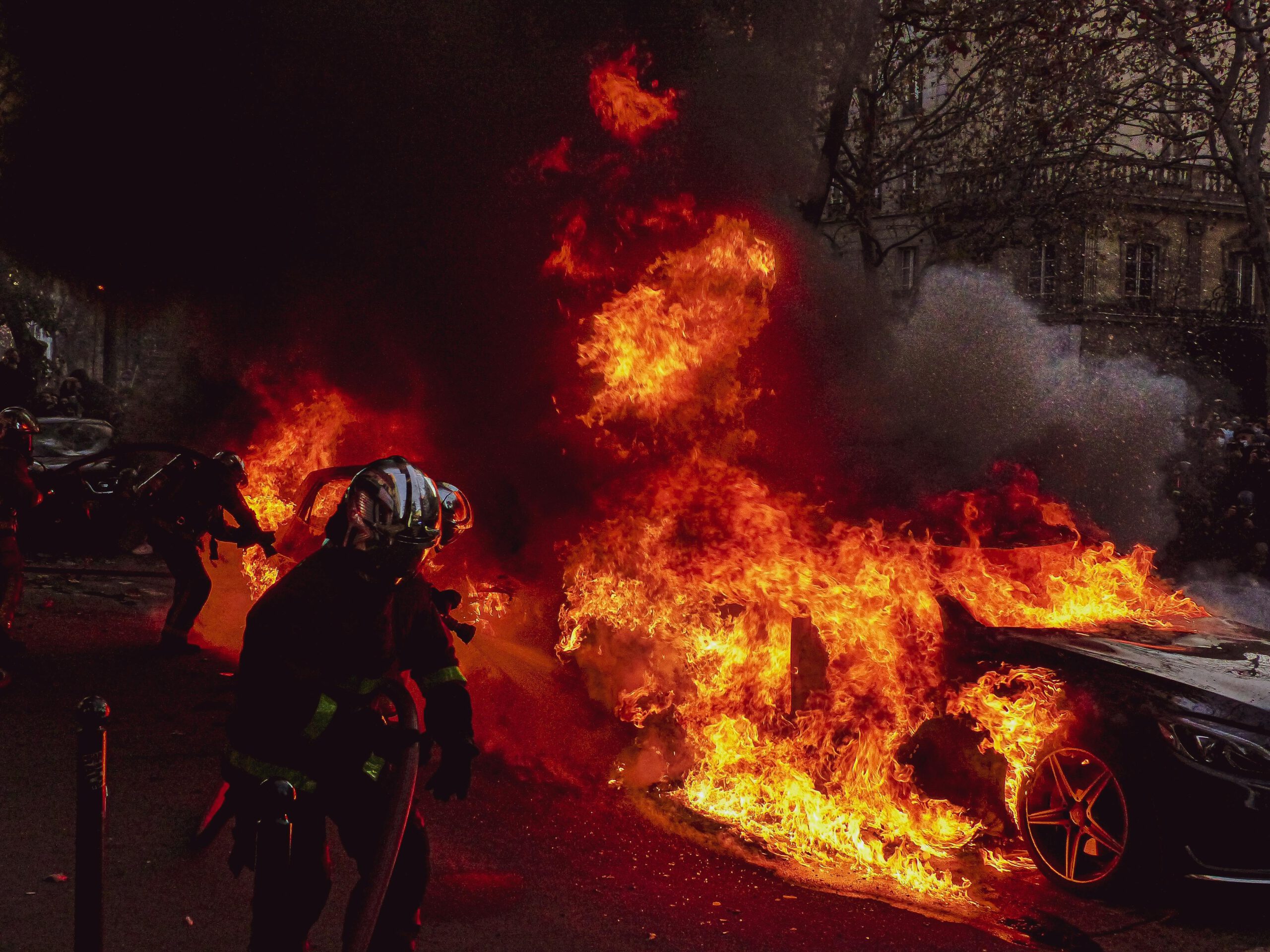
Bone fractures from thermal exposure don’t happen in typical car crashes. They occur when fires burn hot enough to cremate human remains—around 5,000 degrees Fahrenheit. That’s what investigators believe happened to Michael Patrick Sheehan when his Tesla Cybertruck reportedly flipped and ignited in Baytown, Texas last August. According to reports, the 47-year-old’s remains were found scattered across the front seats after firefighters extinguished the reigniting battery blaze.
Design Choices Become Death Traps
The same features Tesla markets as strengths create emergency egress nightmares.
Emergency responders face a perfect storm of complications with burning Cybertrucks:
- The stainless steel exoskeleton that supposedly makes them “bulletproof” also makes them nearly impossible to cut open
- Laminated windows resist standard rescue tools
- There are no external door handles—a design choice that looks sleek in showrooms but turns lethal when electronic systems fail in crashes
College Students Couldn’t Escape Burning Truck
Three reportedly died from smoke inhalation in what should have been a survivable crash.
The Piedmont, California incident reveals how Tesla’s design philosophy can prove fatal. When 19-year-old Soren Dixon’s Cybertruck reportedly hit a tree last November, CHP investigators suggest the impact was survivable. But three college students reportedly died from smoke inhalation and thermal injuries—not blunt force trauma.
The sole survivor, Jordan Miller, only escaped after someone broke a window from outside. The families are now suing Tesla, alleging the electronic door handles failed when power was lost, while rear passengers had no way out except a hidden cable buried under floor mats.
Pattern of Entrapment Emerges
Five fires since 2023 show troubling fatality rates compared to other vehicles.
Tesla has reportedly faced over 140 complaints about locking door handles since 2018, with more than 15 entrapment deaths across all models over the past decade. But Cybertrucks show a troubling acceleration of this pattern. When 18-year-old USC athlete Alijah Arenas reportedly survived his Los Angeles crash in April, he was only rescued after responders peeled away window sections—the doors wouldn’t budge despite the vehicle being upright and intact.
NHTSA awarded Cybertrucks five-star crash ratings, but those tests don’t measure how quickly occupants can escape burning vehicles. Thermal runaway in EV batteries burns hotter and longer than gasoline fires, requiring up to 8,000 gallons of water to suppress. Tesla claims recent software updates will auto-unlock doors in collisions, but affected families remain skeptical of promises for future fixes.