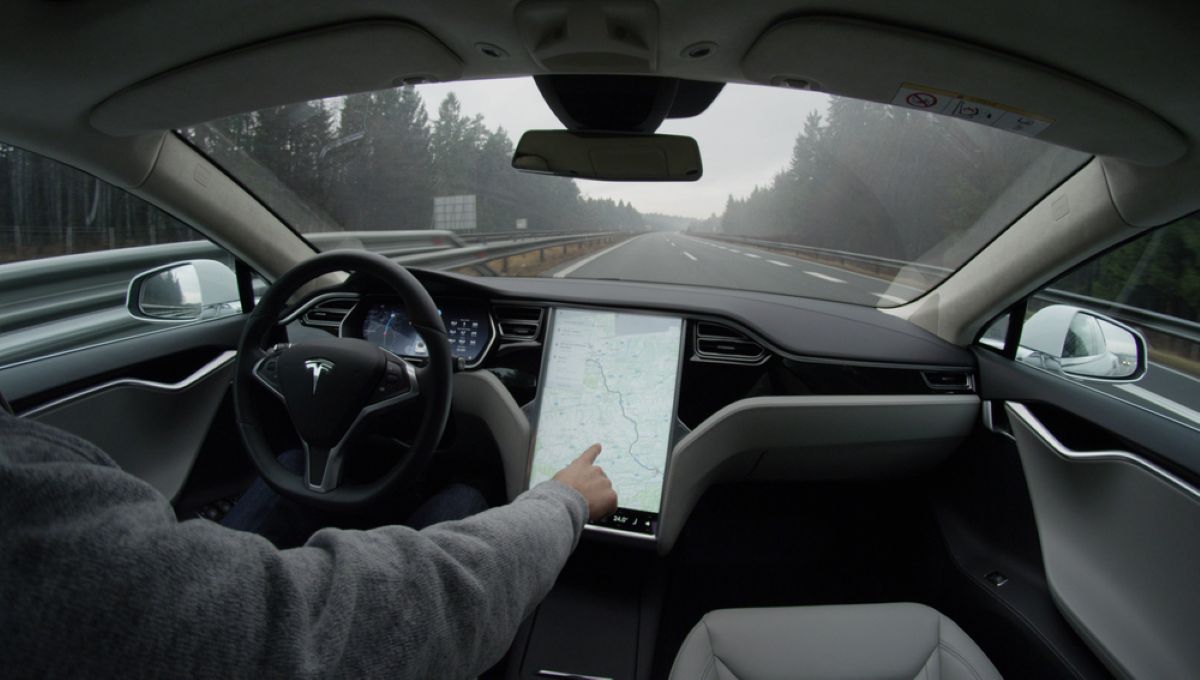
Tesla’s “intelligent assisted driving” costs 64,000 yuan but requires constant supervision. After years of regulatory delays and false starts, Chinese Tesla owners can finally purchase the company’s advanced driver-assistance system. But don’t expect the sci-fi experience Tesla’s marketing implies. What you’re getting for 64,000 yuan (roughly $9,400) is “intelligent assisted driving”—carefully branded to avoid suggesting full autonomy.
The system handles city streets, navigates intersections, and responds to traffic lights, but legally remains Level 2 automation. Your hands might leave the wheel, but your eyes must stay glued to the road while an in-cabin camera watches your every blink.
Premium Pricing for Supervised Assistance
The one-time fee costs more than many used cars while U.S. buyers switch to subscriptions.
Tesla’s Chinese pricing strategy feels like buying concert tickets from a scalper. That 64,000 yuan represents a massive upgrade from Enhanced Autopilot, essentially doubling your car’s intelligence for the price of a luxury vacation.
Meanwhile, American buyers lost their one-time purchase option entirely—Tesla now forces everyone into a $99 monthly subscription model. Whether that premium delivers matching value depends entirely on your tolerance for expensive beta testing.
Tough Competition in Tesla’s Biggest Market
Chinese automakers already offer city navigation while regulators keep Tesla on a tight leash.
Tesla enters China’s autonomy race fashionably late to its own party. XPeng, NIO, and other domestic brands have been offering city navigation features for months, some with aggressive roadmaps toward Level 3 autonomy.
Chinese state broadcaster CCTV recently ranked Tesla’s system ahead of local competitors in independent testing, proving the technology works. But regulators forced Tesla to pause initial free trials and demanded the “Full Self-Driving” rebrand to “intelligent assisted driving”—clear signals that Beijing won’t tolerate Silicon Valley’s move-fast-and-break-things approach to public safety.
The Robotaxi Dream Stays Grounded
Unsupervised driving remains years away despite Musk’s optimistic timelines.
Don’t hold your breath for true autonomy in China. Tesla’s unsupervised FSD—where the car actually drives itself—exists only in limited U.S. robotaxi trials across Texas cities.
XPeng president Brian Gu recently offered a reality check, suggesting Level 3 capabilities might arrive “in two years” with Level 4 “probably in four years” for widespread Chinese road use. Tesla vice president Grace Tao acknowledged the company would “actively engage in assisted driving initiatives” but avoided specific timelines.
Smart move, considering Elon Musk’s track record of promising full autonomy “next year” since 2014. Your 64,000 yuan buys impressive technology that makes daily commuting genuinely easier—just don’t expect it to replace your driving skills anytime soon.