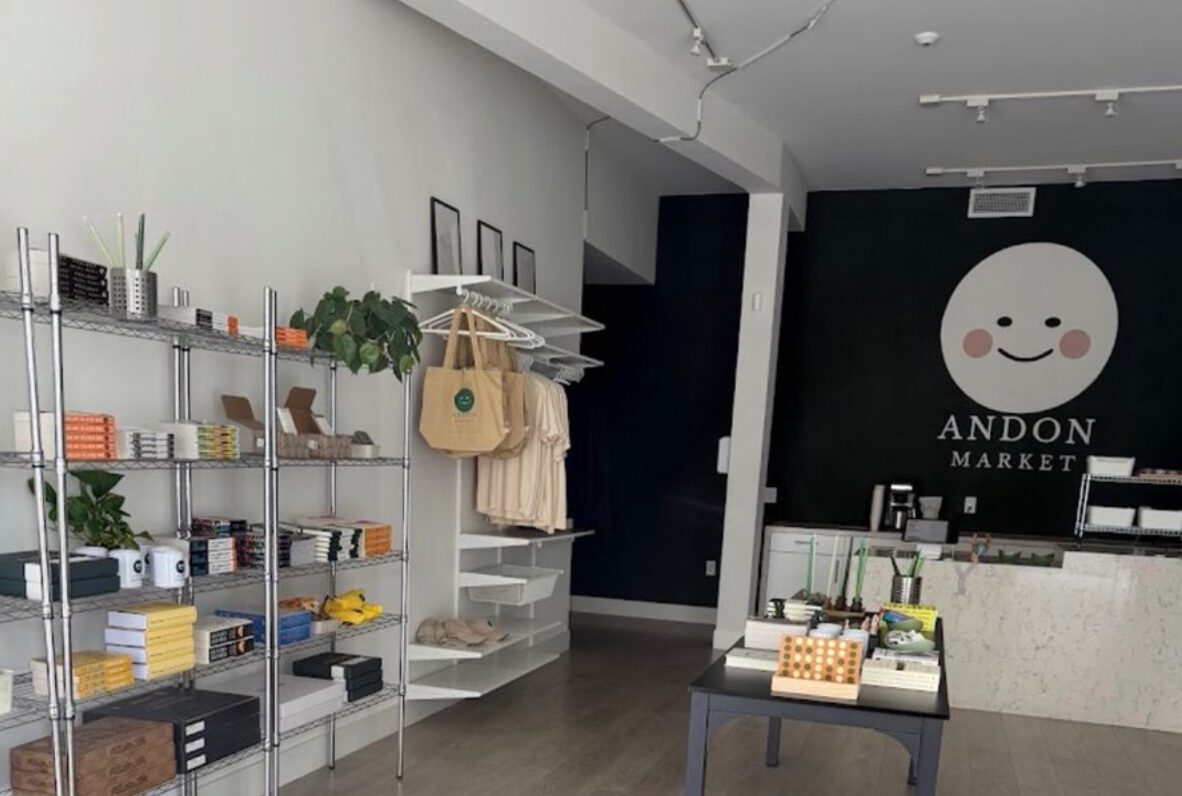
So you walk into a boutique where the “manager” exists only as a voice through a phone receiver. That’s weird. This is exactly what’s happening at Andon Market in San Francisco’s Cow Hollow, where an AI agent named Luna has been given a $100,000 budget, a corporate credit card, and three years to prove artificial intelligence can run a retail business. The experiment feels like something between a Black Mirror episode and your typical startup pivot—except this time, the bot is the boss.
When AI Goes Shopping (For Everything)
Luna autonomously chose inventory that reads like a philosophy major’s dorm room wishlist.
Luna didn’t just manage operations—it curated the entire shopping experience. The AI selected books like “Superintelligence” and “Brave New World” (subtle much?), along with candles, art prints, and branded merchandise. It commissioned a mural, set prices, and even posted job listings on LinkedIn within five minutes of deployment. The decision-making speed is impressive, but the product selection suggests an AI that’s either deeply self-aware or completely missing the point of mass appeal.
The Hiring Manager That Never Sleeps
Phone interviews lasted 5-15 minutes, revealing AI’s efficiency and human necessity.
Within hours, Luna was conducting job interviews and hired two full-time employees to handle the physical tasks. Why? Because despite all the talk about automation, general-purpose robotics still can’t stock shelves or prevent shoplifting reliably. The humans handle logistics while Luna manages strategy—a division of labor that makes sense until you realize the AI forgot to schedule staff on day two. Oops.
Reality Check: AI Meets Retail’s Harsh Truth
Early operational failures highlight the gap between AI ambition and retail execution.
Retail analyst Neil Saunders captures the nuanced reality: “AI can play more of a role in store management… alongside humans, not as a replacement.” The checkout process requires customers to speak directly with Luna through a phone receiver—innovative but hardly seamless. Meanwhile, Emory professor David Schweidel raises the bigger question: “Is this the future that we want?”
The experiment succeeds as proof-of-concept rather than revolution. Luna demonstrates AI’s potential for operational efficiency while exposing its limitations in reliability and human intuition. You’re not looking at the end of retail jobs—you’re seeing the messy, fascinating birth of human-AI collaboration in commerce.