Dead batteries and overheated joints used to doom marathon robots, but Honor’s Lightning just rewrote the rules with Formula 1-style pit stops. This humanoid completed Beijing’s half-marathon in 50 minutes and 26 seconds—crushing the human world record by nearly seven minutes while technicians in golf carts rushed ice packs to its overheating battery.
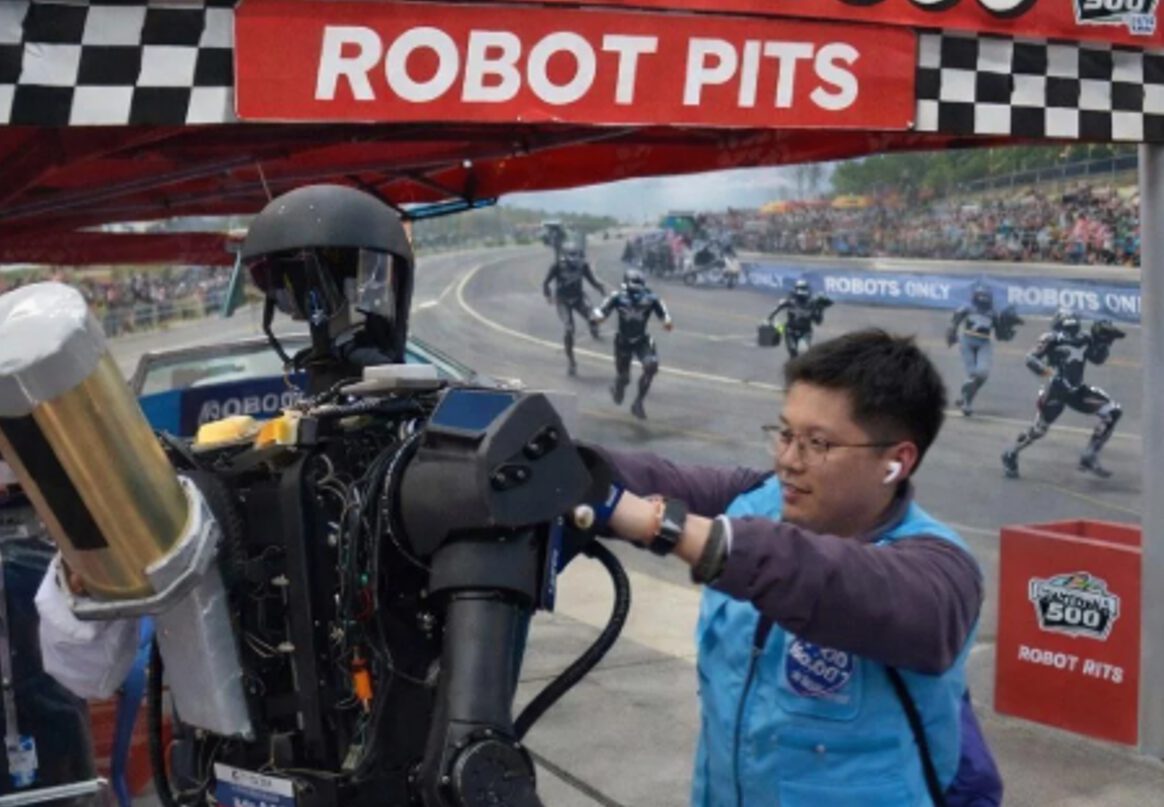
The scene looked like NASCAR meets Black Mirror. Over 100 humanoid robots raced 21.1 kilometers alongside human runners, but the real drama happened during maintenance breaks. Robots pulled over for rapid cooling sessions, with teams applying ice directly to battery compartments and lubricating joints to prevent friction damage on Beijing’s uneven pavement.
From Disaster to Dominance
This year’s performance represents a stunning turnaround from 2025’s mechanical carnage. Last year’s winner crawled across the finish line in 2 hours and 40 minutes, with most robots failing completely. The pit stop strategy proved crucial for sustained performance this time around.
Lightning’s 5’5″ frame—designed with legs mimicking elite human athletes—maintained consistent speed thanks to liquid cooling systems borrowed from Honor’s smartphone division. When batteries overheated during sustained high-speed running, ice application provided the thermal management needed to prevent shutdowns. Some competitors even required packing tape repairs after falls.
The Brain Gap Remains
While robots now dominate physical endurance, cognitive limitations persist. Some competitors required basic repairs and maintenance interventions that highlighted the gap between raw athleticism and adaptive intelligence. Yet China’s state-backed push involves numerous companies targeting factory automation and eldercare applications.
Human runners finished impressed rather than intimidated, many slowing to photograph their mechanical competitors. The fastest human, Zhao Haijie, completed the course in 1:07:47—respectable by any standard, but the new benchmark belongs to machines that never tire, never doubt, and cool down with ice packs.
Your future robot workforce just got more viable. This spectacle signals serious commercial intent beyond engineering theater, with massive investment and livestream audiences proving the technology’s market potential.