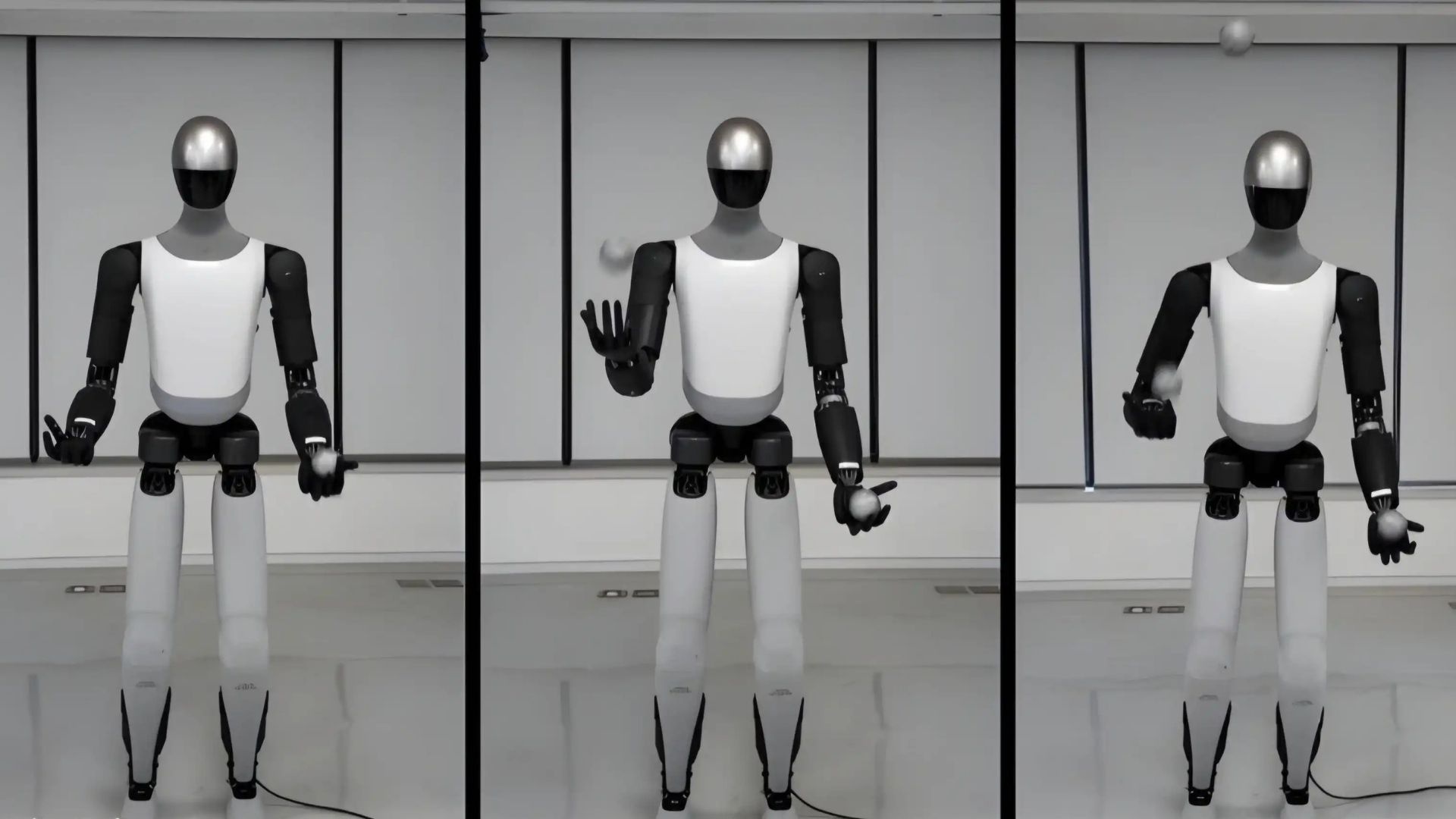
Robot hands that literally perspire just solved industrial automation’s biggest reliability headache. Xiaomi’s redesigned CyberOne bionic hand uses 3D-printed metal channels that mimic human sweat glands, evaporating half a milliliter of water per minute to dissipate 10 watts of heat from 100-watt motors that would otherwise throttle under sustained load.
This bio-inspired cooling system tackles the thermal wall that’s plagued high-performance robotic for decades. Most robot hands fail after 10,000 grasping cycles when heat buildup degrades components. Xiaomi’s sweating solution enables over 150,000 cycles—a 15x durability improvement that transforms factory deployment economics. The cooling channels snake through the forearm like miniature radiators, preventing the overheating that turns precision instruments into expensive paperweights.
Industrial testing reveals the impressive payoff in real manufacturing scenarios. The hand achieved 90.2% success rates in automotive nut-fastening tasks sustained over three-hour shifts within 76-second cycles—the kind of reliability manufacturers actually need, not the cherry-picked demo videos that usually accompany robotics announcements. The hand operates at true human scale, modeled after a 5.6-foot adult male, while packing 83% more active degrees of freedom than its predecessor, reaching the 22-27 range that enables complex manipulation tasks.
Beyond thermal management, Xiaomi crammed 8,200 square millimeters of tactile sensing across the entire palm surface. This full-palm coverage lets the hand work effectively even when vision systems fail—crucial for real-world manufacturing where lighting, angles, and obstructions constantly challenge camera-based guidance. The company collected tactile data using specialized gloves to train their AI systems, creating more realistic sim-to-real transfer for robotic learning.
The broader implications hit harder than the tech specs suggest. Manufacturing automation has stalled partly because robots couldn’t match human hand reliability in demanding environments. Xiaomi open-sourced their TacRefineNet framework alongside 61 hours of raw tactile data, accelerating research across the robotics community. If this sweating solution proves scalable beyond prototype testing, it could unlock the factory automation wave that’s been perpetually “five years away” since the 1980s. Your next smartphone might get assembled by hands that perspire just like yours—only they never get tired, never call in sick, and work three shifts without complaint.