Most CPU companies treat product lines like Netflix catalogs—something for everyone, endless tiers and options. Nvidia just torched that playbook entirely. The company’s new Vera CPU comes in exactly one configuration: 88 cores, no alternatives, take it or leave it. This isn’t cost-cutting or manufacturing laziness. It’s a calculated rejection of how Intel and AMD have operated for decades. You’re watching Nvidia bet that solving one problem exceptionally well beats serving every possible customer badly.
Performance Over Proliferation
The Vera CPU delivers twice the performance-per-watt of traditional processors by optimizing for AI orchestration rather than general computing.
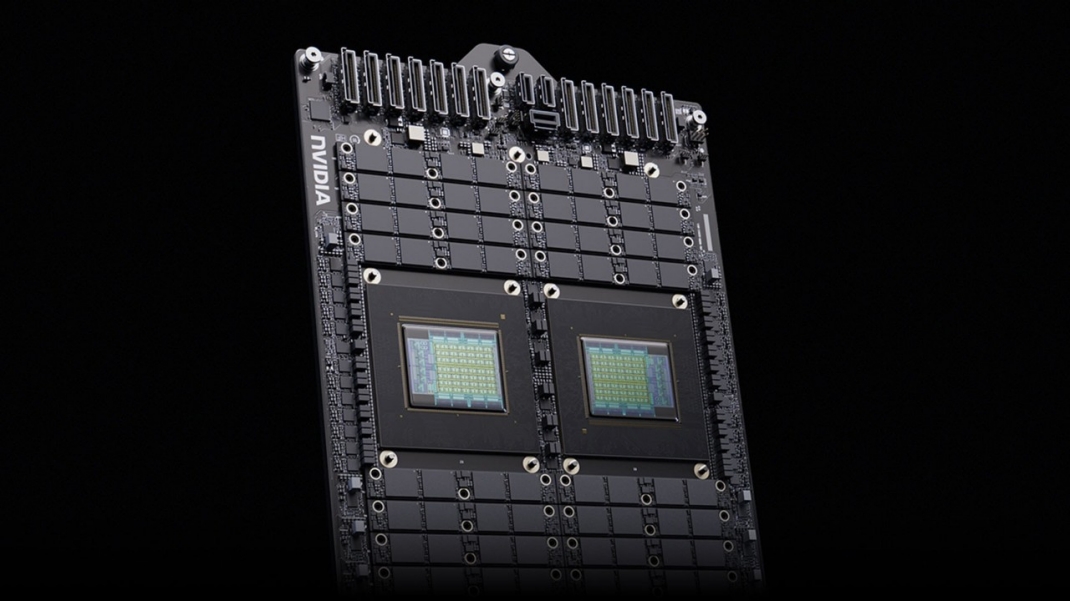
The Vera CPU isn’t trying to be your next desktop processor or server workhorse. Built on custom silicon “Olympus” Arm cores, it’s engineered specifically for agentic AI inference and orchestration—the control layer that manages complex AI systems. Jensen Huang claims it delivers “twice the performance-per-watt than any CPUs in the world” for these specialized tasks. Rather than cramming more cores onto silicon like Intel and AMD, Nvidia focused on extreme single-threaded performance and energy efficiency for AI workloads that actually matter in 2026.
Unexpected Standalone Success
Nvidia originally designed Vera as a component within integrated systems but discovered massive standalone demand.
Here’s where the strategy gets compelling. Nvidia never planned to sell Vera CPUs individually—they were supposed to be glued to GPUs in complete rack systems. But hyperscalers started demanding standalone processors anyway. “We never thought we will be selling CPUs standalone, but we are selling a lot of CPUs standalone,” Huang admitted during GTC 2026. “This will for sure be a multi-billion dollar business for us.” That’s billion with a ‘B,’ from a single SKU the company didn’t expect to sell separately.
Manufacturing Ruthlessness
Nvidia’s approach eliminates traditional product binning by discarding any chip that fails to meet the full 88-core specification.
The manufacturing strategy reveals Nvidia’s true intentions. Each Vera die contains 91 cores, with 88 functional and three held in reserve. Parts that can’t hit the full specification get tossed entirely—no budget variants, no scaled-down models. Ian Buck, Nvidia’s VP of Hyperscale Business, explained the focus: “We like a workload problem to go solve, to go swarm, and Nvidia is making one CPU to help in that agentic workload.”
This eliminates the complexity and cost of managing multiple product tiers while maintaining architectural coherence across the entire Vera Rubin platform ecosystem. You’re watching Nvidia fundamentally reshape expectations about how semiconductor companies approach product strategy—and early customer adoption suggests the gamble is paying off.