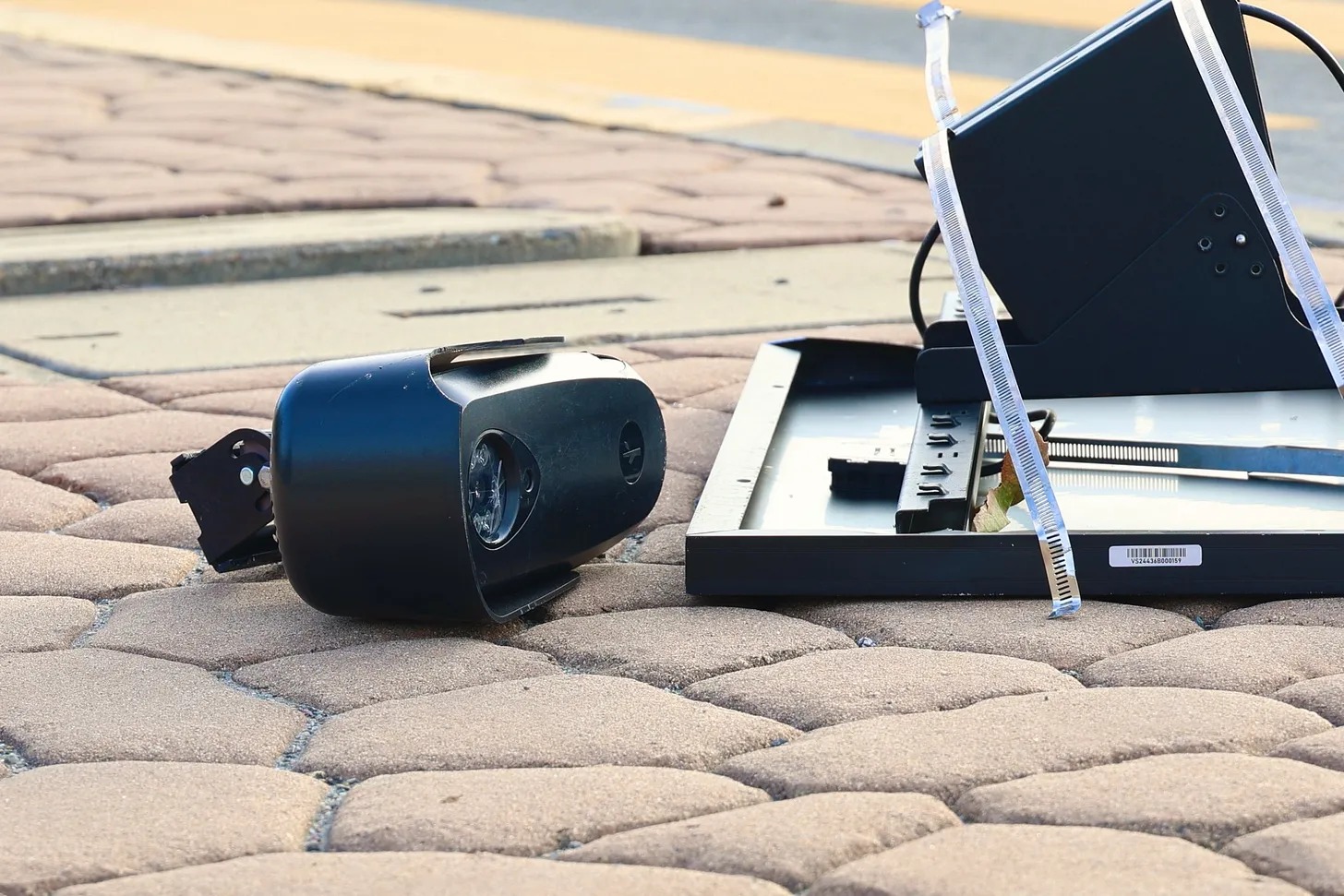
Across five states, citizens are cutting down, smashing, and dismantling Flock Safety’s license plate surveillance cameras faster than cities can install them. In La Mesa, California, two solar-powered poles lay destroyed just weeks after city council approval. Eugene, Oregon saw six cameras severed with notes reading confrontational messages. This isn’t random vandalism—it’s coordinated resistance to a $7.5 billion surveillance empire.
The Scope of Flock’s Surveillance Network
These aren’t your typical traffic cameras—they’re warrantless tracking systems deployed in 6,000 communities.
Flock’s cameras don’t just snap license plates. They create “vehicle fingerprints” using AI to identify cars by scratches, bumper stickers, and roof racks. That data flows directly to law enforcement and ICE without warrants, creating a dragnet that tracks your grocery runs, doctor visits, and everywhere else you drive. The company markets this as crime prevention, but the scope feels more like digital stop-and-frisk.
Citizens Fight Back with Vice Grips and Determination
From Illinois to Virginia, people are literally taking matters into their own hands.
Jeffrey Sovern of Virginia didn’t hide his work. He admitted to destroying 13 cameras with vice grips, citing Fourth Amendment violations, and now faces charges while a GoFundMe raises money for his defense. In Greenview, Illinois, someone severed a pole completely. Connecticut investigators found cameras smashed beyond repair. The methods vary, but the message stays consistent: not in our neighborhoods.
Public Opinion Rallies Behind the ‘Vandals’
Reddit threads and fundraising campaigns reveal widespread support for camera destruction.
Social media shows little sympathy for Flock. Reddit threads in Norfolk and San Diego celebrate the saboteurs as heroes fighting corporate overreach. DeFlock.org tracks 46 cities that have rejected Flock contracts after public pressure, while Sovern’s legal defense fund demonstrates how surveillance resistance crosses political lines. Even Flock’s CEO attacking critics for normalizing “lawlessness” only seems to fuel more opposition.
Privacy Stakes Go Beyond Traffic Violations
The real concern isn’t speeding tickets—it’s ICE access and reproductive surveillance.
These cameras create permanent tracking records shared with federal agencies. That means potential monitoring of abortion clinic visits, immigrant community movement, and political gatherings. Georgia police chiefs have already been caught using the system for personal stalking. When Flock’s Condor cameras accidentally exposed unsecured footage online in January 2026, it confirmed privacy advocates’ worst fears about data security.
The destruction continues spreading while cities keep installing cameras despite public opposition. This grassroots revolt suggests Americans have reached their limit with warrantless surveillance—and they’re willing to break some expensive equipment to prove it.