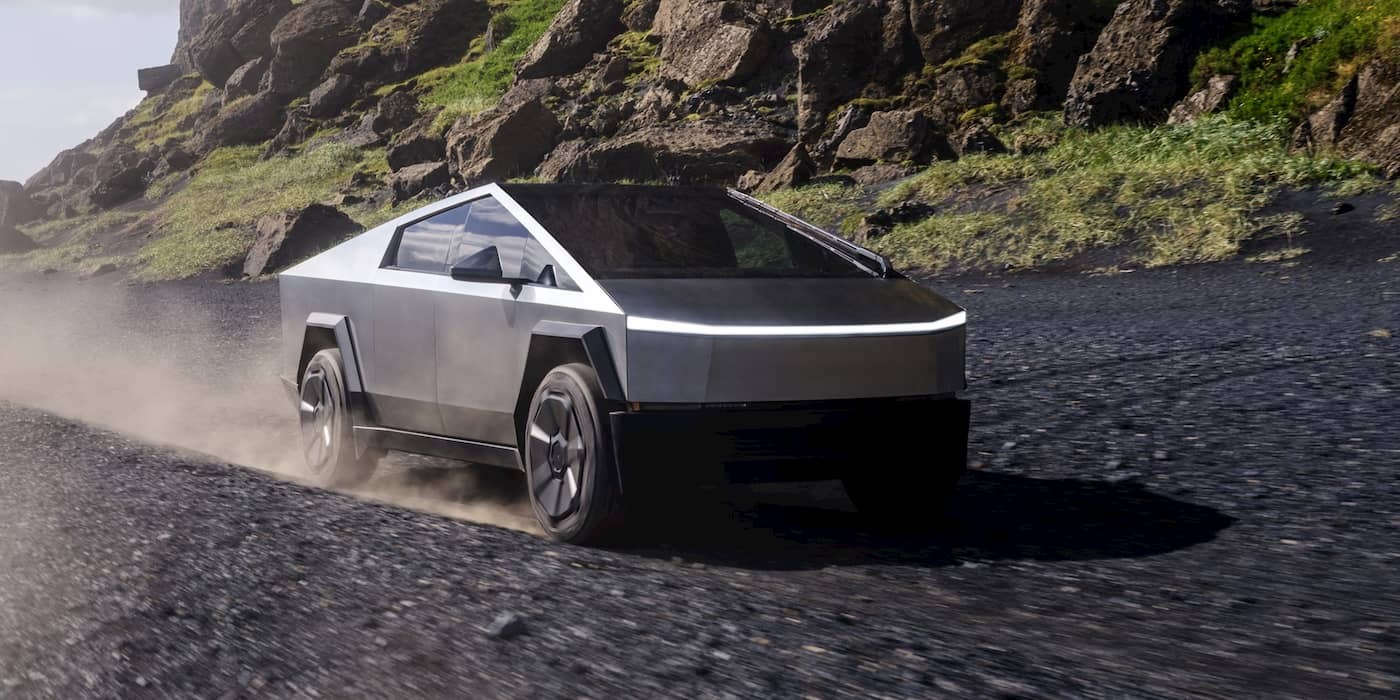
Dead sales figures kill even the most futuristic vehicles. Tesla just chopped $15,000 off its Cyberbeast and launched a new dual-motor Cybertruck at $59,990—but only for the next 10 days. Translation: inventory is piling up faster than panels falling off production models.
The New Budget Beast
Tesla’s most affordable Cybertruck variant targets cost-conscious buyers.
This new all-wheel-drive variant undercuts everything Tesla has offered before. You get:
- Adaptive damping
- Powershare outlets for running your tools
- A tonneau cover
Features that matter when you’re actually using a truck for work.
The catch? That $59,990 sticker comes with artificial urgency that screams, “Please buy this thing.”
Meanwhile, the top-tier Cyberbeast drops from $114,990 to $99,990. Tesla quietly killed the “Luxe Package” that bundled Full Self-Driving and free Supercharger access—perks that apparently weren’t moving units fast enough to justify the complexity.
Numbers Don’t Lie
Sales figures reveal Cybertruck’s struggle to meet ambitious projections.
Reality check: Tesla sold just 20,237 Cybertrucks in 2025, roughly half of 2024’s numbers and nowhere near the projected 250,000 annual capacity. That’s about 5,000 units per quarter—pathetic for a vehicle Tesla hyped as revolutionary.
Multiple recalls for rust, electrical gremlins, and yes, literal panels falling off haven’t helped. Neither did losing Siddhant Awasthi, the Cybertruck program head, last November.
Compare that $60,000 price tag to Ford’s F-150 at $39,000 base, and you see Tesla’s challenge. Even with the EV premium, asking working customers to pay 50% more requires flawless execution—something Tesla’s quality control clearly hasn’t delivered.
The Bigger Picture
Musk’s strategic pivot affects Tesla’s commitment to electric vehicles.
Musk’s attention has shifted toward robotics and humanoid manufacturing, treating EVs like yesterday’s obsession. When your CEO is planning to shutter Model S and X production for robot factories, price cuts become damage control rather than market strategy.
The $699 monthly lease option might attract fence-sitters, but Tesla’s real problem isn’t pricing—it’s whether buyers want their truck associated with Musk’s increasingly polarizing brand. For a “statement vehicle” like the Cybertruck, that reputation matters more than any discount can fix.
This pricing move signals Tesla’s acknowledgment that demand hasn’t materialized as expected. Whether temporary discounts can solve fundamental quality and brand perception issues remains the bigger question for potential buyers weighing their options.