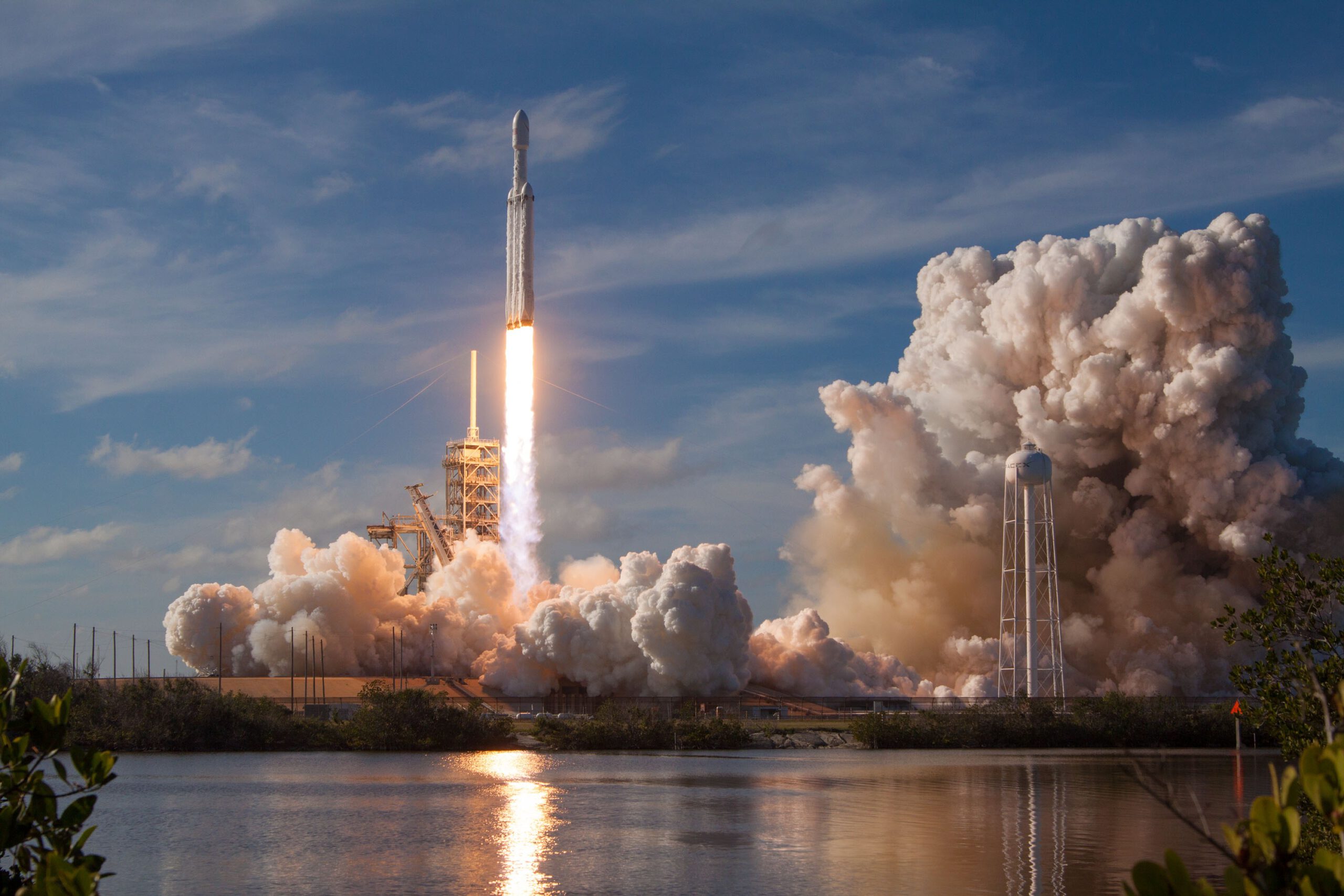
Those dramatic fireballs streaking across European skies on February 19, 2025 weren’t just space debris—they were evidence of a pollution problem most of us never considered. When a SpaceX Falcon 9 upper stage broke apart over Europe after a propellant leak, German researchers seized the moment to test something unprecedented: tracking the metal contamination left behind by disintegrating spacecraft.
The payoff from your Starlink internet comes with an atmospheric price tag. Researchers at the Leibniz Institute of Atmospheric Physics detected a 10-fold spike in lithium concentrations at 96 kilometers altitude roughly 20 hours after the rocket’s demise.
The pollution lingered for 27 minutes—long enough for their new lidar system to paint a detailed picture of how spacecraft metals disperse through the mesosphere.
Laser Technology Turns Invisible Pollution Visible
Lithium from rocket alloys and batteries serves as the perfect tracer for space debris contamination.
Think of lithium as the forensic fingerprint of space pollution. Unlike cosmic dust, this metal floods rocket components—from lithium-aluminum alloys to batteries—but barely exists naturally in the upper atmosphere. The German team’s lidar system works like atmospheric CSI, firing laser pulses tuned to lithium’s specific resonance frequency and measuring what bounces back.
“Lithium is an excellent tracer for space debris,” explains Robin Wing from the Leibniz Institute. Daniel Murphy from NOAA’s Chemical Sciences Laboratory was equally impressed: “I’m impressed with their measurement… a demonstration that it can be done.”
The technique proved so precise that back-trajectory modeling confirmed the pollution plume matched the rocket’s exact path.
The Environmental Price of Our Satellite-Connected Future
With SpaceX launching 130+ missions annually, atmospheric monitoring becomes critical for understanding long-term impacts.
Your faster internet connection multiplied by millions creates a cumulative problem. SpaceX alone launched over 130 missions in 2024, with 2025 numbers climbing exponentially as Starlink expands globally. Each mission eventually sends metal-rich components through atmospheric reentry—usually controlled, but sometimes not.
The study, published in Communications Earth & Environment, validates a monitoring system we desperately need. Previous research shows spacecraft metals already exceed natural influx rates, but long-term atmospheric effects remain unknown. As satellite constellations multiply rapidly, this lidar technique offers our first reliable method for tracking the environmental cost of our connected world.