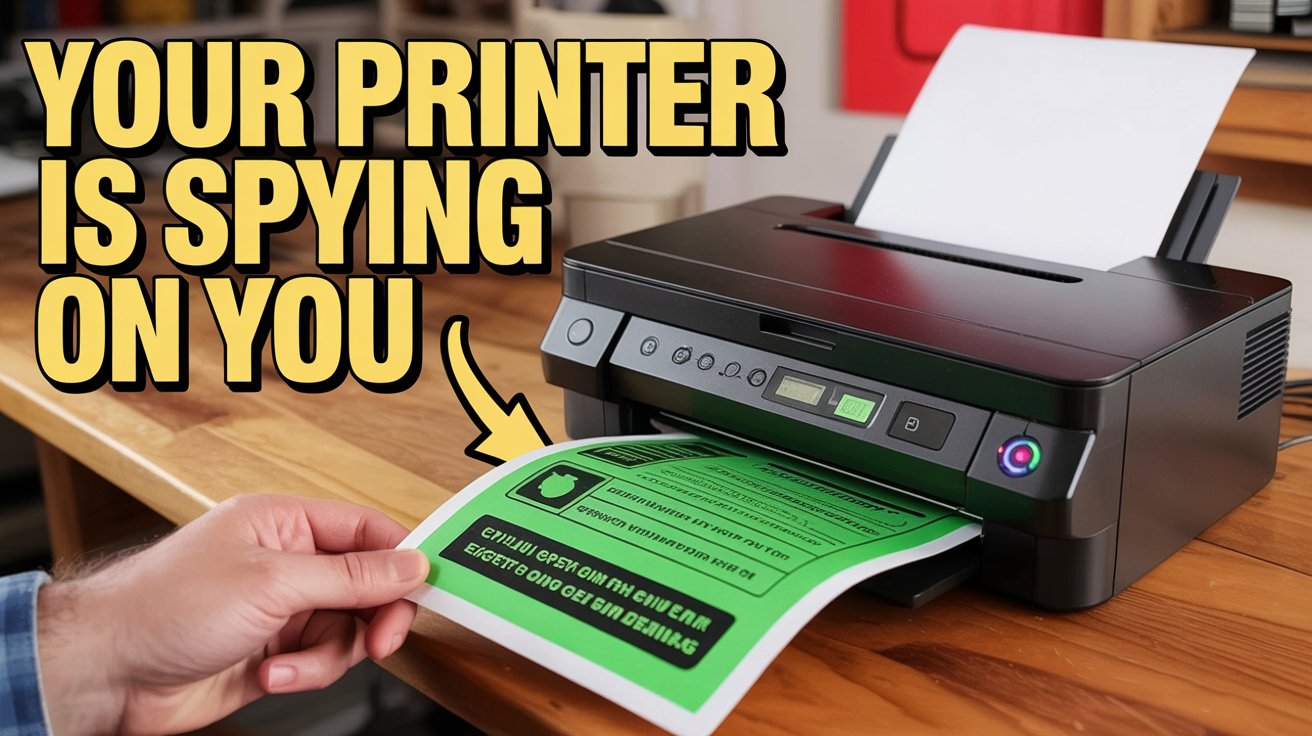
Reality Winner learned the hard way that printed pages carry invisible forensic fingerprints.
When NSA contractor Reality Winner leaked classified documents about Russian election interference in 2017, she thought scanning and sharing the papers would protect her identity. Instead, security researchers quickly spotted nearly invisible yellow dots scattered across the leaked pages—dots that revealed her printer’s serial number, model, and the exact time she printed the documents. Your color printer has been doing this to every page you’ve printed for over two decades.
The Secret Life of Steganographic Surveillance
Major printer manufacturers embed unique tracking codes in microscopic yellow patterns across your documents.
Those innocent-looking pages emerging from your HP, Canon, Xerox, or Brother printer carry a hidden payload. Color laser printers and copiers have embedded Machine Identification Codes since the mid-1980s—tiny yellow dots forming steganographic patterns that encode your device’s serial number and timestamp.
The dots are nearly invisible to the naked eye but reveal themselves under blue LED light or digital enhancement. According to the Electronic Frontier Foundation, this system emerged from “secret agreements between governments and the printer industry,” with the U.S. Secret Service as a key partner.
From Anti-Counterfeiting to Universal Tracking
What started as currency protection became a forensic tool affecting anyone who prints sensitive documents.
Xerox pioneered the technology in its DocuColor line to combat counterfeit currency concerns. The logic seemed reasonable: high-quality color printing threatened monetary security. But the EFF’s 2005 investigation revealed the true scope through FOIA documents showing “all major manufacturers of color laser printers” had agreed to make their devices forensically traceable.
The system wasn’t limited to counterfeiting investigations—it could track any document back to its source printer, and through workplace logs, to specific users.
Your Privacy Options Are Limited
Consumer controls to disable tracking remain essentially nonexistent across major printer brands.
If you’re printing anything you’d prefer to keep anonymous—financial documents, medical records, or yes, whistleblower materials—your options are surprisingly narrow. Most manufacturers don’t provide consumer-facing controls to disable tracking dots. The EFF notes this “makes it more difficult to publish any kind of document anonymously,” affecting journalists, activists, and ordinary citizens who assume physical paper offers more privacy than digital files.
Your best bets:
- Stick with monochrome printers
- Avoid networked devices that log user activity
- Experiment with the anonymization tools researchers at TU Dresden released in 2018
Like finding out your smart TV has been listening all along, discovering your printer’s secret surveillance capabilities feels like a betrayal of basic consumer trust—except this one’s been happening since before most of us had email addresses.