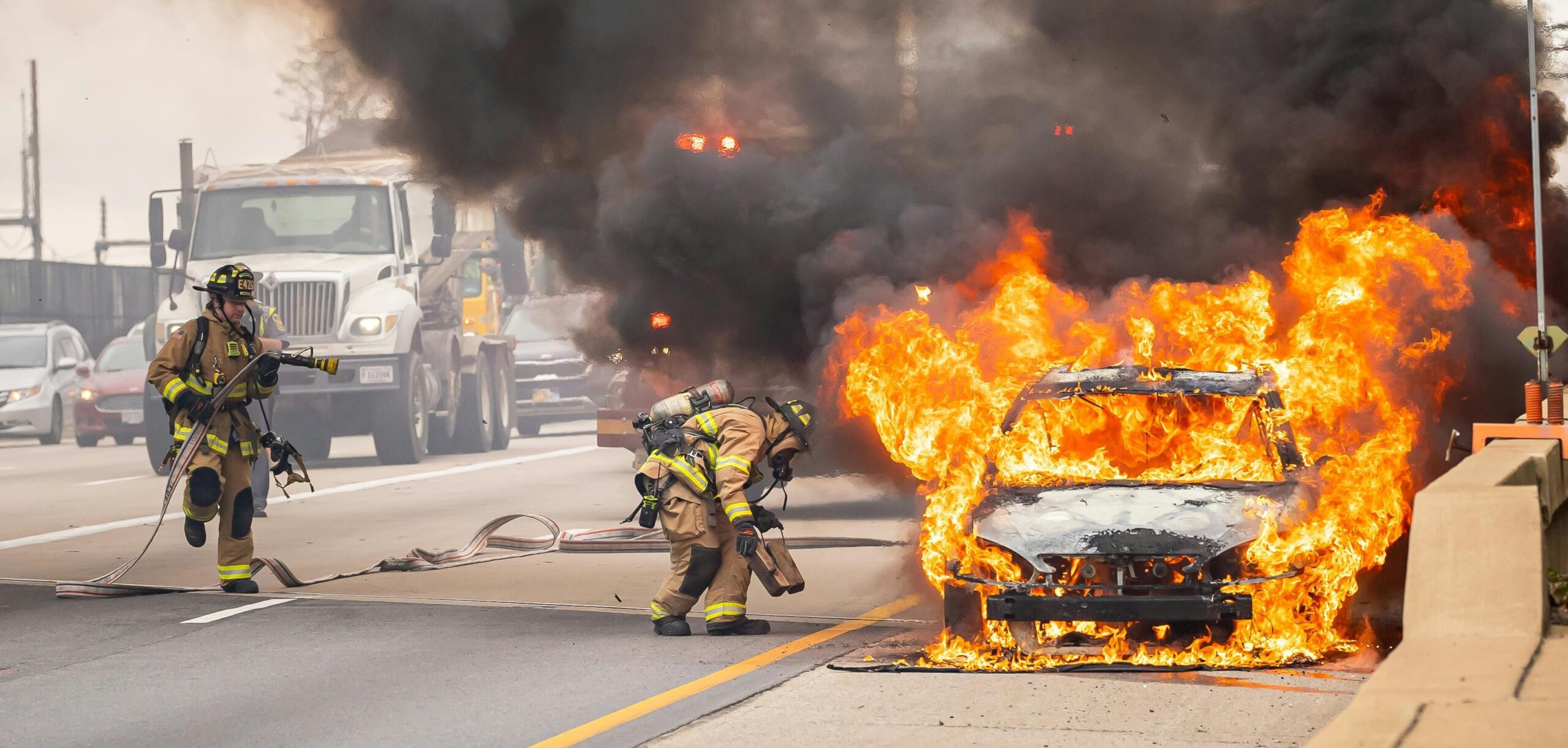
Your garage fire extinguisher won’t help if your EV battery catches fire. Water actually spreads the reaction, foam does nothing, and firefighters now follow a protocol that sounds counterintuitive: isolation, not suppression. Yet before you panic about parking your Tesla next to the lawn mower, consider this—verified EV battery fires occur in just 25 vehicles per 100,000 sold, compared to 1,530 fires per 100,000 gas cars.
Thermal runaway turns a single battery cell failure into a self-sustaining inferno reaching over 1,000°C (1832°F). The reaction generates its own oxygen, making traditional firefighting methods not just useless but dangerous. Water conducts electricity and spreads the chemical reaction. These fires burn for 24+ hours with reignition risk, producing toxic gases like hydrogen fluoride that require neighborhood evacuations.
The Real Numbers Behind the Headlines
Statistical reality shows EVs catch fire far less than gas vehicles.
EV FireSafe has verified 511 battery fire cases worldwide since 2010—a dataset that reveals both the rarity and the challenges. While dramatic when they occur, these incidents represent roughly 0.025% of the global EV fleet. Norway provides compelling context: EVs make up 28% of their vehicle fleet but account for only 7% of car fires.
Manufacturing defects drive many cases, explaining major recalls like:
- Chevrolet’s 70,000 Bolt EVs
- Hyundai’s 82,000 Kona EVs
Charging stress reveals battery faults in 18-30% of incidents, while collisions and flooding create additional risks. The good news? Post-recall fire rates have dropped significantly as manufacturers improve battery management systems.
Your Garage Becomes Ground Zero
Residential fires create unique challenges beyond the vehicle itself.
Home garage fires spread through radiant heat, not just flames. Your EV fire becomes your neighbor’s problem when toxic gases seep into surrounding homes and contaminated runoff threatens local water systems. Tesla incidents have prompted multi-block evacuations, though these remain exceptional events rather than routine occurrences.
Current protocols require firefighters to establish large perimeters and monitor for days—not exactly reassuring when the fire starts in your attached garage. Yet the statistical risk remains lower than your gas car spontaneously combusting during a routine trip to Target.
The evolving reality: your EV is statistically safer than conventional vehicles, but when problems occur, they’re harder to solve. New battery technologies and improved monitoring systems promise to reduce both frequency and severity, making thermal runaway the engineering challenge it should be rather than the consumer nightmare it sometimes becomes.