Your GPS glitched during yesterday’s commute, and streaming services stuttered across the Pacific. The culprit wasn’t your internet provider—it was a monster solar flare that just reminded us how fragile our tech-dependent world really is.
Record-Breaking X8.11 Flare Disrupts Communications
The strongest solar outburst of 2026 knocked out radio signals across multiple continents.
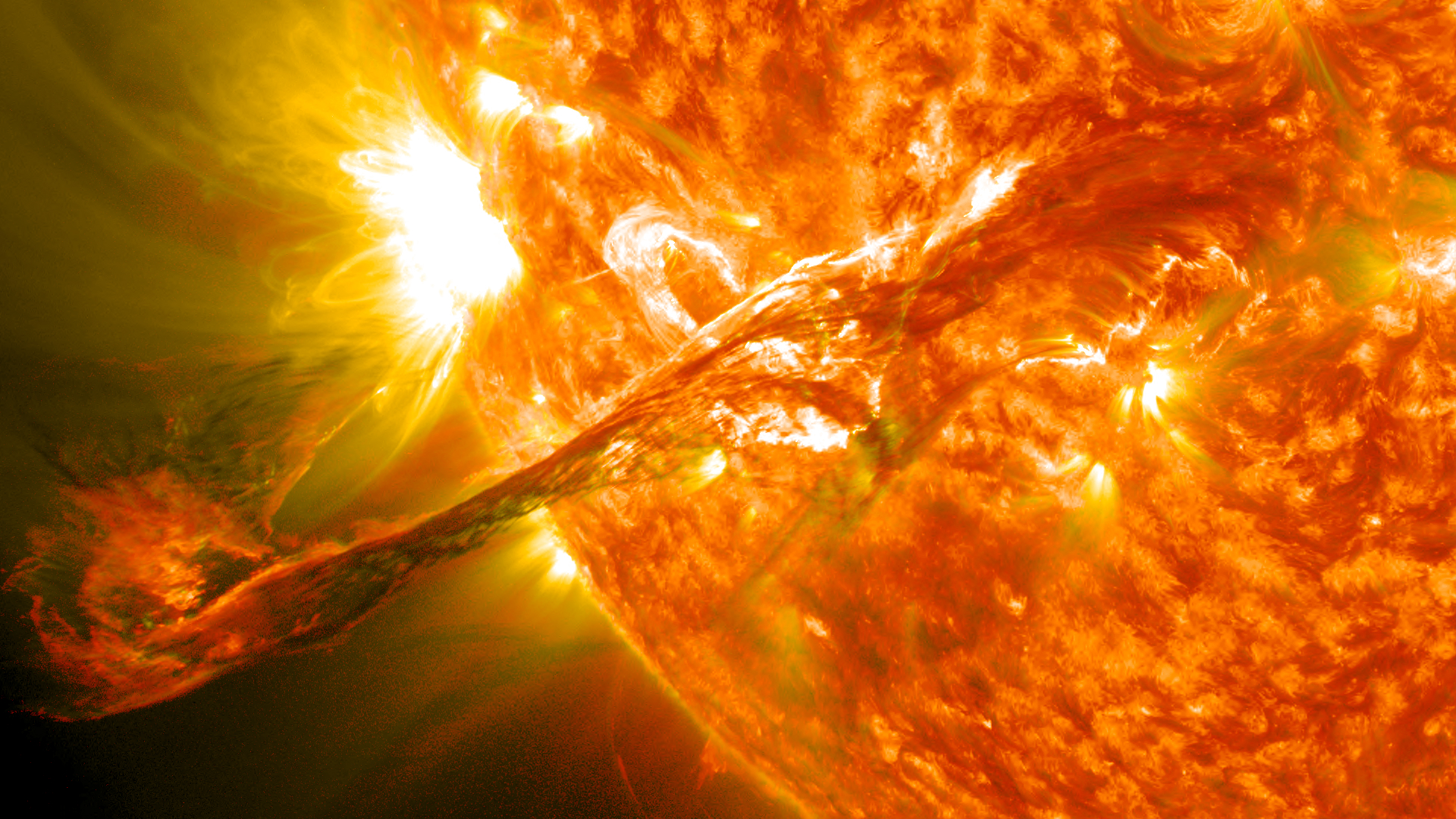
On February 1 at 23:57 GMT, sunspot AR4366 unleashed an X8.11-class solar flare—the most powerful we’ve seen this year. The blast immediately triggered R3-level radio blackouts across the South Pacific, eastern Australia, and New Zealand, wiping out shortwave communications below 20-30 MHz for hours.
Think of it like cosmic interference jamming every radio frequency, affecting everything from aviation communications to ham radio operators trying to check in with distant friends. The ionization of Earth’s upper atmosphere essentially created a dead zone for certain frequencies, leaving pilots and emergency services scrambling for alternative communication methods.
Incoming Magnetic Storm Threatens Your Devices
A coronal mass ejection from the same sunspot is racing toward Earth with tech-disrupting potential.
The flare launched a coronal mass ejection (CME)—essentially a billion-ton cloud of charged particles—that’s expected to deliver a glancing blow to Earth around February 5-6. NOAA’s Space Weather Prediction Center warns of potential G1 geomagnetic storms, which sounds mild until you consider what that means for your gadgets.
We’re talking possible GPS interference during critical navigation, satellite service hiccups affecting everything from Starlink to DirectTV, and minor power grid fluctuations that could mess with sensitive electronics. While G1 storms are classified as “minor,” they still pack enough punch to disrupt the satellite constellations your daily tech relies on.
The Sunspot Behind the Chaos Keeps Growing
AR4366 has rapidly expanded to become a solar threat comparable to the infamous Carrington Event.
This isn’t some random cosmic burp. Sunspot AR4366 emerged in late January and quickly grew to nearly 10 times Earth’s width—roughly the same size as the sunspot that caused the 1859 Carrington Event, which fried telegraph systems worldwide.
In just 24 hours from February 1-2, this “solar flare factory” produced 27 eruptions, including four X-class flares. The sunspot remains highly active and continues rotating toward a more Earth-facing position, meaning we could see more tech-rattling events over the next week. Solar flares are classified on an A-to-X scale, with X-class being the most intense and capable of accelerating particles across the electromagnetic spectrum.
What This Means for Your Connected Life
Modern technology faces new vulnerabilities as solar activity peaks during Solar Cycle 25.
Your smartphone’s GPS might experience temporary glitches, streaming services could buffer unexpectedly, and smart home devices may briefly lose connectivity. While we’re not facing a civilization-ending Carrington-level event, these minor disruptions highlight how dependent we’ve become on space-based infrastructure.
The 2024 geomagnetic storms already showed us what happens when solar fury meets satellite constellations—and we’re entering Solar Cycle 25’s maximum phase. Keep an eye on space weather forecasts through apps or NASA’s alerts. The silver lining? If you’re in northern latitudes, you might catch some spectacular auroras dancing across the sky this week.