But Can You Trust That Timeline for Your Next Purchase?
While Ford bleeds $19.5 billion on electric vehicle development, Volvo‘s CEO dropped a bombshell that could change your car-buying timeline forever. Håkan Samuelsson claims electric cars will “most probably be lower in cost than a combustion car” within five years—and here’s the kicker: Volvo’s EV operations are already turning a profit. If you’ve been sitting on the fence about when to make the switch, this prediction deserves your attention.
The Profitability Puzzle: Volume Over Margins
How Volvo makes money while competitors lose billions
Samuelsson’s math works differently than Ford’s disastrous approach. Volvo’s electric vehicles operate with slimmer margins than their gas counterparts, but the company isn’t selling them at a loss. “Our company’s more profitable now as we have EVs,” Samuelsson declared during a Stockholm briefing, emphasizing that “if we did not have EVs we would be less profitable.”
The secret sauce? Volume drives total profit even when individual unit margins shrink. Volvo’s EV sales surged 54% in 2024, representing 23% of total global sales. Think of it like Netflix’s streaming strategy—lower per-unit profit but massive scale creates sustainable business.
For you as a buyer, this means Volvo has skin in the game rather than treating EVs as an expensive experiment.
Manufacturing Magic: Russian Dolls to Smart Design
The engineering innovations that will slash EV costs by 2027
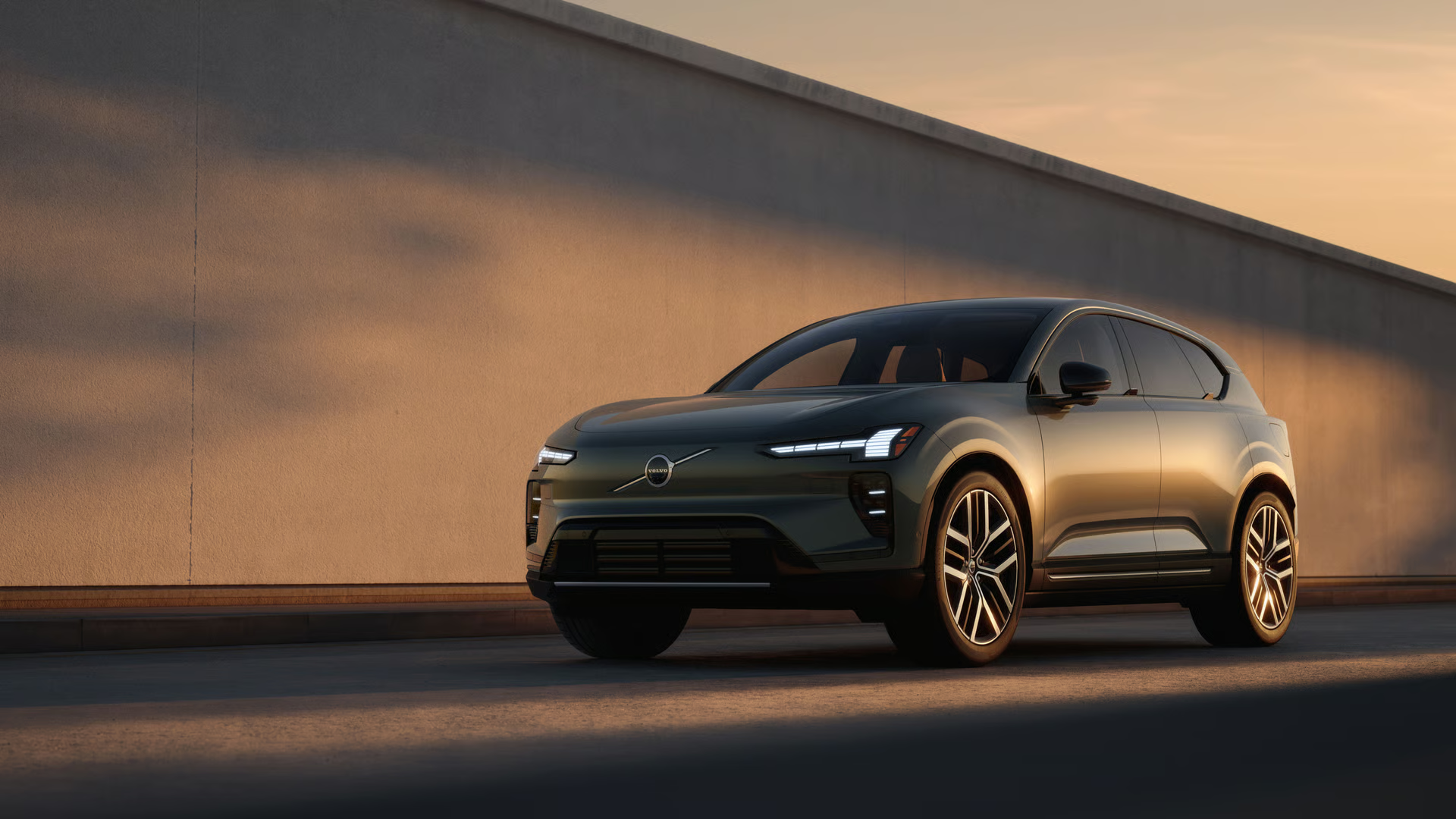
Volvo’s cost-reduction strategy reads like a masterclass in manufacturing efficiency. The 2027 EX60 introduces:
- Cell-to-body integration
- Mega castings
- Elimination of “Russian doll” design—batteries placed in boxes within boxes
Instead, cells integrate directly into the vehicle body, cutting structural complexity and material costs. Add in-house motor development, hardware synergies with Geely, and a strategic shift from expensive NMC batteries to cheaper lithium iron phosphate chemistry, and you get margin parity with gas vehicles.
Samuelsson takes a refreshingly pragmatic stance on waiting for breakthrough technology like solid-state batteries: “If you wait for that you probably will not be in the market anymore.” Translation: buy what works now, not what might work eventually.
The timeline matters for your wallet. Volvo’s 2027 EX60 should achieve near-equal margins with gas equivalents, suggesting genuine cost parity rather than subsidized pricing. Whether other manufacturers can match this timeline remains unclear, but Volvo’s profitable head start gives them credibility most competitors lack.