




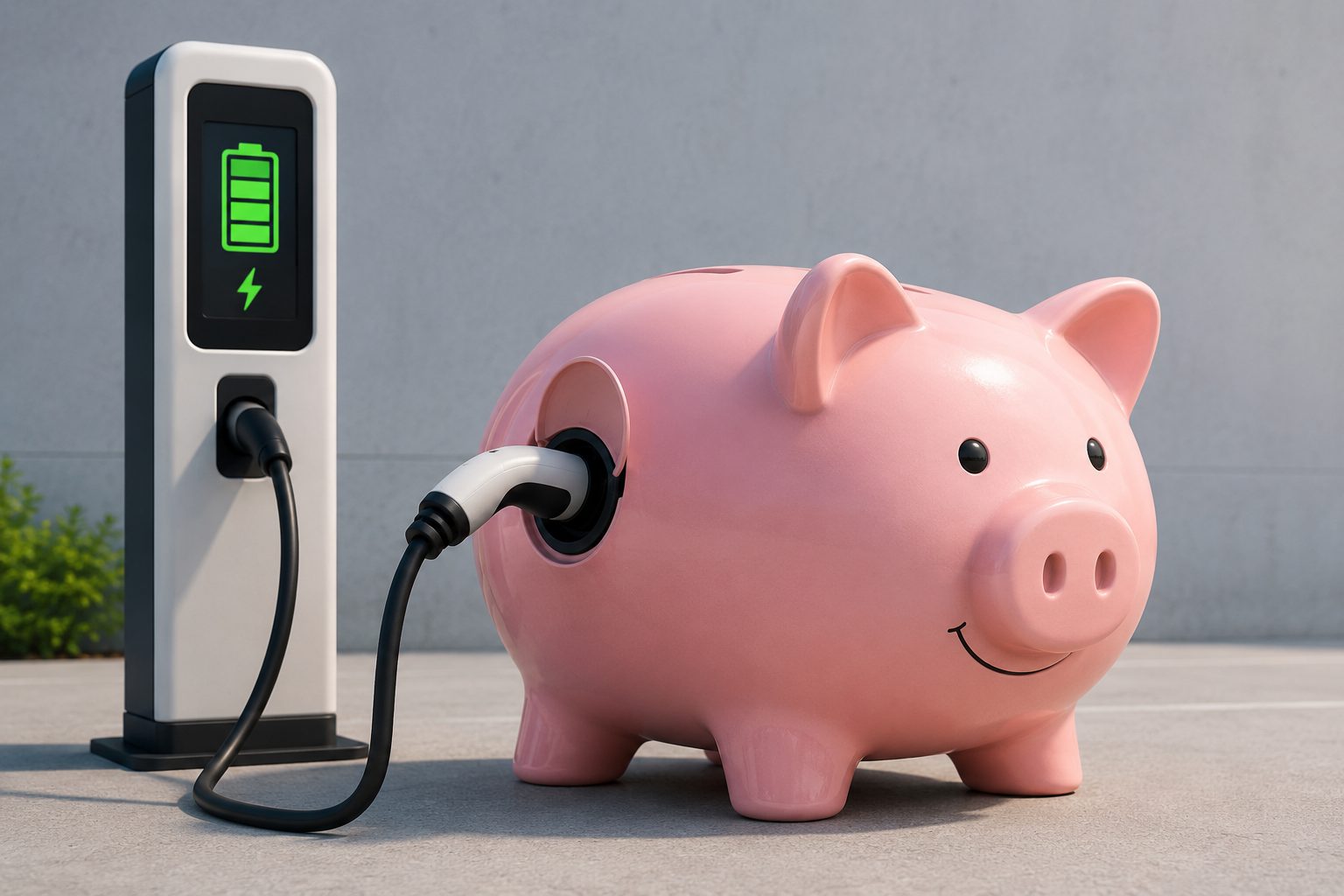
That sleek Tesla in your driveway isn’t just transportation anymore—it’s infrastructure. Vehicle-to-grid technology promises to turn your EV into an energy-trading powerhouse, letting you charge cheap and sell dear while helping stabilize the grid. Sounds like a win-win, until you realize who’s really winning.
The Two-Way Street You Didn’t Ask For
Unlike smart charging, this tech lets utilities drain your battery remotely.
Regular smart charging simply times your car’s charging for cheap, off-peak hours—your EV stays a one-way energy consumer. V2G flips that script entirely. Bidirectional chargers can reverse the flow, pulling stored electricity from your battery back into the grid when demand spikes. Your privately-purchased battery becomes a distributed power plant they can tap at will.
Currently, very few chargers and EVs support true bidirectional operation, keeping V2G in pilot-program territory. The technology remains in its infancy and is described as “a long way off” from being standard in typical homes. The Nissan Leaf was among the early adopters, particularly in Japan where regulations pushed the technology harder. But as more automakers build V2G capability into their platforms, your next EV might come with strings attached.
Who Really Owns Your Electrons?
You pay for the battery, bear the replacement risk, but utilities capture most value.
Here’s the uncomfortable math: every V2G discharge cycle subjects your battery to additional wear beyond normal driving. While industry advocates claim smart management minimizes degradation, the economic risk sits entirely with you. Premature capacity loss affects your range and resale value, but the utility bears none of the replacement cost unless explicitly covered by warranty terms—which isn’t universally standard.
Meanwhile, utilities get access to flexible storage cheaper and faster than building equivalent centralized battery farms or peaker plants. That system-level savings rarely translates to meaningful compensation for individual owners. The spread between retail rates you pay to charge and the compensation rate you get to discharge determines whether you profit or effectively subsidize the grid.
Take Back Control
Three ways to keep your battery yours.
- Hardware lockouts: stick with unidirectional chargers or configure smart chargers to disable export functions entirely
- Audit every contract: your EV’s connected services agreement, charger cloud terms, and utility tariffs all govern V2G participation
- Demand per-event consent: insist on manual confirmation for every export event to keep you in the driver’s seat
Look for language about “demand response,” “grid services,” or “energy flexibility programs” and opt out where possible.
Current V2G platforms typically control discharge through automated schedules via software rather than requiring your explicit approval for each energy release. Insisting on manual confirmation for every export event keeps you in the driver’s seat—literally.
The clean energy future shouldn’t turn EV owners into unpaid grid operators. Smart money protects its battery autonomy until the compensation actually matches the convenience.


























