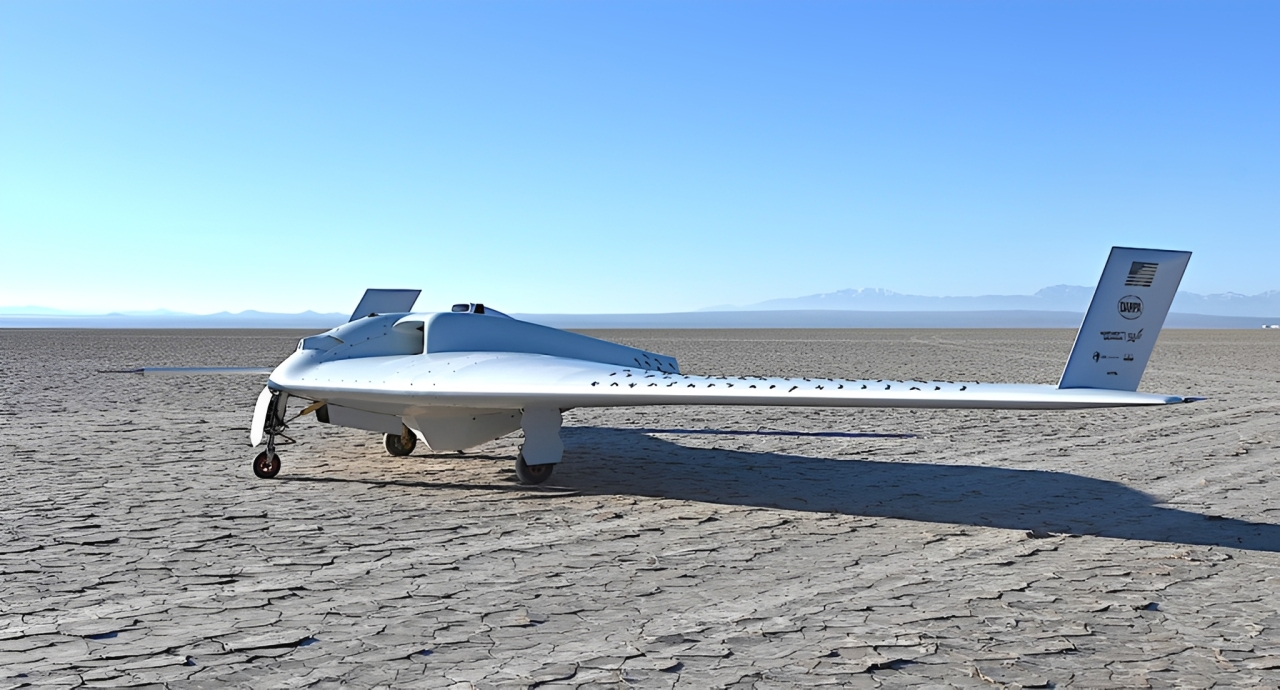
Military surveillance just got a Tesla-style upgrade. DARPA’s XRQ-73 SHEPARD completed its maiden flight in April 2026, proving that hybrid-electric propulsion can power stealth drones through contested airspace where traditional platforms get shot down. This isn’t another Pentagon experiment—it’s a validation of technology that could fundamentally change how America conducts intelligence missions.
Silent Running Meets Strategic Power
The 1,250-pound flying wing combines a gas turbine generator with electric motors, delivering the endurance of traditional fuel with the whisper-quiet operation electric systems provide. This delivers extended loiter time over enemy territory without the acoustic signature that gives away surveillance platforms. Think of it as the Prius principle applied to spy planes—maximum efficiency when stealth matters most.
Design Evolution From Paper to Sky
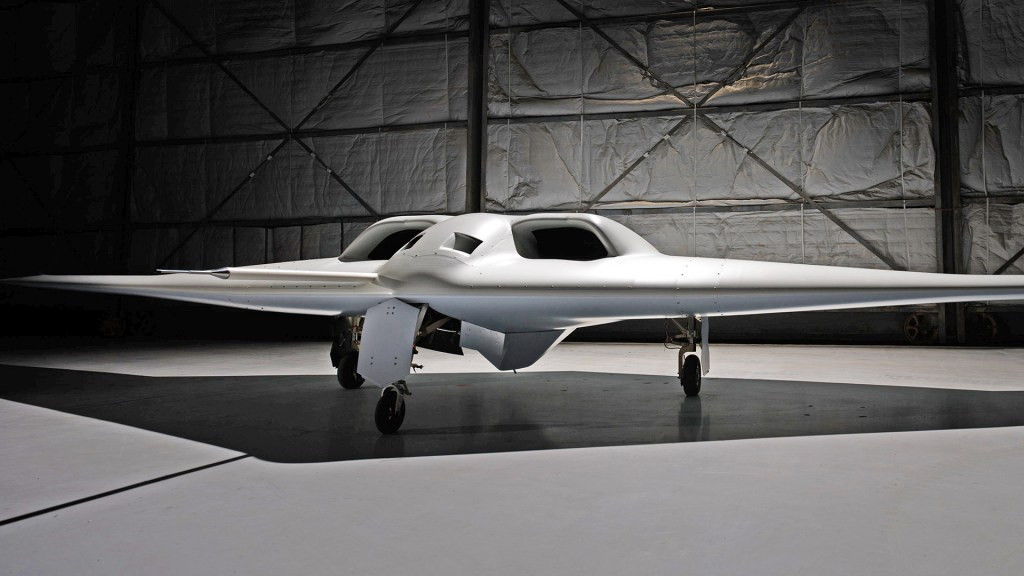
Since its 2024 unveiling, the XRQ-73 has gained:
- Two vertical stabilizers
- A dorsal air intake
- Forward-facing camera housing that resembles fighter jet aesthetics
These aren’t cosmetic changes—they solve real problems with stability, cooling, and situational awareness that emerged during ground testing. The B-2 Spirit-inspired flying wing design retains its low-observable characteristics while adding practical improvements that delayed but ultimately validated the concept.
Filling the Vulnerability Gap
Traditional surveillance drones like the MQ-9 Reaper become expensive targets in environments where adversaries deploy advanced air defenses. The XRQ-73’s hybrid propulsion enables persistent intelligence gathering with reduced signatures—infrared, acoustic, and electromagnetic—that keep operators alive longer in hostile territory. It’s specifically designed for the kind of great power competition scenarios where losing a $30 million drone to hypersonic missiles becomes strategically problematic.
Proof of Concept Becomes Battle-Ready Blueprint
“This milestone is not just about a single flight. The architecture proven by the XRQ-73 paves the way for new types of mission systems,” according to DARPA program manager Lt. Col. Clark McGehee. Northrop Grumman leveraged 500,000+ hours of autonomous flight testing to achieve this breakthrough, while General Atomics’ competing GHOST hybrid drone program creates healthy pressure for rapid development.
Contested airspace demands platforms that survive long enough to complete their missions. The XRQ-73’s successful flight demonstrates that hybrid-electric propulsion delivers the stealth and endurance combination military planners need for future conflicts.