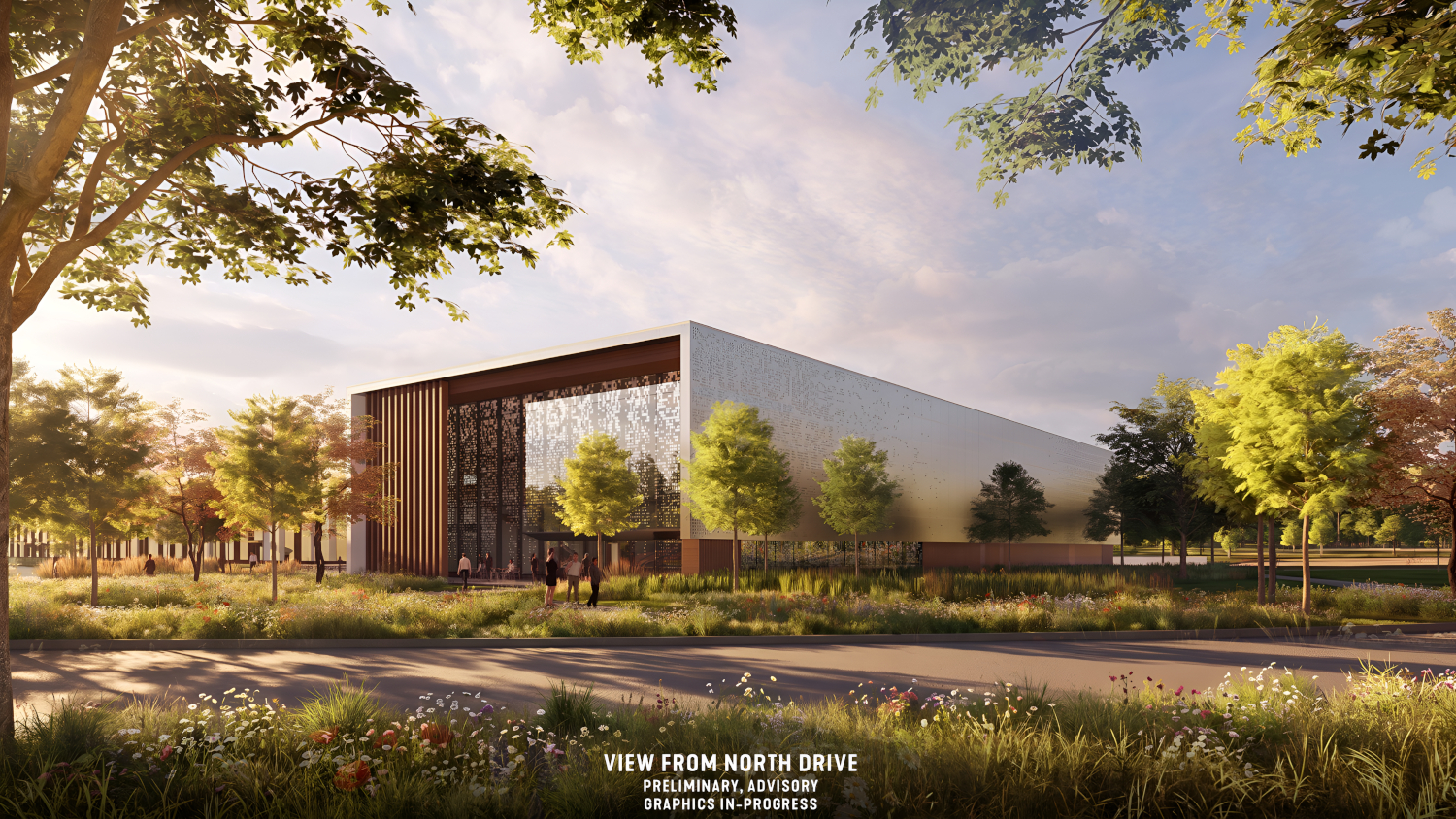
A 7–1 board vote clears the path for a $1.25 billion project where Los Alamos National Laboratory would occupy roughly 90% of capacity. Ypsilanti Township says it will sue.
The facility would occupy a 144-acre Textile Road site, described in university materials as a 124-acre development parcel plus a separate 20-acre parcel set aside for electrical infrastructure. Construction is expected to begin in late 2027, with the facility expanding across two phases to approximately 290,000 square feet.
The regents authorized construction costs of up to $785 million for both phases. The total project investment has been reported at approximately $1.25 billion, with the first phase estimated at roughly $450 million.
Facility Use Split Is Central to the Dispute
According to reporting, Los Alamos National Laboratory would occupy roughly 90% of the facility, while U-M would use approximately 50,000 square feet, or about 10%.
LANL is a federal laboratory with a central role in U.S. nuclear-weapons research. Critics argue the facility functions primarily as computing infrastructure for nuclear-weapons design, not as the general medical or scientific resource that university materials describe.
Competing Narratives on the Facility’s Purpose
U-M describes the project as a research computing center capable of supporting cancer research, medical breakthroughs, and engineering work.
In a letter to township residents, LANL stated it would not build nuclear weapons at the Ypsilanti site. Opponents respond that their concern is computational support for weapons design, not physical manufacture.
A secondary dispute involves terminology. U-M calls the facility a high-performance computing center rather than a data center; critics say the distinction is inadequate because the practical demands on electricity, water, and land are, in their view, functionally identical.
The Township Has Already Been Fighting
Before the regents voted, Ypsilanti Township had moved twice to constrain the project through infrastructure controls.
Its water authority voted in May to restrict new infrastructure construction for data-center projects while reviewing effects on the local water supply; U-M called that action unlawfully discriminatory. In August, the township adopted a six-month moratorium on new electrical infrastructure.
A Community Divided
Labor representatives and project opponents arrived at the same regents meeting with opposite conclusions.
Labor supporters cited projections of more than 300 local construction jobs the project would generate. Faculty, students, staff, and residents raised objections at the public meeting, citing environmental impact, water and electricity consumption, and what they described as the absence of meaningful community consent.
What Comes Next
Township officials vowed to continue opposing the facility after the vote, with litigation among the stated next steps.
Expected pressure points include court filings, environmental and water-impact reviews, electrical-infrastructure decisions, and construction contracting. Whether LANL’s work at the site will be subject to public disclosure, or shielded by federal classification rules, remains an unresolved question for oversight of the project.