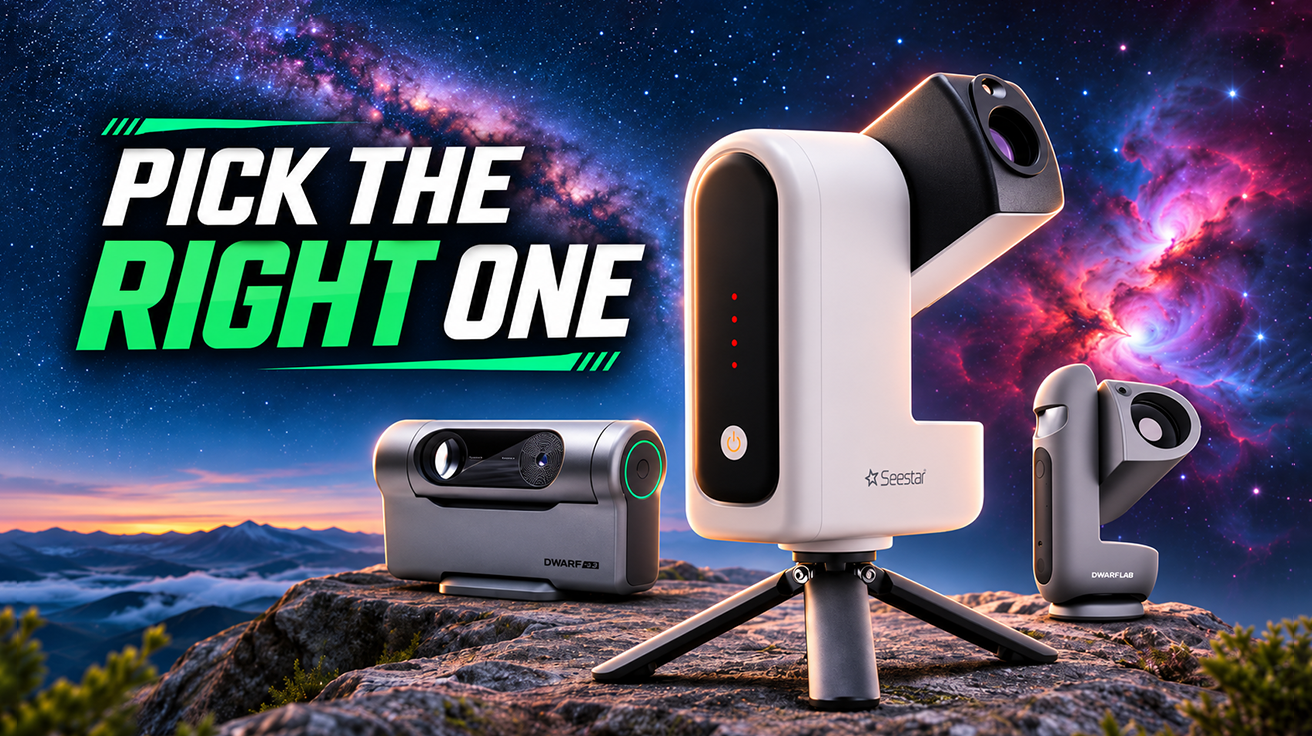
Astronomy once demanded expensive setups and arcane knowledge, but app-controlled smart telescopes now put deep-sky imaging in anyone’s hands. These compact devices automate alignment and tracking, turning astrophotography from an engineering challenge into an accessible hobby. For 2026, the sweet spot sits between $400 and $1,600, where DWARFLAB and ZWO Seestar deliver automated setup and serious imaging power. Ready to capture galaxies, nebulae, and planets without the traditional learning curve?
This content may contain affiliate links. If you wish to support us and use these links to buy something, we may earn a commission.
5. Dwarf Mini
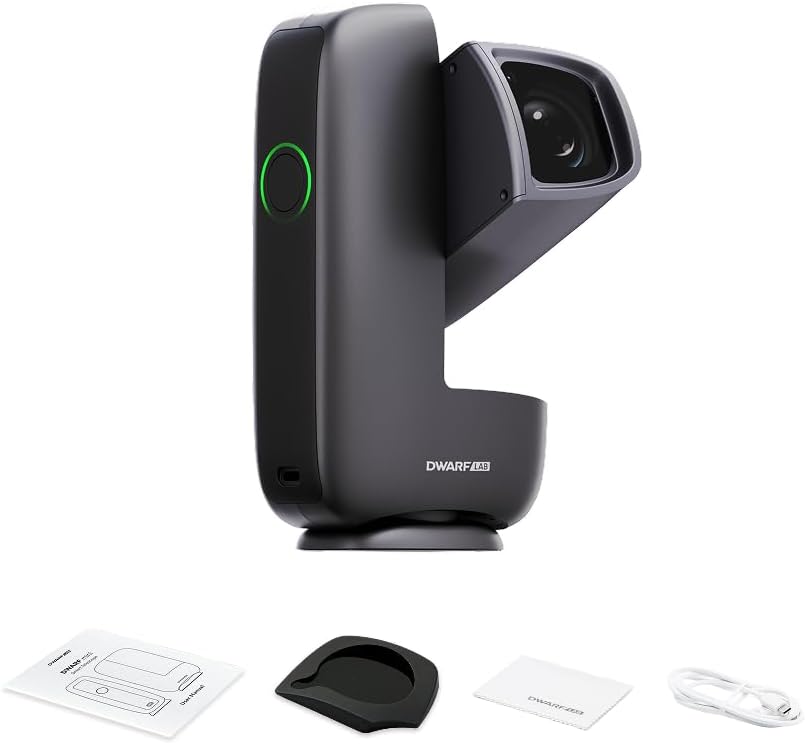
The ultra-portable entry point that fits in a backpack and costs less than most camera lenses.
Weighing only 840 g (1.85 pounds), the Dwarf Mini meets demand for genuinely portable astrophotography. Its compact body houses approximately a 30 mm aperture and a 2 MP camera supporting 90-second exposures. The design strips away typical complexity, making it ideal for beginners capturing their first nebula or lunar crater.
Battery life reaches approximately four hours, with 360° horizontal rotation providing full-sky coverage. The $89 tripod sells separately, as does the carrying bag depending on your package. This model positions itself as an accessible gateway into smart astrophotography, particularly for travelers who refuse to check luggage just to see Saturn’s rings.
4. Dwarf 3
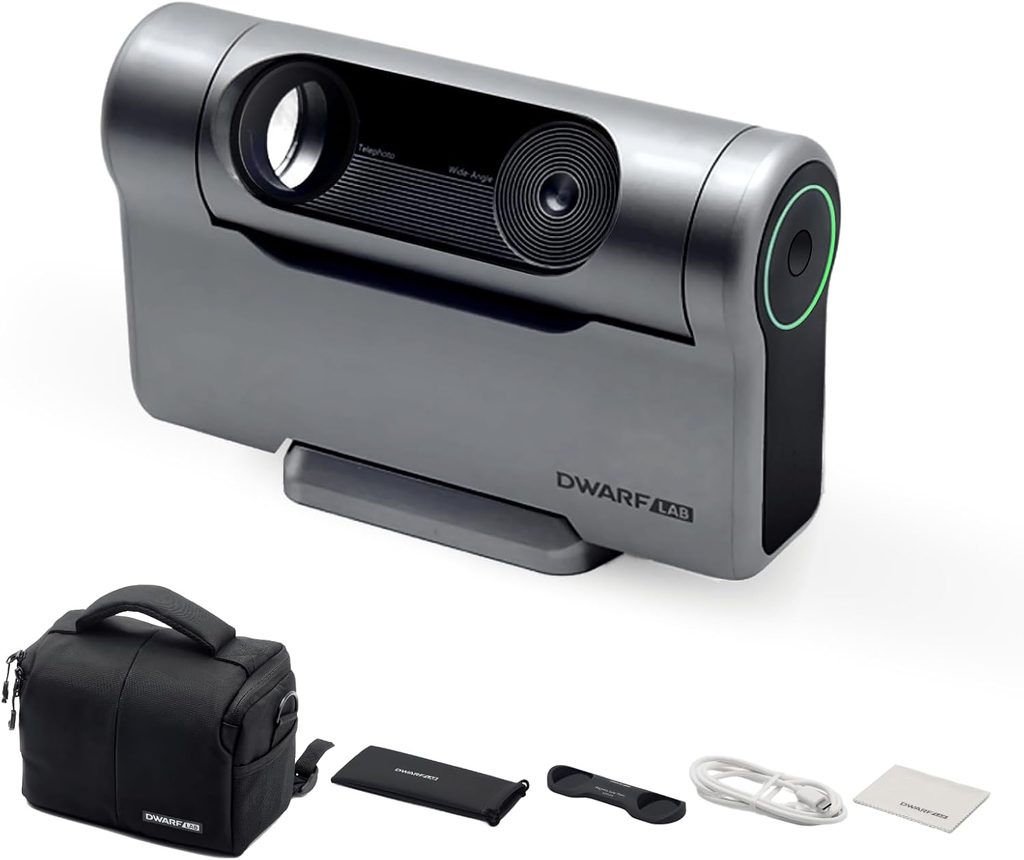
A substantial imaging upgrade that keeps portability while quadrupling sensor resolution.
Standard entry-level telescopes deliver basic views, but the Dwarf 3 pushes well beyond that threshold. It deploys a 35 mm aperture telephoto lens paired with an 8.3 MP Sony IMX678 STARVIS 2 sensor. That four-fold resolution jump over the Mini captures considerably more light and detail, transforming fuzzy blobs into recognizable celestial structures.
The hardware upgrade delivers notably better photo quality without a proportional price increase. Maximum exposure time reaches 60 seconds. A carry bag may be included depending on your sales package, though the tripod remains a separate $89 purchase. Heavier than the Mini yet still manageable for transport, this model offers a compelling middle ground for aspiring astrophotographers who’ve outgrown starter gear.
3. Seestar S30 Pro
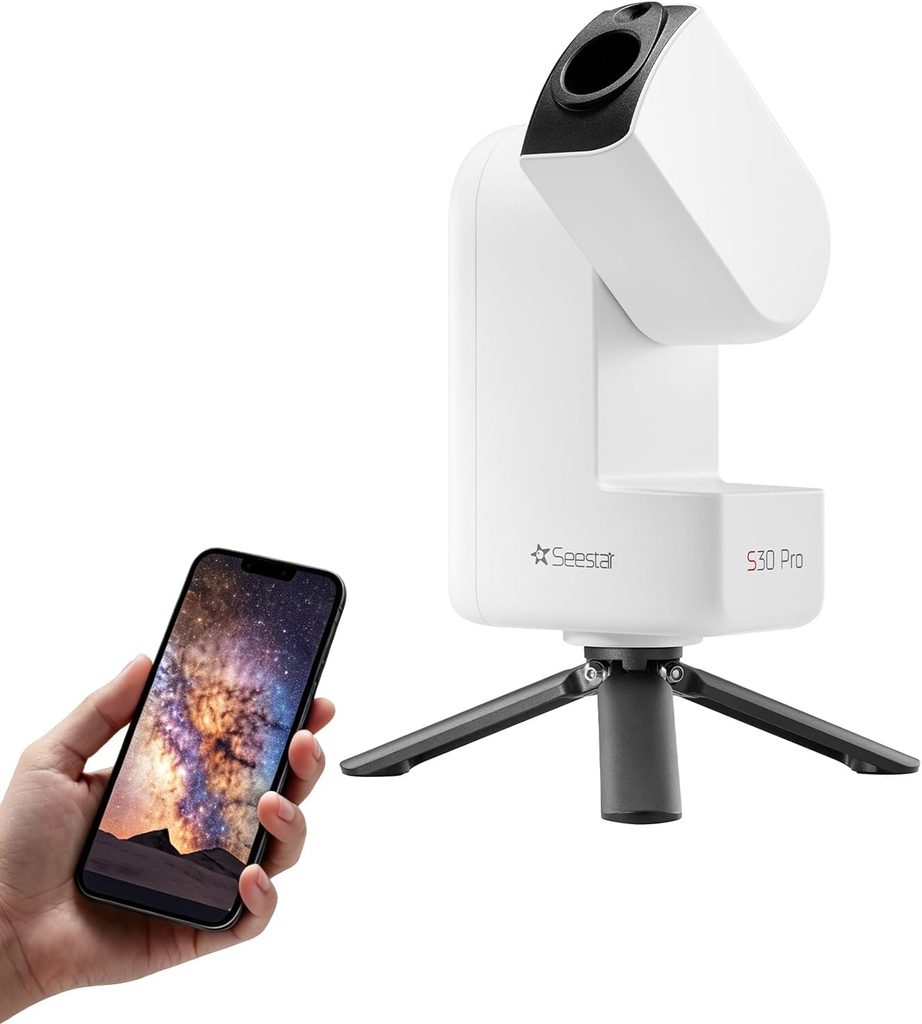
Dual cameras tackle both tight deep-sky framing and sweeping Milky Way panoramas in one portable package.
The S30 Pro deploys two distinct imaging systems rather than forcing a single-camera compromise. Its primary telephoto setup uses a 30 mm aperture, 160 mm focal length, and 8.3 MP Sony IMX585 sensor. A four-element apochromatic lens with ED glass is designed to provide sharp detail across its 4.6° telephoto field of view, suited for nebulae and distant galaxies.
The second 8.3 MP wide-angle camera captures a sprawling 63° field of view, enabling Milky Way imaging and star trails. Internal storage reaches 128 GB; the 6,000 mAh battery delivers approximately six hours under manufacturer testing. Weighing 1.65 kg (3.6 lbs) before adding a tripod, it remains highly portable. A magnetic solar filter enables safe solar imaging. This dual-camera approach eliminates the typical either-or choice between tight framing and wide landscapes, handling both in a single session.
2. Seestar S50 Pro
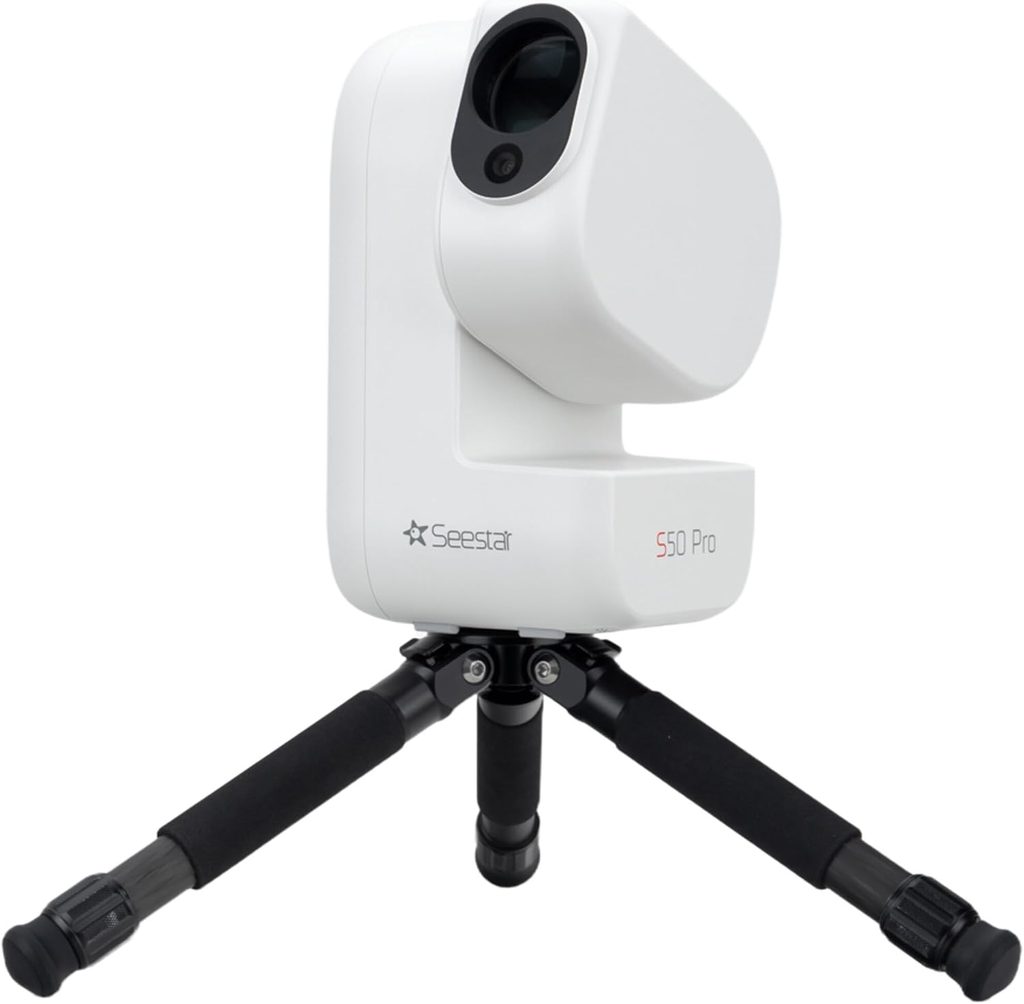
Serious aperture and extended battery life for astrophotographers who prioritize optical performance over extreme portability.
A 50 mm aperture and 260 mm focal length enhance light-gathering substantially compared to the S30 Pro. The telephoto camera delivers 8.3 MP resolution with a 2.8° field of view, while the secondary wide-angle camera provides 8.3 MP across a 63° span. Its four-element apochromatic optical system incorporates ED glass across the tighter telephoto view.
The 10,000 mAh battery supports up to nine hours under ZWO laboratory conditions. Built-in dual-band light-pollution filtering and a dark-frame filter streamline processing. Storage capacity matches the S30 Pro at 128 GB. Weighing approximately 2.8 kg (6.2 lbs), it’s noticeably larger and heavier. Package contents vary by region and bundle, but many configurations include a tripod and carry case. Users seeking superior light-gathering and tighter framing appreciate its capabilities, accepting the portability trade-off.
1. DWARFLAB Draco
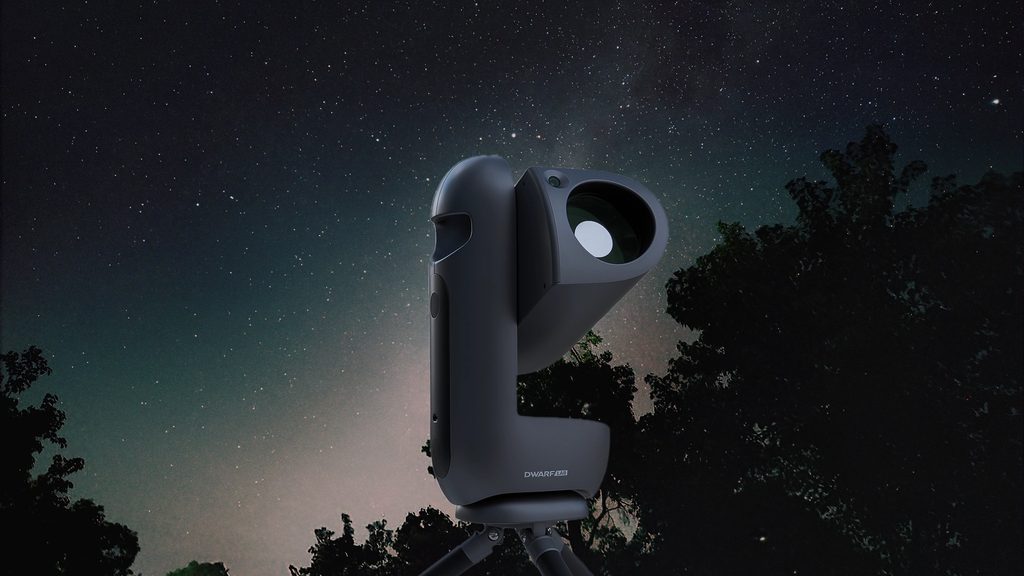
Premium aperture and advanced imaging features typically reserved for gear costing twice as much.
Astrophotographers prioritizing maximum imaging performance find Draco’s 90 mm aperture and 340 mm focal length compelling. The f/3.8 optical system gathers substantial light for faint deep-sky objects. Its approximately 50 MP native sensor outputs approximately 12 MP deep-sky images using 2×2 pixel binning, ranking among the highest effective resolution in this price class. A secondary wide-angle camera expands observational versatility.
Advanced features include exposures up to 300 seconds, built-in guiding, and physical field-rotation correction for long-duration imaging. The SHO edition adds a narrowband filter designed primarily for nebula imaging. Official pricing sits at $1,599 on the DWARFLAB product page, though some regional listings show $1,399. Standard packages include a tripod, protective carrying case, and external ND filter.
Weighing approximately 5.5 kg (12.1 lbs), roughly double the S50 Pro, Draco trades portability for superior imaging capability and professional-level tools. Backyard observers who rarely relocate their setup appreciate the performance; frequent travelers should look elsewhere.