
GPS jamming is not a theoretical inconvenience in Ukraine; it is a recurring operational problem along contested front lines. Yaroslav Sheiko, an 11th-grade student from Poltava, built an AI-assisted autopilot system designed to guide drones to operator-selected destinations even when satellite positioning signals are disrupted or unavailable.
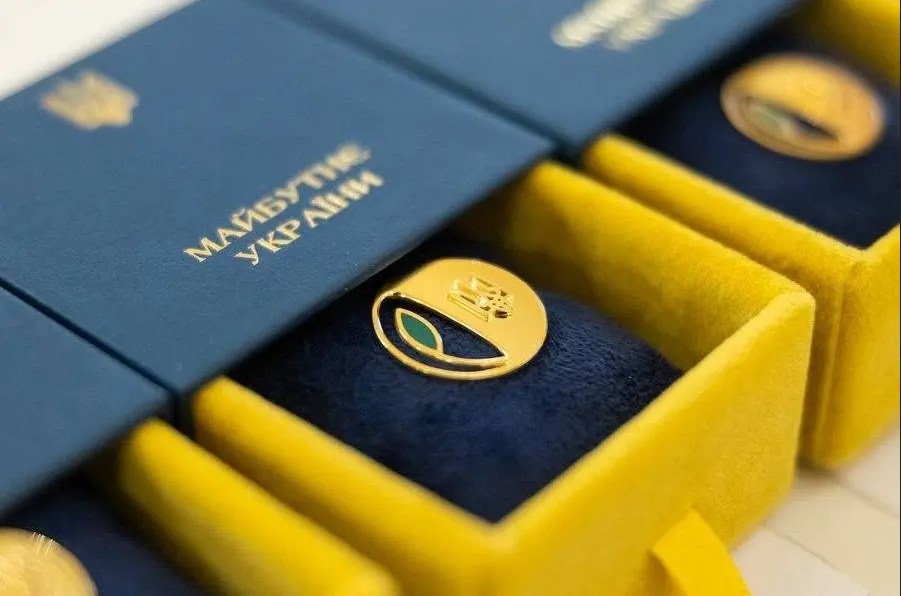
Ukraine’s President awarded Sheiko the “Future of Ukraine” presidential distinction for the achievement.
Why Navigation Without GPS Matters Here
Disrupted satellite positioning can push conventional drone navigation systems into confusion or failure, making GPS-independent flight control a practical engineering priority.
GPS jamming and spoofing can interfere with conventional drone positioning, according to reporting on the conflict’s electronic-warfare environment. When satellite navigation is unavailable, a drone relying on it may drift off course or trigger an automatic return, making it ineffective for its mission.
Starlink is primarily a communications and data-connectivity service, not a navigation system. Sheiko’s system targets a different dependency: knowing where the aircraft is and where it needs to go, without relying on global navigation satellites.
These are related problems but separate engineering challenges. Solving one does not solve the other.
What the System Actually Does
Sheiko’s reported system guides a UAV toward a destination using AI-powered flight control, though the full technical details have not been made public.
His reported invention guides a UAV toward a destination without conventional satellite positioning. It reportedly combines AI-powered flight control with optical-electronic stabilization to support navigation, observation, and aircraft control, with reporting describing operation relatively close to the ground.
The specific sensors, algorithms, onboard hardware, and machine-learning models behind the system were not identified in available public reporting. No verified figures were identified in the available reporting for navigation accuracy, operational range, altitude ceiling, or performance under active jamming conditions.
What It Does Not Claim
Navigation autonomy addresses one layer of drone vulnerability; other signal dependencies remain.
GPS-independent navigation does not make a drone immune to electronic interference more broadly. A system that navigates without satellite signals may still depend on other signal links that adversaries can target.
Drone resilience stacks in layers: navigation autonomy addresses where the aircraft goes, while communications resilience addresses whether operators can monitor or redirect it in real time. Sheiko’s project appears to address the first layer. Calling it “anti-jamming” in a general sense would go beyond what available reporting supports.
A Competitive Record That Stands Alone
Sheiko’s award history reflects a consistent track record in aerospace and defense-technology competition, both nationally and internationally.
Sheiko has reportedly won first place twice in nationwide competitions run by Ukraine’s Junior Academy of Sciences, in an aerospace and defense-technology category. The official presidential announcement confirms he is a recipient of a Presidential Scholarship for scientific research.
His international results include a gold medal at the INOVA 2025 International Inventions Show in Croatia and a silver medal at the Engineering HackFest. The “Future of Ukraine” presidential distinction adds to a competition record that is, for a secondary-school student, unusually substantive.
One Piece of a Larger Effort
Ukraine’s drone ecosystem is exploring several alternatives to GPS and Starlink, and Sheiko’s project represents one contribution to that distributed effort.
Ukraine’s broader drone ecosystem is pursuing multiple alternatives to GPS and Starlink simultaneously. According to reporting, these include encrypted radio links, LTE and 5G connectivity, ground-based beacons, optical communications, and additional onboard AI systems.
Sheiko’s work is one contribution to that distributed effort, not a singular fix. Whether his system moves beyond the prototype stage into operational or mass-produced use remains unconfirmed in available public reporting. The presidential award marks his engineering achievement within Ukraine’s education and innovation system; what the technology does in the field, if anything, has not been established publicly.