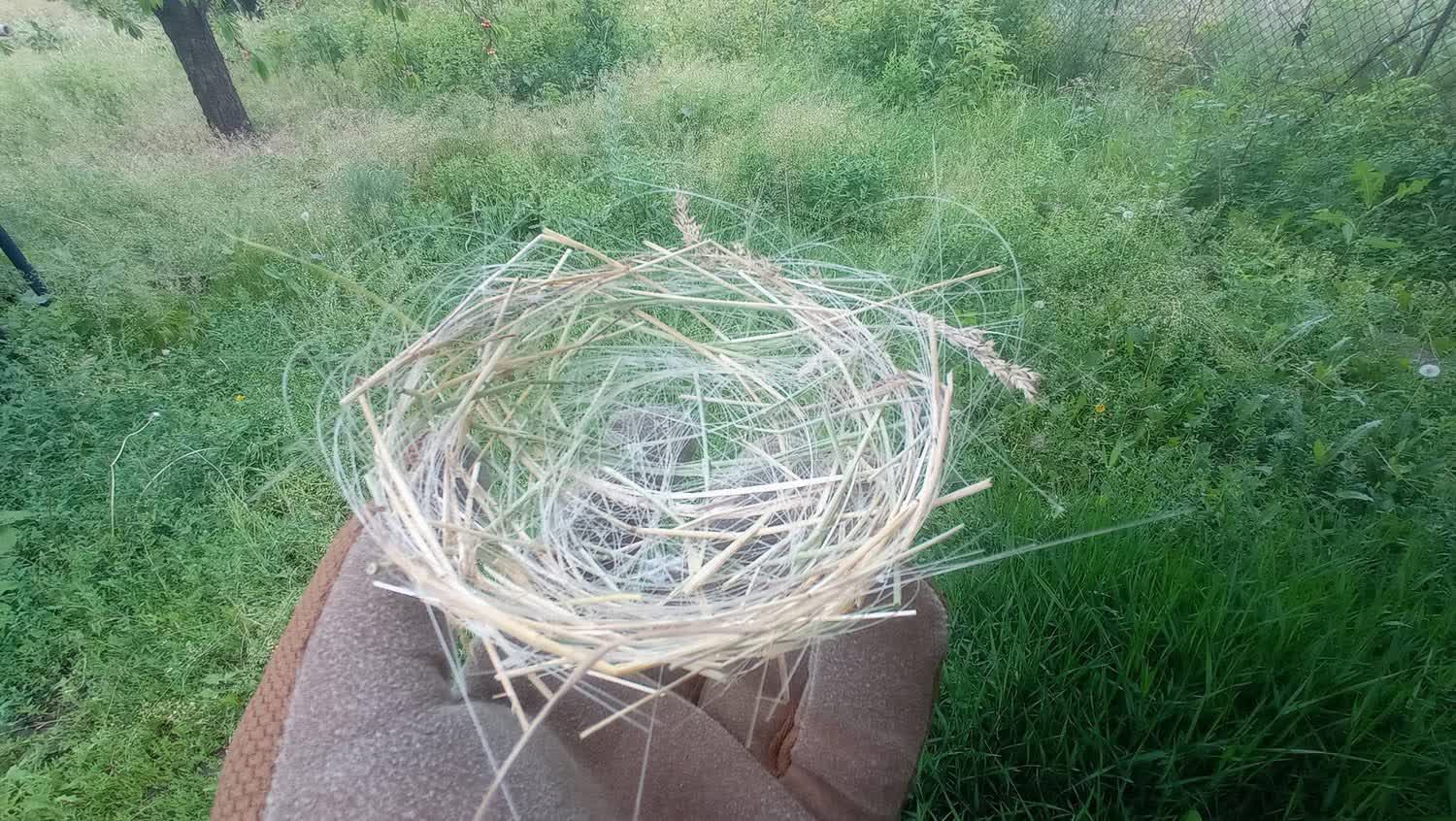
When a Russian glide bomb felled a tree in Ukraine’s Donbas region, something unexpected rolled from the shattered branches: a small songbird’s nest woven almost entirely from fiber-optic cable. The pale polymer strands formed a compact sphere that photographer Oleh Malchenko documented before Ukrainian civil society leader Olena Tregub shared the image on social media, where it quickly went viral as an “apocalyptic bird’s nest.”
The nest material tells a darker story about modern warfare. Those thin cables come from tethered FPV drones—systems that trail fiber-optic lines to defeat electronic jamming. Unlike standard radio-controlled drones, these tethered variants maintain jam-proof control links by spooling out physical cables during flight missions.

Technology Carpets the Battlefield
Each drone mission can leave up to 40 miles of polymer cable draped across Ukrainian landscapes.
Russian tethered systems now deploy spools containing up to 65 kilometers of fiber cable—roughly 40 miles per mission. Earlier Ukrainian versions maxed out around 42 kilometers. The trade-off for jam-resistant control is environmental: acres of fields now look like they’re wrapped in invisible spider webs, with wisps of discarded optical fiber clinging to vegetation and fence posts.
You can see why birds find the material attractive. Fiber-optic cables are lightweight, flexible, and provide excellent thermal insulation—perfect for nest construction. What looks cyberpunk-dystopian to human eyes makes practical sense to a finch seeking warm, dry shelter for its eggs.
Environmental Price of Innovation
Polymer debris threatens wildlife with entanglement risks and microplastic contamination that could persist for decades.
The British Ornithologists’ Union warns that polymer optical fibers present “entanglement risks to birds, bats, and ground-dwelling mammals” while breaking down into microplastics that contaminate soil and waterways. This adds what researchers call “a new layer of anthropogenic threat” to ecosystems already devastated by artillery, unexploded ordnance, and habitat destruction.
Ukrainian outlet NV reports that birds across Donetsk Oblast are increasingly incorporating drone fiber into their nests. The phenomenon reflects how front-line conditions reshape animal behavior when traditional nesting materials become scarce or dangerous to collect.
The next photograph crystallizes something profound about 21st-century warfare: our conflicts now leave technological DNA embedded in the most intimate spaces of surviving life. Like finding smartphone components in a hermit crab’s shell, it’s adaptation that makes you question what we’re really fighting for.