A commencement speech praising artificial intelligence sparked loud boos and viral backlash, revealing deep anxiety in creative fields about their futures
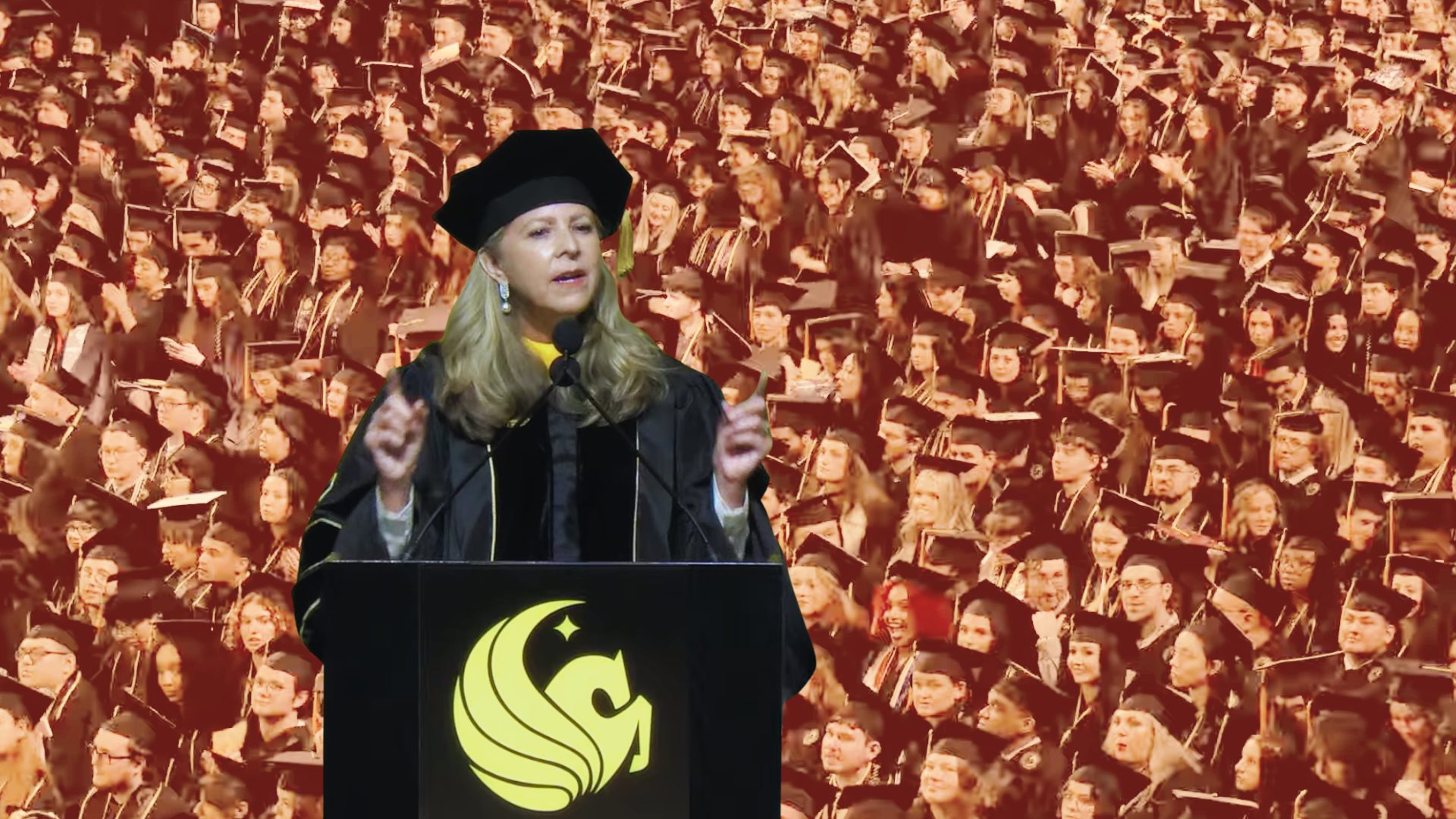
You know that moment when someone completely misreads the room? Gloria Caulfield experienced it spectacularly at UCF’s May 8 commencement ceremony. As she praised AI optimism as the “next industrial revolution” to thousands of Arts and Humanities graduates, murmurs turned to boos. One student cut through her speech with a defiant yell: “AI SUCKS!”
The crowd’s reaction wasn’t just garden-variety graduation rudeness. These soon-to-be media professionals and creative workers are staring down an existential threat to their chosen careers.
Corporate Executive Meets Creative Resistance
Tavistock Group VP pushed AI optimism to the wrong audience at the worst possible time.
Caulfield, who oversees business partnerships for a Florida planned community development company, seemed genuinely surprised by the hostility. She paused, acknowledged striking “a chord,” then doubled down—comparing AI fears to past anxieties about the internet and cellphones. Her prediction that AI would create jobs like Apple, Google, and Meta rang hollow to graduates facing immediate displacement threats.
The timing couldn’t have been worse. These communication and media students know the statistics haunting their industries: AI drove 26% of layoffs in April 2026 alone, eliminating over 21,490 jobs. Palantir CEO Alex Karp recently declared AI would “destroy” humanity’s jobs entirely. Meta cut 10% of its workforce to fund AI initiatives.
The Irony of Institutional AI Embrace
UCF heavily promotes AI research while its own students rebel against the technology’s impact.
Here’s the kicker: UCF has been all-in on AI integration. The university’s 2025 research archive lists dozens of AI projects spanning everything from hate speech detection to nursing education. The school even launched a controversial “Art of AI” course that sparked campus protests from animation students fearing for their job prospects.
Yet when a corporate speaker tried selling AI’s promise to the very students most threatened by it, the institutional enthusiasm met grassroots reality. The viral moment—already spreading across social media like a digital wildfire—captures something bigger than one awkward speech.
This backlash signals growing resistance in creative fields. Sometimes the revolution meets the revolutionaries, and they’re not having it.