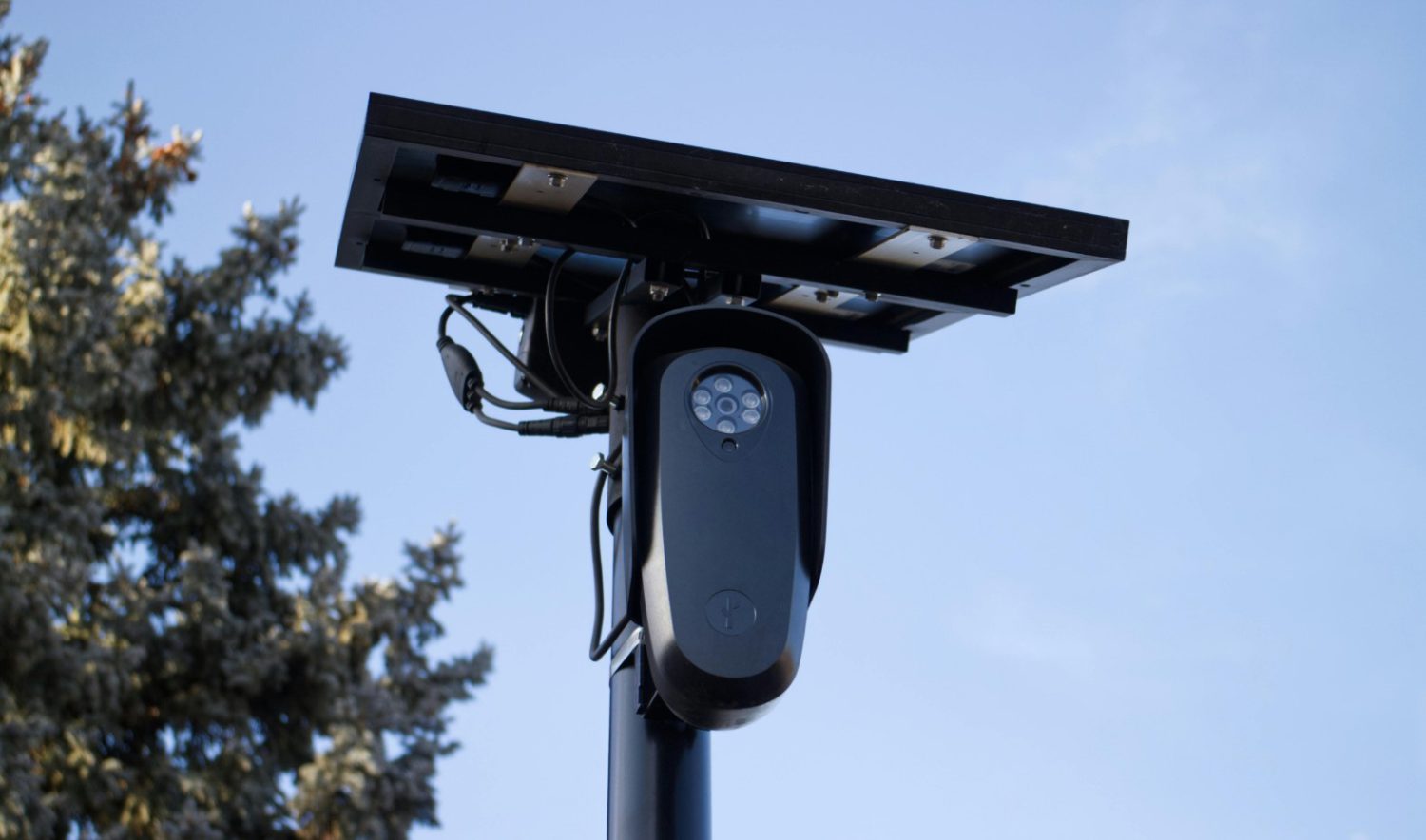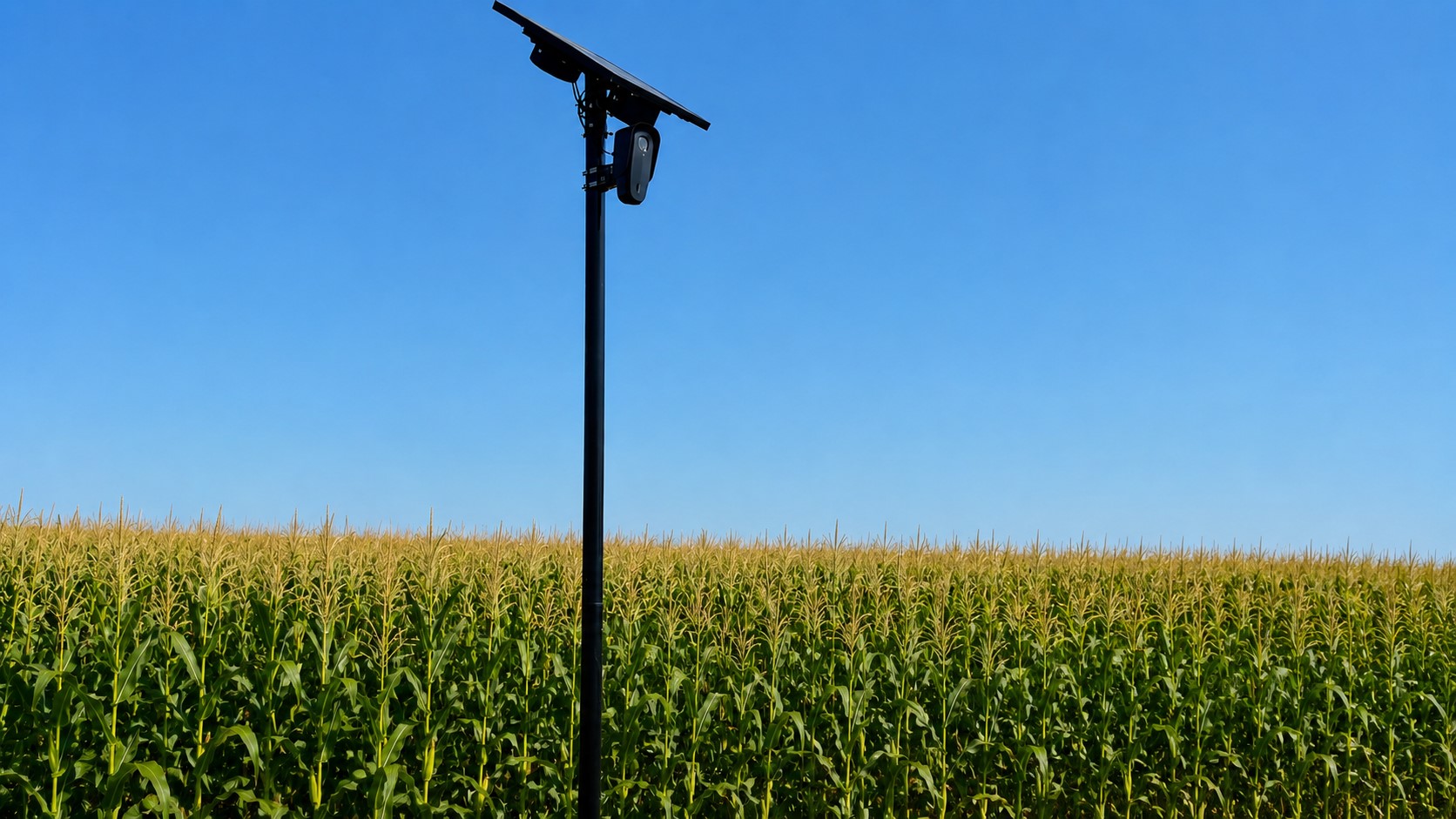
You’re walking a gravel path. Cornfield on one side, open sky above, maybe a redtail hawk circling. Then you notice it — a small white box on a pole, solar panel tilted toward the sun, lens aimed at the road. Not a busy intersection. Not a parking garage. A dirt path near a wildlife corridor.
That camera belongs to Flock Safety, and it just logged your vehicle. According to the ACLU of Kansas, between 80,000 and 100,000 of these devices are now installed across the country. The assumption that “out here” means unobserved is dead.
What These Cameras Actually Capture
Flock’s automatic license plate readers log every passing vehicle and feed data into a centralized, searchable platform accessible by thousands of agencies.
Flock cameras are ALPRs — automatic license plate readers. Because Flock markets placement at “choke points,” trailhead parking lots and rural crossroads are logical targets, not exceptions. Every vehicle passing within view gets photographed: plate numbers, vehicle characteristics, timestamps, location. That data sits on a centralized platform for roughly 30 days, searchable by thousands of law enforcement agencies without a warrant, according to ACLU reporting. The company now also sells AI video cameras that track people and flag unusual behavior beyond simple plate capture — a practice mirrored by a covert surveillance app built to monitor political dissidents.
- Roughly 80,000–100,000 cameras installed nationally, per the ACLU of Kansas
- Hernando County, Florida deployed 40-plus cameras, including along remote corridors near wildlife management lands
- Two Flock cameras were physically cut down in a small South Carolina town — early grassroots pushback
- DeFlock.org, a volunteer-run map, lets you search for cameras near your home, trail, or school
“Flock Safety cameras track every vehicle that comes into view for an entire month,” the ACLU noted, describing a searchable database available to thousands of agencies.
Police call these “force multipliers,” citing stolen vehicle recoveries and faster case closures, according to PBS Newshour. That’s a real benefit. But EFF investigations found data was sometimes shared far more broadly than local agencies realized, and NPR reported cities canceling Flock contracts after discovering local feeds had entered a national network without clear consent — an outcome few local officials anticipated when they signed on.
What You Can Actually Do About It
The regulatory landscape is local and uneven, which means local pressure is where change happens fastest.
DeFlock.org lets you search for cameras near your regular routes. Cross-reference results with city council minutes and local press for confirmation. Civil liberties groups are actively pushing for retention limits, use-case restrictions, and bans on cross-jurisdictional data sharing. Some cities have already walked away from contracts entirely, demonstrating that public pressure produces real outcomes. For those weighing privacy against protection on their own property, exploring home security options can offer useful perspective on the consumer side of this debate.
As PBS Newshour framed it: police say cameras help solve crimes — critics call them an invasion of privacy. Both things can be true simultaneously, which is exactly what makes this hard.
The corn doesn’t care who’s watching. But you probably should.