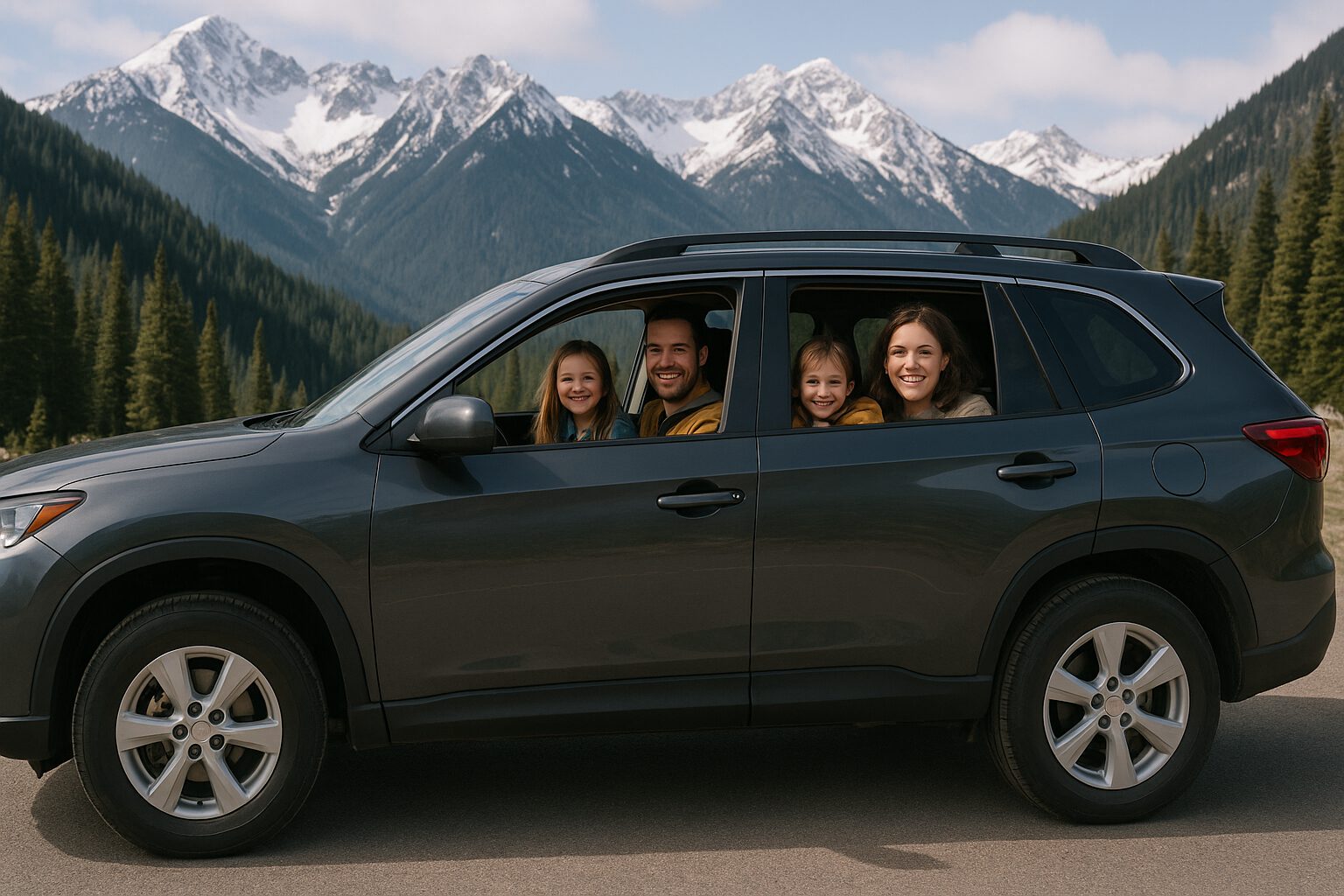
That Tahoe you bought to keep your family safe just doubled the death risk for other families’ kids. Research from the Insurance Institute for Highway Safety reveals SUVs and light trucks increase pedestrian fatality risk by 44% overall—but the numbers get worse when children are involved.
SUVs pose an 82% higher risk to kids, jumping to 130% for children under 10. The culprit isn’t your driving; it’s basic physics meeting suburban parking lots.
Hood Height Becomes Head Height
Physics explains why your elevated front end turns fender-benders into tragedies.
The problem starts 40 inches off the ground, where your SUV’s hood leading edge sits perfectly positioned to strike a child’s head or torso instead of their legs. Traditional sedans hit pedestrians low, often causing survivable leg injuries that knock victims away from the vehicle.
SUVs bypass this natural protection, delivering blunt force trauma directly to vital organs. As IIHS President David Harkey notes, America’s “fondness for tall SUVs has intensified that effect,” creating a fleet of unintentionally lethal family vehicles.
The Numbers Don’t Lie About Rising Deaths
Pedestrian fatalities climb alongside SUV sales in a grim correlation.
In 2023, 7,314 pedestrians died in U.S. traffic crashes, with SUVs involved in roughly 45% of incidents despite their “safety” reputation. This represents a 78% increase since the 2009 low, coinciding with SUVs growing from 15% to 48% of global vehicle sales.
According to researcher Elsa Robinson from the London School of Hygiene & Tropical Medicine, SUVs are “much more likely to cause serious harm” in pedestrian collisions. The math is brutal: replacing all SUVs with passenger cars could prevent 17% of pedestrian deaths and 27% of child fatalities.
Technology Offers Limited Salvation
Automatic emergency braking helps, but can’t overcome fundamental design flaws.
Pedestrian-detecting automatic emergency braking reduces crashes by 27% in equipped vehicles, providing some relief from the carnage. Yet this technology can’t change the fundamental geometry problem—your SUV’s elevated mass still strikes higher on the body when crashes do occur.
The solution isn’t just better sensors; it’s acknowledging that your choice of family hauler carries hidden consequences for neighborhood kids walking to school.
Your next vehicle purchase just became a moral calculation, not just a safety one.