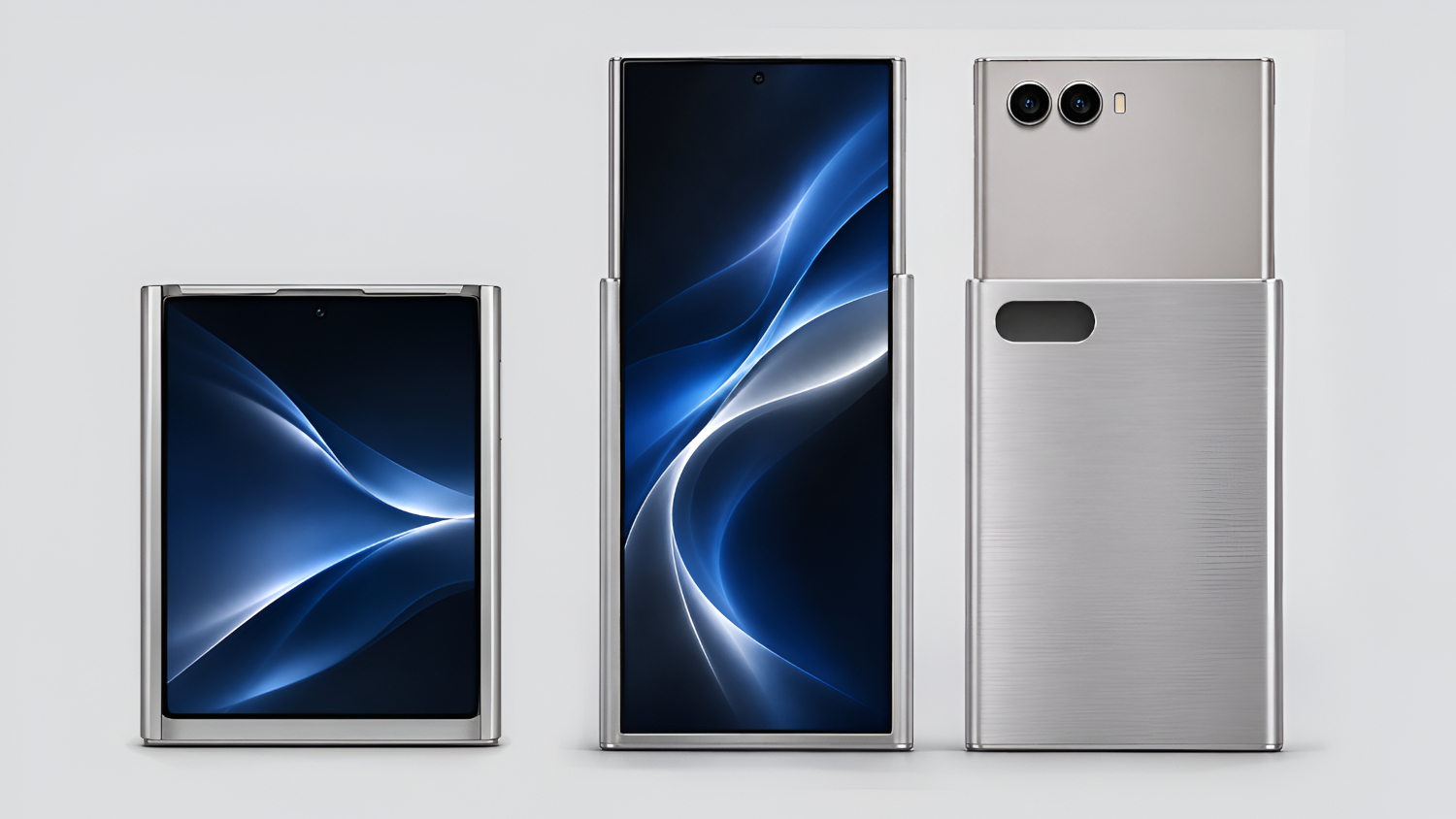
According to Ice Universe, a Samsung-focused tipster whose claims have been reported by Gadgets 360, the device is said to shift from roughly a 16:9 format to a taller 21:9 layout by extending vertically. Both ratios may have been inferred from concept renders rather than pulled from a confirmed spec sheet. Concept renders associated with the leak show a squat, nearly square handset in its compact state that stretches into a conventional smartphone shape when extended.
How the Mechanism Works
A Samsung patent and a related display prototype both describe the core idea, though neither confirms a retail product.
Samsung’s patent describes two housing sections, with one moving from a retracted to an extended position while a flexible display connects them. Think of it as a retractable scroll: the screen material stays continuous while the frame extends to reveal more of it. Samsung Display has also demonstrated related technology, reportedly showing a sliding-screen prototype that expanded from a smaller display size to a larger one, though the specific measurements and event details have not been confirmed by an official Samsung source. The final operating method, whether manual extension or a button-operated mechanism, remains unconfirmed.
What a Taller Screen Could Actually Do
The reported aspect-ratio shift targets specific situations where more vertical screen height changes the experience.
Based on the reported concept, a slide-out display could potentially benefit:
- Scrolling-heavy apps and social feeds that reward vertical real estate
- Widescreen video content at a taller ratio with reduced letterboxing, depending on the video format
- Split-screen multitasking with more room for two active windows
- Everyday portability in compact mode without permanently sacrificing display size
Software adaptation presents a separate challenge. According to Android Authority, apps would need to resize and rearrange content smoothly as the display changes shape, and that transition is considered a significant engineering hurdle.
The Engineering Trade-Offs
Sliding rails and a flexible display compete for internal space that would otherwise hold battery capacity.
The mechanism could reduce the internal space available for the battery. Dust resistance, screen wear over time, housing alignment, and repairability remain open questions, and Samsung has not publicly disclosed how it would address any of them. A moving display also introduces potential failure points that a conventional slab phone does not have.
Where This Fits in Samsung’s Lineup
The slide-out concept sits closer to a standard smartphone than to a Galaxy Z Fold and is not intended as a replacement.
A book-style foldable like the Galaxy Z Fold opens into a tablet-sized workspace. This reported design appears intended to remain near conventional smartphone dimensions throughout its range. “Galaxy Z Slide” is a nickname assigned by enthusiasts and media outlets, not a name Samsung has confirmed.
Reality Check on Timing
Launch estimates from separate reports range from late 2027 to 2028 or later, and none carry official confirmation.
Samsung has not announced the phone, confirmed its name, or provided specifications or a release date. The most accurate reading of the available evidence is that Samsung is exploring the category. It is not, based on current reporting, finalizing a product for launch.