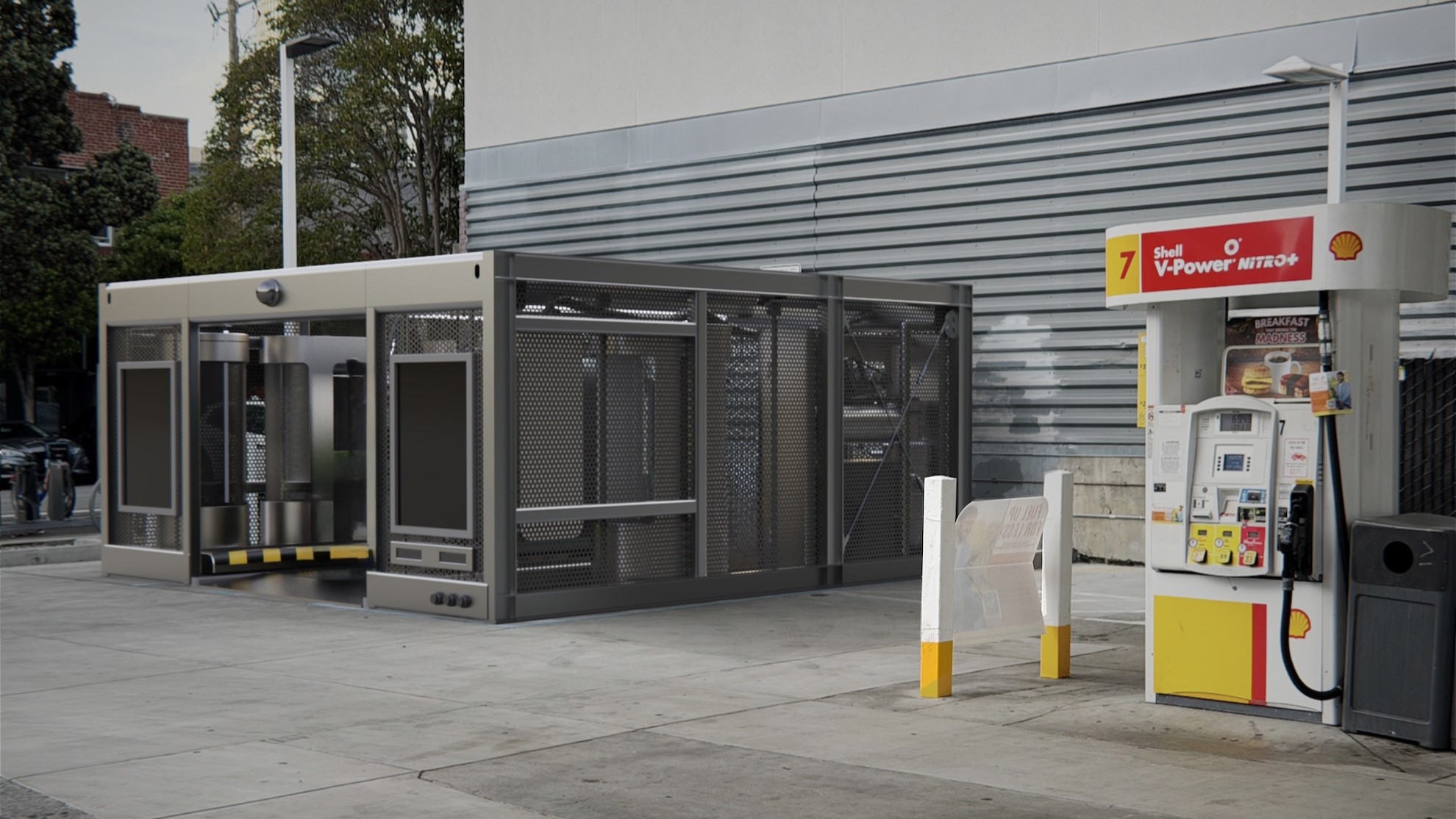
A Waymo pulls up spotless, smelling vaguely of nothing — but that car just drove twenty empty miles from a warehouse on the city’s edge to reach you. No passenger. No revenue. Just vibes and electricity. Those wasted trips — called deadhead miles — are quietly strangling robotaxi economics. Redwood City startup Aseon Labs just raised $10 million to kill them with robotic pit stop pods the size of a single parking space.
The Empty Miles Nobody Talks About
Robotaxi depots sit on cheap land far from riders, and every empty trip back costs money nobody’s paying for.
Every mile a robotaxi drives without a passenger is lost revenue and burned energy. Current AV depots handle charging, cleaning, and inspections, but they’re planted on the urban fringe because downtown real estate costs a fortune. The result looks a lot like a Formula 1 car driving to its pit crew three towns over. “In order to reach economic parity with ride-hailing, you need the utilization to go up,” CEO George Kalligeros told TechCrunch. “You need the robotaxi in continuous operation during the entirety of the demand curve of the day.”
“You need the robotaxi in continuous operation during the entirety of the demand curve of the day.” — George Kalligeros, CEO, Aseon Labs
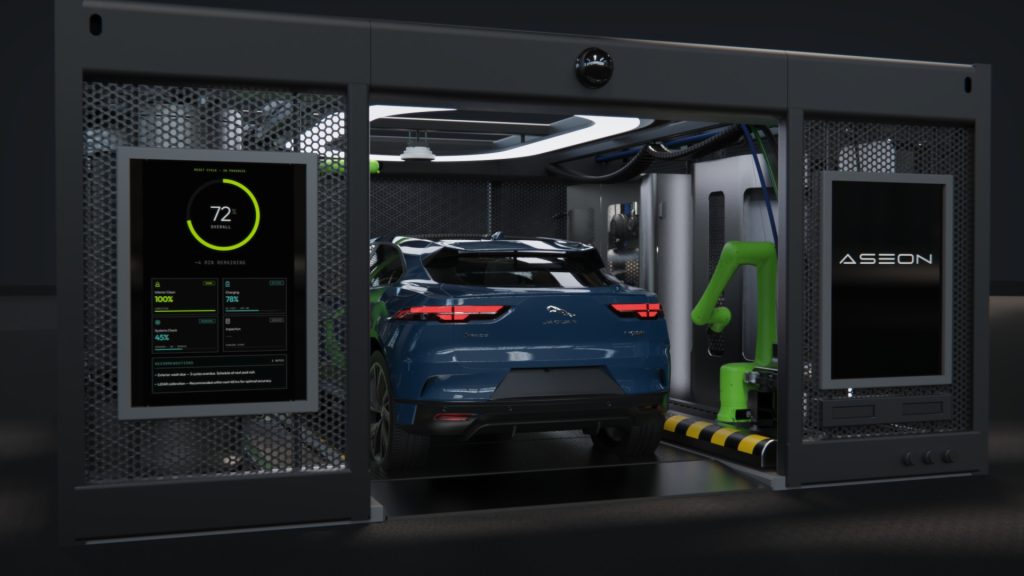
Traditional depots handle everything from a distance. Aseon’s pods handle the routine right where the car already operates:
- Parking-space-sized units deployed inside AV operating zones
- Robotic arms plus cameras for interior cleaning, inspection, and lost-item retrieval
- Power via propane generator or existing EV charging infrastructure
- Classified as temporary structures — simpler permitting, relocatable if underperforming
- Early pods will be staffed; fully autonomous operation comes later
Robots Cleaning Robots
Vision-language-action models give the robotic arms enough intelligence to recognize when standing down is the smarter move.
The pods run on AI that knows when not to act. Melted chocolate on a seat? The robotic arm stands down rather than smearing it deeper. The car gets charged, then dispatched to the central depot for human cleanup. Smart triage, not blind automation.
Kalligeros brings real credentials. He previously designed hardware at Bentley and Tesla, then co-founded Pushme — a battery-swap network that scaled across 40 European cities before Tier Mobility acquired it in 2020. Same playbook here: sprinkle non-permanent infrastructure across cities. The $10 million seed round, led by Crane Venture Partners with Y Combinator, Garrett Camp’s Expa, and angels from Anthropic, Nuro, and Turo, funds five prototypes and grows the team to roughly a dozen engineers, per TechCrunch.
No contracts are signed yet. Kalligeros says “pretty much everyone wants to try it” — which is startup-speak for promising but unproven. Still, the trajectory is worth watching. Robots are now being dispatched to service other robots, automating the invisible layer underneath every robotaxi ride. The self-driving future, it turns out, needs its own pit crew.