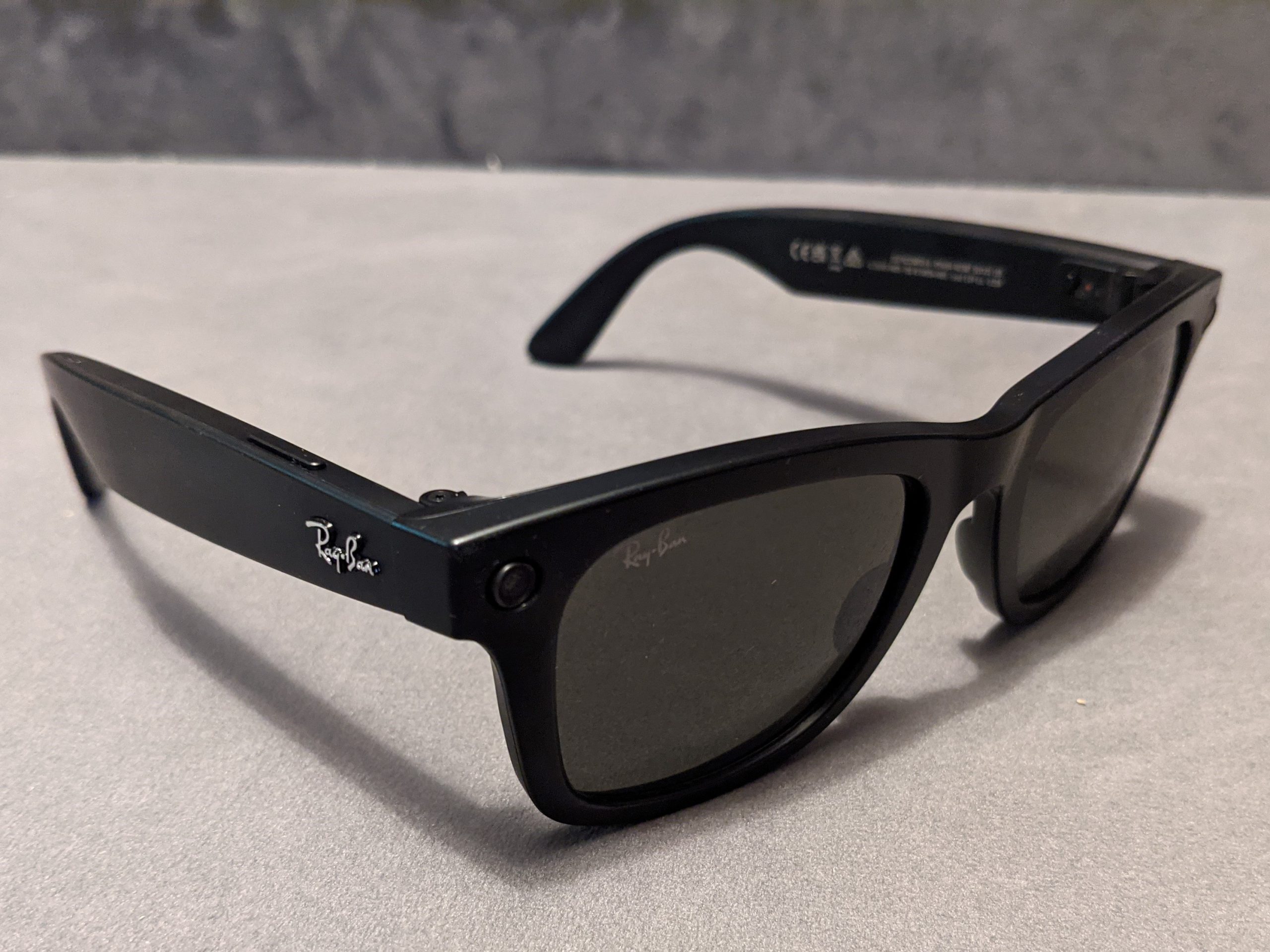
Your Ray-Ban Meta glasses can’t identify faces—Meta draws that privacy line pretty firmly. Meanwhile, police in China are patrolling with smart glasses that scan crowds, match faces to government databases, and deliver results faster than you can blink. The consumer tech industry’s ethical guardrails don’t apply when governments start shopping.
China’s Second-Generation Police Eyewear Gets Seriously Smart
Tianjin’s domestically built AI glasses deliver recognition capabilities with claimed 95% accuracy rates.
Tianjin Municipal Public Security Bureau rolled out their second-generation smart glasses this year, packing cameras, voice recognition, and real-time database connectivity into wearable surveillance gear. Officers can scan license plates, identify objects, and—though not explicitly advertised—apparently match faces against state records.
When one officer found a confused elderly man who couldn’t provide his name, the glasses identified him within minutes and reunited him with family. While China Daily doesn’t explicitly confirm facial recognition capabilities, the ability to identify a non-communicative person strongly implies face-matching linked to government databases.
- Battery life reaches 1.5-2 hours per charge, covering standard patrol shifts
- Performance claims suggest recognition accuracy rates between 95% and 99.5% with millisecond response times
- These systems connect to China’s existing surveillance infrastructure of hundreds of millions of CCTV cameras, extending that capability to mobile, officer-mounted scanning
This Technology Is Going Global Whether We Like It or Not
U.S. immigration enforcement and other agencies are exploring similar facial recognition capabilities.
ICE has expressed interest in smart glasses that tap biometric databases for real-time identification during field operations. Russian cities were expected to deploy facial recognition glasses by 2020, while Delhi Police have used AI-powered eyewear for security operations.
The contrast is stark: consumer smart glasses manufacturers like Meta explicitly avoid facial recognition features, citing privacy concerns and regulatory pressure. Yet law enforcement versions march ahead with purpose-built systems that make consumer privacy debates feel quaint.
Stories about helping lost seniors create compelling PR cover, but they’re normalizing head-mounted surveillance infrastructure that tracks everyone, not just those who need assistance.
Your Public Anonymity Just Got an Expiration Date
When every beat cop wears AI-powered scanners, privacy in public spaces fundamentally changes.
These deployments signal the end of casual anonymity in surveilled spaces. Unlike fixed CCTV cameras you can spot and avoid, smart glasses turn every police interaction into a potential biometric scan.
The technology works—that’s not in question. The question is whether societies want law enforcement equipped with instant, invisible recognition capabilities that make every sidewalk conversation a logged event.
Consumer smart glasses will inevitably gain similar capabilities as the technology matures and social acceptance grows. The line between police surveillance gear and everyday wearables is blurring fast, and you’re the one being watched.