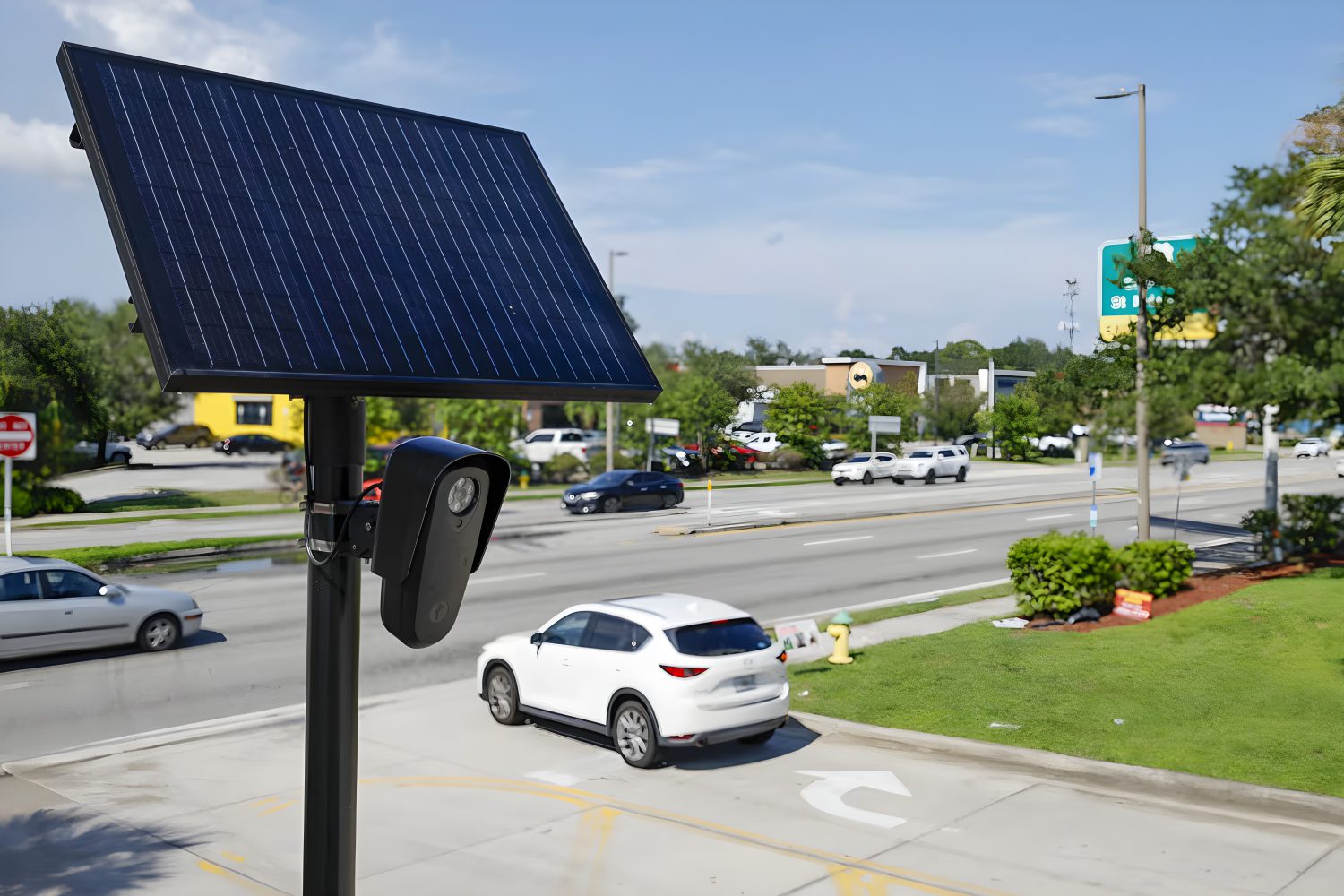
At a June 2025 city council meeting in Sunnyside, Washington, the police chief asked for $24,000 in opioid settlement funds — not for a detox bed or a harm-reduction program, but for a mobile surveillance trailer to watch a strip mall parking lot. The council approved it unanimously. One member asked if they could afford two. Yakima County, where Sunnyside sits, has no medical detox center and one of Washington’s highest overdose death rates. That’s the whole story in a single meeting.
What Flock Cameras Actually Do
Before judging the spending, it helps to understand exactly what these cameras are built to do.
Flock Safety cameras use AI to read license plates and log vehicle make, model, and color — across more than 120,000 locations in 49 states, capturing billions of scans per month. Police flag vehicles linked to crimes. The ACLU describes this network as a mass location-tracking dragnet: no warrant is required to establish that your car visited a clinic, a protest, or a church. This kind of covert data collection mirrors the methods documented in a surveillance app built to track political dissidents without their knowledge.
A Mother Jones investigation published in August 2026 found at least 19 law-enforcement agencies in 10 states directed more than $920,000 in opioid settlement funds toward Flock and competing ALPR systems from Motorola, Axon, and Verkada. Six additional jurisdictions used opioid money for Peregrine Technologies — an AI platform fusing ALPR feeds, body-camera footage, and police records into one surveillance dashboard. Reporters describe $920,000 as a likely undercount, given inconsistent disclosure practices across jurisdictions.
The pattern holds across the country:
- Ohio County, West Virginia: Commissioners approved $57,900 for six Flock cameras to “track drugs coming into our area.” By Black Friday, the system logged 28,000 plate reads in a single day — in a county of roughly 40,000 people.
- Pensacola, Florida: The mayor approved a two-year, $108,000 contract for 18 cameras funded with settlement money. After seven months of public backlash, the city council announced it would not renew using opioid funds.
- Chicopee, Massachusetts: Despite holding one of Hampden County’s highest overdose rates, the city approved a five-year, $837,500 Peregrine contract paid with opioid settlement money.
- Monongalia County, West Virginia: Residents organized weekly courthouse protests after commissioners approved up to $180,000 for 20 Flock cameras. A petition opposing the cameras has drawn more than 1,500 signatures.
“Whatever Funds You Spend on a Camera…”
The trade-off, stated plainly, is a dollar that cannot be in two places at once.
“Whatever funds you’re spending on a camera, you’re not spending on getting someone into treatment.” — Robyn Oster, Partnership to End Addiction
The math is blunt. Opioid settlements — paid out by pharmaceutical manufacturers and distributors following years of litigation — were earmarked for addiction prevention, treatment, and harm reduction across an 18-year payout. Communities receive modest shares of that $50 billion pool. Every dollar locked into a Flock lease is a dollar unavailable for a methadone program. Sunnyside had approximately $200,000 sitting unused in its opioid account since 2022 while Yakima County had no medical detox center at all.
Law enforcement’s counter-argument is straightforward enough to survive a budget meeting: cameras catch traffickers, trafficking fuels overdoses, therefore cameras reduce overdoses. Public-health evidence, however, points consistently toward treatment access, housing support, and harm reduction as interventions that actually move addiction outcomes. Surveillance has not been shown to meaningfully reduce addiction rates. A camera may deter drug activity in one parking lot; it does not get anyone into recovery.
The Industry Already Smells the Money
Surveillance vendors aren’t simply benefiting from these funding decisions — some are actively recruiting for them.
The sharpest detail in this story isn’t a council vote. It’s a blog post. In December, multinational security firm Leonardo described opioid settlement funds as a “major new opportunity” for ALPR vendors, noting that some states explicitly list license plate reader technology as an eligible expenditure. Peregrine publicly celebrated on LinkedIn that partner agencies “leveraged opioid settlement funds” to expand its platform — framing a public-health tragedy as a stable, 18-year revenue stream, a troubling echo of how governments have been caught secretly tracking users without meaningful public oversight. The surveillance industry isn’t waiting to see how this plays out. It’s writing the pitch deck.