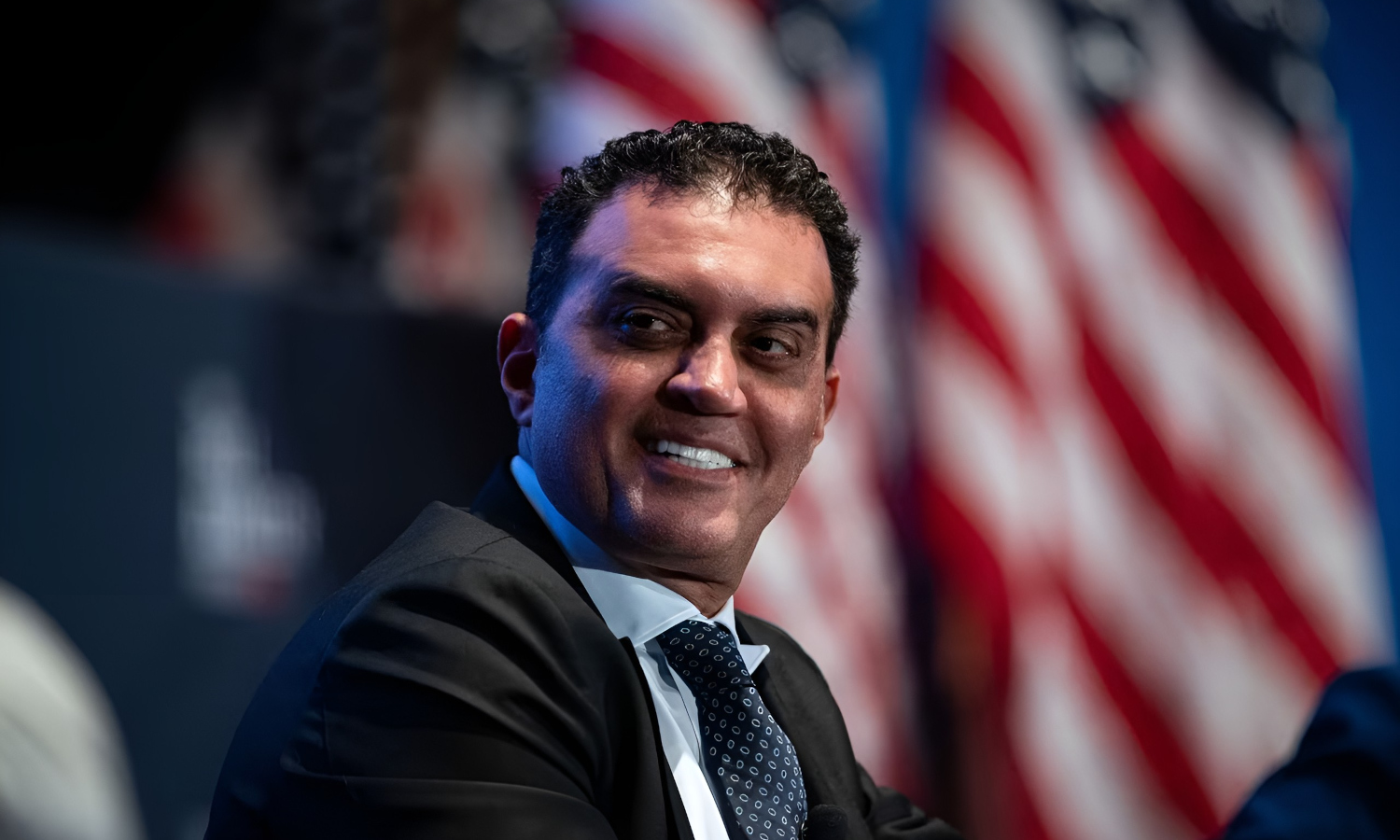
The man deciding military AI strategy held substantial stakes in the very firms those decisions affected. Emil Michael, undersecretary of defense for research and engineering, made three substantial trades between January and June 2026—xAI, Perplexity, and Brex—collecting between $15 million and $75 million in estimated proceeds, according to federal ethics disclosures. Those trades overlapped with live policy decisions that reshaped the military AI landscape. Think of it as the referee owning shares in one of the teams. OpenAI has faced similar scrutiny over the blurred lines between AI companies and government policy influence.
The Trades
Three companies, three windfalls—each sale timed uncomfortably close to a consequential Pentagon decision.
Michael’s disclosures reveal a pattern worth unpacking:
- His xAI stake, valued at $500K–$1M and held via an entity called KQ Partners, came with a divestiture certificate issued December 18, 2025, ordering him to sell. He completed that sale on January 9, 2026, collecting $5M–$25M—a potential gain of 400% to 4,800%. The Pentagon had already selected xAI’s Grok chatbot as a commercial AI provider in mid-2025, while Michael still held the stake.
- His Perplexity AI holdings tell a more layered story. The stake ranged from $2M to $10M. Perplexity also extended him a personal loan of $250K–$500K at 4.57%, and he served on the company’s advisory board. He pledged not to profit from unvested shares, but ethics filings leave unclear exactly which portion—vested, unvested, or both—he sold in June 2026 for $5M–$25M.
- Then there’s Brex, the Peter Thiel-backed fintech acquired by Capital One in a deal valued around $5.15 billion. Michael’s Brex stake was worth up to $750K in March 2025. By April 2026, he had sold it for at least $5M—a documented gain of at least 473%.
“He should have sold all interest in the company before he started working. That’s the way we would have done it back when I was working for president.” — Richard Painter, former White House ethics lawyer under George W. Bush
Where It Gets Sharp
Michael championed the Anthropic blacklist while holding millions in Perplexity—a company positioned as an Anthropic competitor.
Driving the Anthropic blacklist while simultaneously holding a multi-million-dollar Perplexity stake is the detail that refuses to stay quiet. Michael led the campaign to designate Anthropic a supply chain risk in March 2026—a label previously reserved for foreign adversary firms like Huawei and ZTE. A $200 million contract was terminated. Anthropic’s offense: refusing to let its Claude models support autonomous weapons and mass surveillance. Court filings reveal that one day after the designation was finalized, Michael emailed Anthropic CEO Dario Amodei saying the two sides were “very close” on contested issues—a timeline that raises questions about the official rationale.
“Full Compliance” and What That Actually Means
The Pentagon says the rules were followed; ethics experts say the rules themselves may not be enough.
Both sides have staked out clear positions, and neither is obviously wrong on its own terms. The Pentagon insists Michael and other officials “are in full compliance with ethics laws and regulations. Any claims otherwise are false.” Venture capitalist David Sacks calls the conflict-of-interest allegations a “smear campaign,” arguing Perplexity “does not sell to the Pentagon” and isn’t a direct Anthropic competitor. That’s technically accurate—Perplexity’s government footprint runs through a GSA OneGov contract covering all federal agencies, announced in November 2025, with no Pentagon-specific agreement on record.
Formal compliance and best practice, however, are not the same thing. Richard Painter’s point cuts through the procedural framing: the standard in prior administrations was to exit those positions before the job started, not after the policy decisions were already made. Anthropic’s lawsuit remains active, and every AI company watching this situation now faces a clarifying lesson—refuse Pentagon demands on autonomous weapons and surveillance, and you risk being designated a national-security threat. The rules may have been followed to the letter. Whether those rules are adequate is the question worth sitting with—a concern that extends beyond U.S. borders, as seen in how government health, financial, and legal data are increasingly subject to strict tech restrictions in Europe.