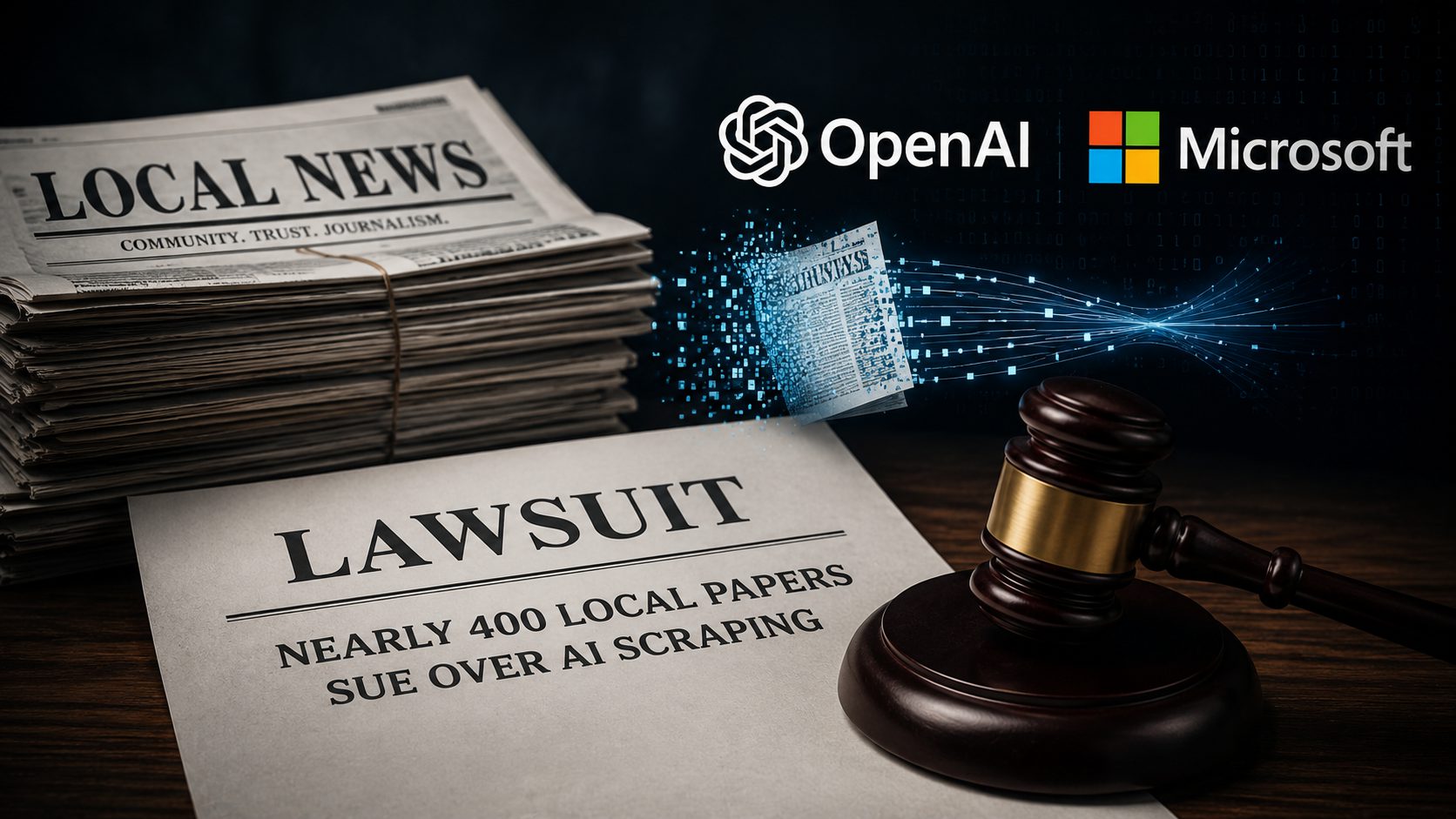
The newspaper that covered your town’s school board scandal, your high school football team, your local zoning fight — its reporting may have been fed into ChatGPT without anyone asking. Thirty-five newspaper publishing companies, representing nearly 400 local and regional brands across 33 states, filed a federal copyright lawsuit in New York against OpenAI and Microsoft. The central claim: decades of journalism got vacuumed up to train AI models, and nobody cut a check.
What the Publishers Are Actually Alleging
The complaint describes automated scraping at industrial scale, including content behind paywalls publishers built specifically to survive.
According to the filing, OpenAI and Microsoft deployed automated systems to crawl and copy articles — including material behind paywalls and other access controls — then used that content to train large language models powering ChatGPT and Copilot. The publishers also allege copyright management information was stripped during the process, effectively erasing the fingerprints of ownership.
The business harm argument is blunt: when an AI chatbot serves up a summary of reporting, you skip the click. That lost traffic bleeds advertising, subscription, and licensing revenue dry.
- 35 publishing companies; approximately 400 newspaper brands; 33 states
- Filed in federal court in New York
- Allegations include bypassing paywalls and removing copyright identifiers
- Claimed harm: reduced web traffic, lost ad revenue, weakened subscriptions and licensing income
- OpenAI claims training uses “publicly available data” grounded in “fair use”
Fair Use or Free Lunch?
OpenAI says the law is on its side, but a growing wave of publisher lawsuits suggests the courts will have the final word.
OpenAI spokesperson Drew Pusateri reportedly stated the company trains models on “publicly available data” and that the practice is “grounded in fair use.” That framing carries echoes of how Spotify once told musicians that exposure was compensation enough — until royalty structures got forced into existence through sustained legal and regulatory pressure.
This lawsuit joins a growing pile, including the high-profile New York Times case, as publishers push the dispute from boardrooms into courtrooms. “Publicly available” and “free to use” are not the same thing. A post on Instagram is publicly available, yet that accessibility does not grant corporations the right to package it into a commercial product without consent. Publishers appear to be making exactly that argument — at scale.
What Happens Next Matters to Your Local News
Court rulings here could determine whether AI companies must license journalism — or keep taking it for free.
However courts rule, the outcome will shape whether AI companies must build licensing pipelines or continue training on content creators’ work without compensation. For local newsrooms already running on fumes, the answer could mean the difference between survival and silence. The case is reportedly the 26th suit filed against OpenAI and the 11th against Microsoft, suggesting this legal confrontation is nowhere near its final chapter.