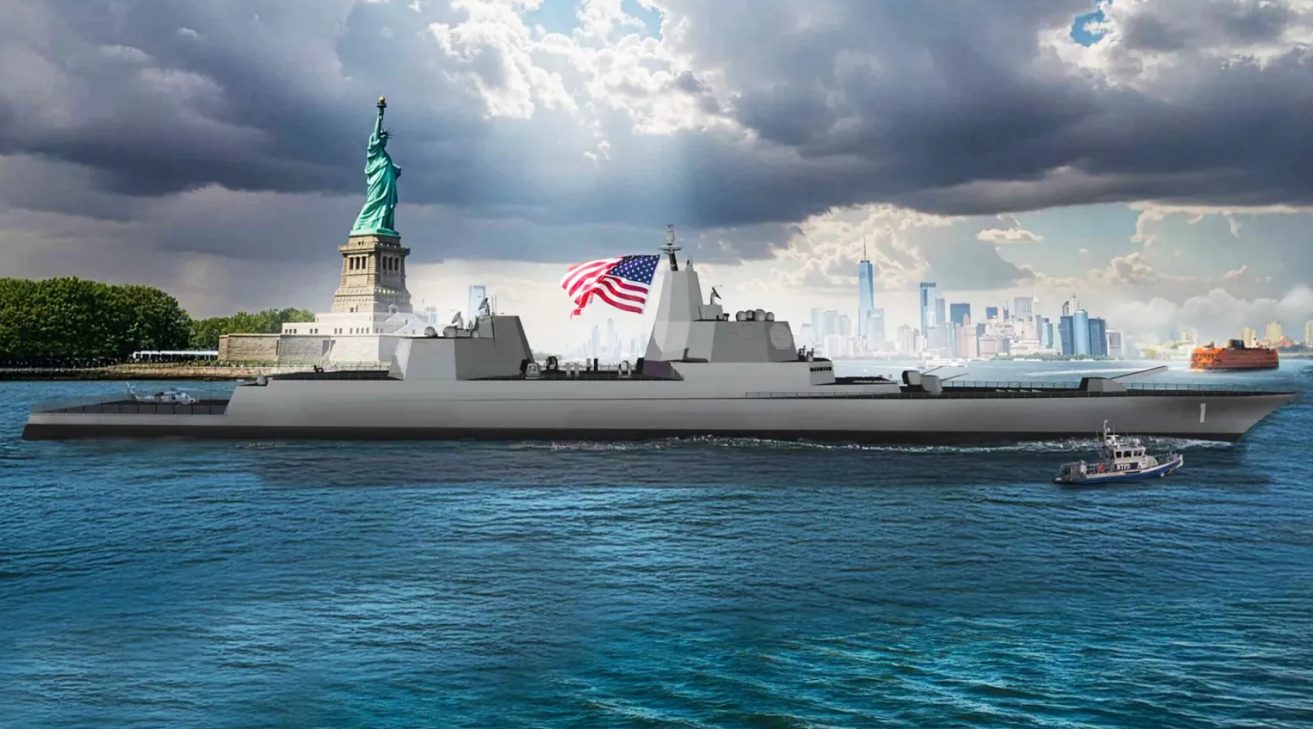
The U.S. Navy just pulled off a procurement plot twist worthy of a Pentagon thriller. Four weeks after proposing diesel-powered Trump-class battleships, the service’s new 30-year shipbuilding plan confirms these warships will pack nuclear reactors—the same A1B units powering Ford-class carriers. The price tag? A staggering $17 billion per ship, exceeding even the troubled Ford carriers’ $13-15 billion cost.
This reversal carries serious drama. Former Navy Secretary John Phelan called nuclear propulsion “unlikely” on April 21, 2026, though the exact circumstances of his subsequent departure remain disputed. The timeline suggests someone really wanted these ships to go nuclear, consequences be damned.
Nuclear Power Meets Hypersonic Ambitions
Ford-class reactor technology promises unlimited range and massive power generation for next-generation weapons.
The Trump-class battleships—officially designated BBGN for nuclear-powered guided-missile battleships—will displace 35,000-40,000 tons across 840-880 feet of steel. That’s triple the size of current Arleigh Burke destroyers, with nuclear endurance enabling indefinite patrol time. The A1B reactor provides enough juice for electromagnetic railguns, directed-energy lasers, and 128 Mk 41 vertical launch cells packed with hypersonic missiles.
Admiral Daryl Caudle previously warned that nuclear propulsion adds “tail to construction” and “pushes [timeline] outside operational need.” The Navy plans 15 ships through 2055, starting with USS Defiant in 2028 for a 2036 commissioning. You can practically hear the schedule slipping already.
Industrial Reality Check
Newport News Shipbuilding faces monopoly pressure while costs spiral beyond Ford-class carriers.
Here’s where ambition meets industrial constraints. Newport News Shipbuilding—America’s only nuclear surface ship builder—must somehow construct these monsters while maintaining carrier production. The total program cost could hit $700 billion by 2090, making this the most expensive surface combatant program in naval history.
The Navy promises digital engineering and modular construction will control costs, the same assurances given for every troubled program since the Zumwalt debacle. No nuclear surface combatants have sailed since the 1990s retirements, yet somehow 15 battleships will roll off production lines like Tesla Model 3s.
The Trump-class represents either visionary naval strategy or spectacular overreach. Given Pentagon procurement history, smart money leans toward the latter—assuming these ships ever leave the drawing board.