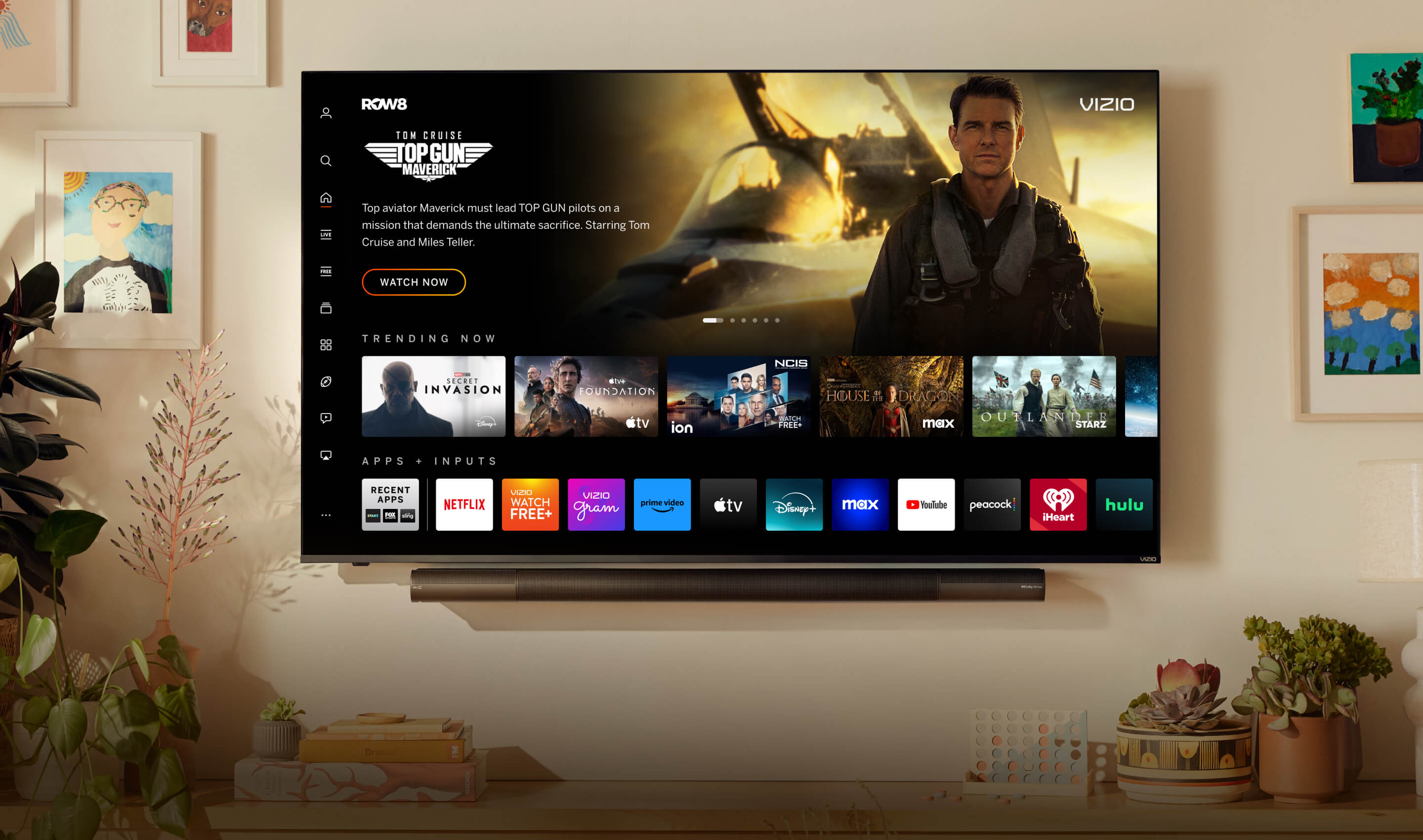
Walmart acquired Vizio in December 2024 and has been merging Vizio accounts into Walmart accounts ever since. As of March 2026, that merger reached the living room. Walmart announced the integration at its NewFronts presentation, framing unified logins as a way to “connect streaming engagement directly with retail interaction,” per Walmart’s corporate announcement. Translation: your TV habits are now retail data.
The Login That Watches You Back
Smart features require a Walmart account — and the data exchange goes far beyond a username.
Vizio’s Account Terms of Use state it plainly: “a Walmart account is required for certain VIZIO OS products to enable and receive Smart TV functionality.” Without signing in, streaming apps and WatchFree+ stay locked. TechSpot notes that basic HDMI and antenna use still works on some models — but the setup flow pushes hard toward account creation.
Here is what Vizio’s privacy policy says gets collected and linked to your Walmart profile when you sign in:
- Contact details, payment information, subscription data, and authentication credentials — along with device identifiers such as IP address, MAC address, advertising IDs, and serial numbers
- Viewing Data and Activity Data merged directly with your Walmart retail profile
- Automatic Content Recognition that scans what is playing — including content through HDMI inputs from game consoles or secretly tracking users via streaming sticks
- An opt-out for data linkage available at Vizio.com/account, though the Walmart login itself remains mandatory for smart features
That last point is worth sitting with for a moment.
Walmart did not invent the account-locked TV. Samsung requires a Samsung account. Fire TVs need Amazon. Google TV wants your Google login. The difference — think of it as the gap between a neighborhood security camera and a store loyalty kiosk — is destination. Vizio OS viewing data flows into a retail loyalty profile built explicitly for ad targeting and purchase attribution, according to Walmart’s NewFronts materials and reporting from CNET. That is a meaningfully different arrangement than handing your watch history to a tech platform.
Your Actual Options
Accept the data trade or turn your smart TV into a very expensive monitor.
Two paths exist. Sign in and then visit Vizio.com/account afterward to limit how your viewing data gets linked to your retail profile. Or skip the login entirely and run the TV as a dumb display — plug in an Apple TV, Roku, or game console and let that device handle all streaming. As TechSpot puts it, skipping the Walmart sign-in “has become a new, straightforward way to disable all smart TV features.”
Neither option is what most buyers expect when they pull a television off a shelf. Consumers who worry they are paying too much for hardware may not realize they are also subsidizing it with their data.
The era of “you bought it, you own it” keeps contracting. A Vizio TV purchased today is also a data terminal with a screen attached — and the account it asks for on day one is the key to everything it knows about you going forward.