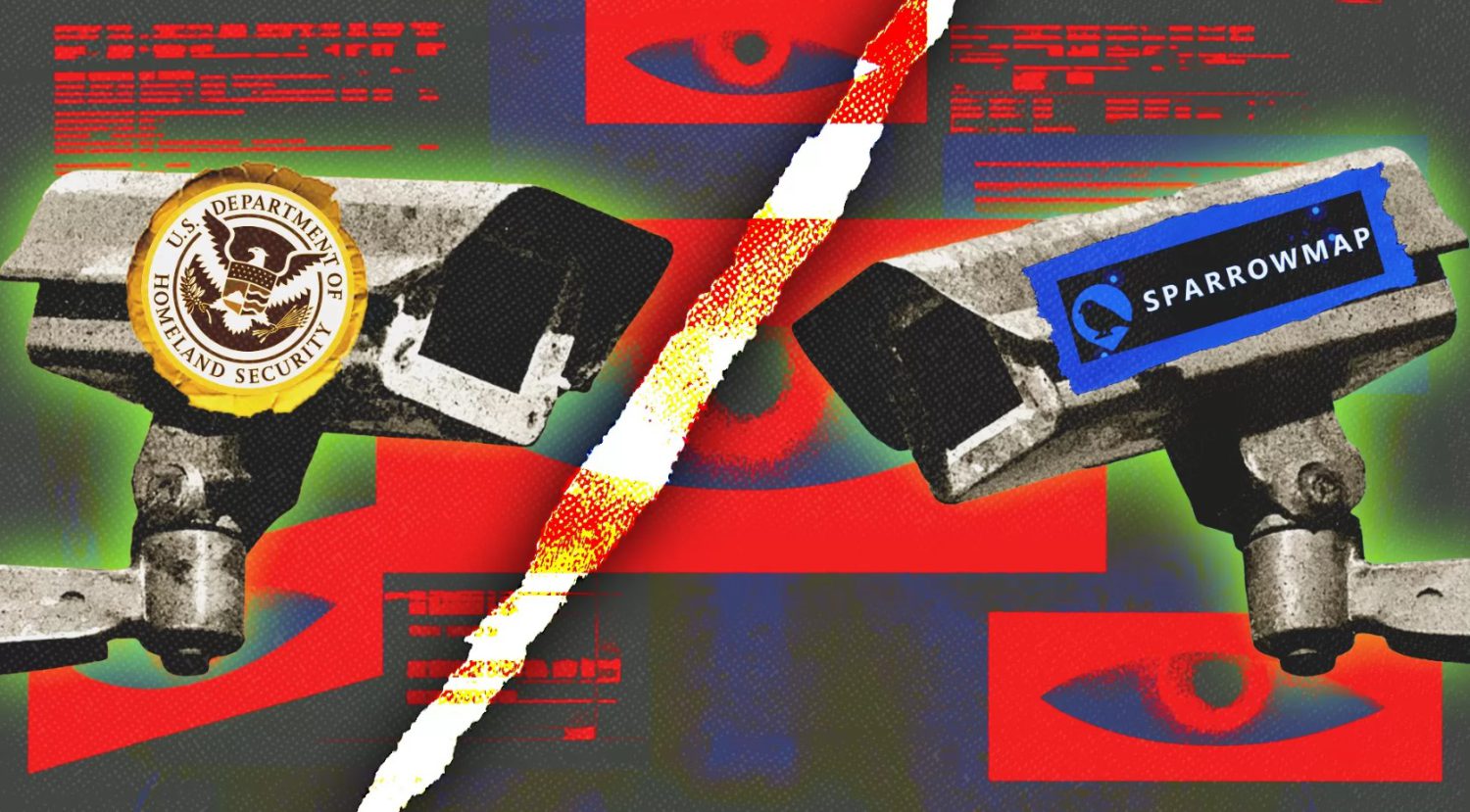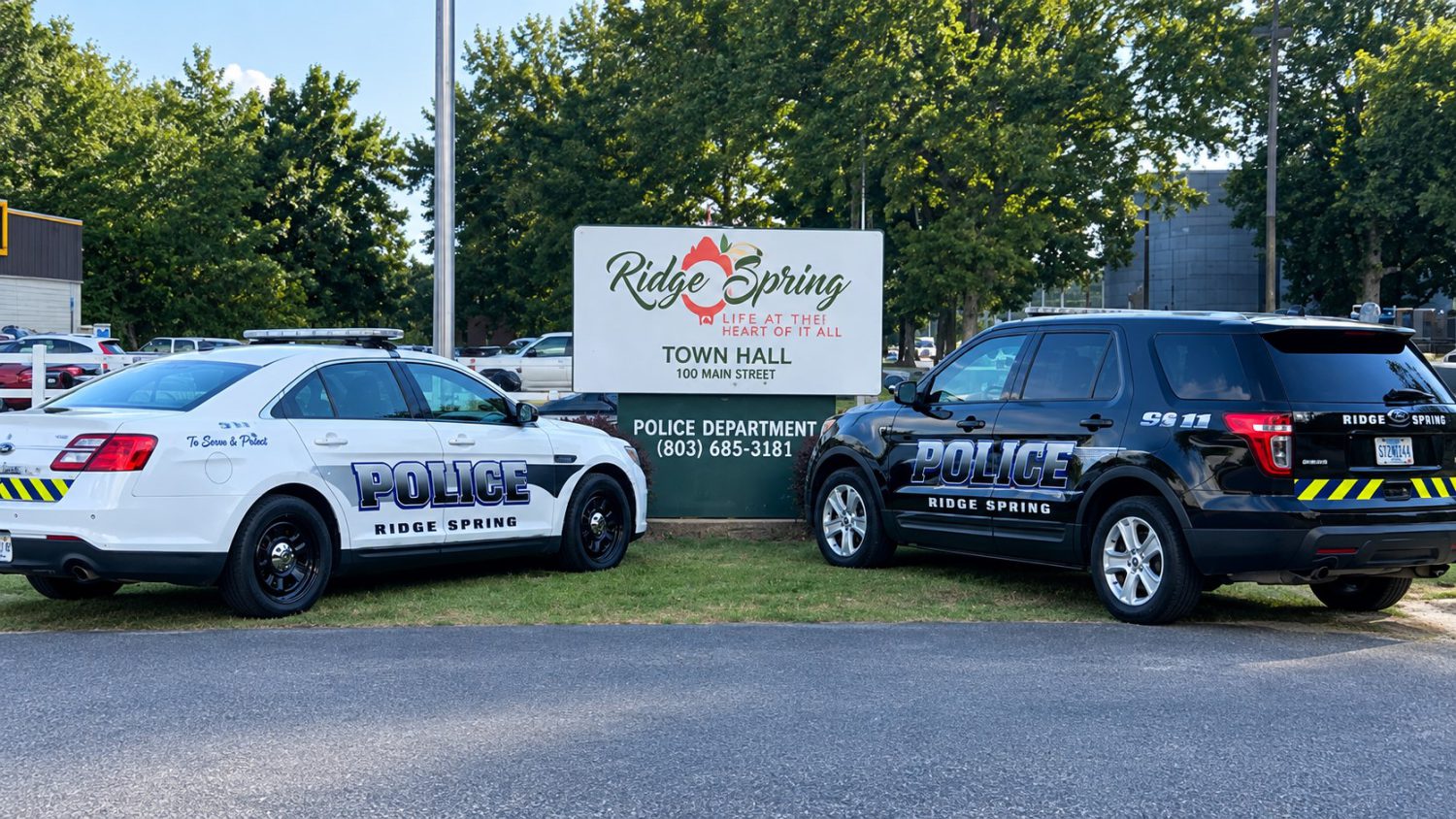
Criticizing a government surveillance program on Facebook is broadly protected speech. Allegedly receiving a warrant threat from the police department’s own account in response is a different matter. WRDW/WAGT reported that Ridge Spring, South Carolina resident Christian McClellan encountered that situation after posting a profanity-laced comment about Flock cameras, and that Mayor James H. “Jimmy” Harling identified Police Chief Terry Logan as the person behind the account when the messages were sent. Logan declined to comment.
What the Messages Said
Screenshots provided by McClellan show escalating threats, though their authenticity has not been independently verified.
McClellan said he commented with profanity on a Ridge Spring Police Department post about Flock cameras being cut down across town. Roughly a week later, screenshots he provided to WRDW/WAGT reportedly show an account labeled “Ridge Spring Police Department” informing him that profanity through electronic communications was unlawful, stating “I will be obtaining a warrant” for “unlawful communications,” and adding “I will send the U.S. Marshals to pick you up.” Those screenshots have not been independently authenticated, and the account’s ownership was not confirmed through platform records or an official investigation.
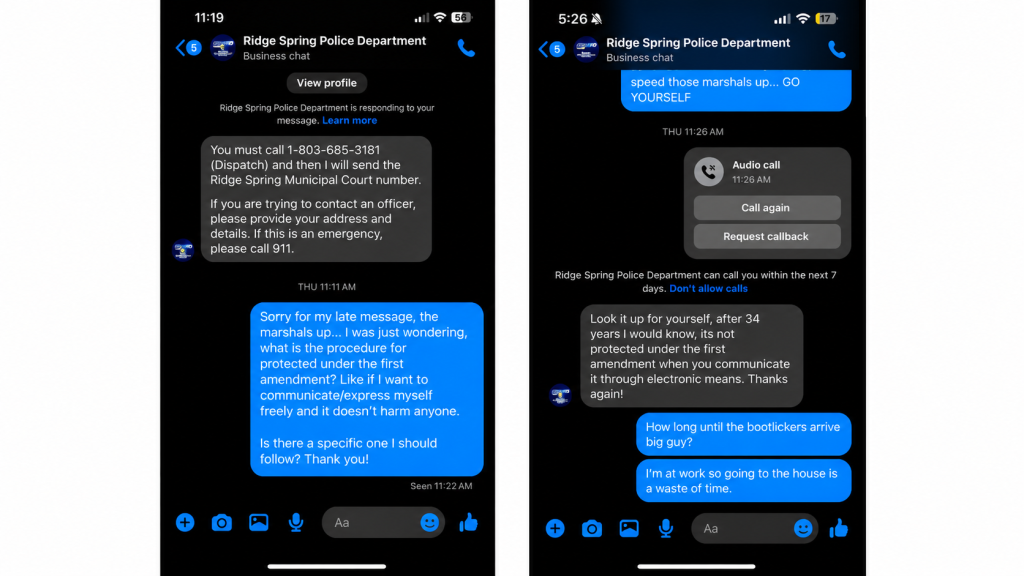
Mayor Harling attributed the account to Chief Logan, but Logan offered no substantive response when contacted through city hall. The station later visited the department in person. No warrant, arrest record, or U.S. Marshals action appears anywhere in the available reporting.
“If an agency doesn’t understand the basic First Amendment principles that govern their authority, that raises serious concerns about whether they should be trusted with expansive surveillance systems,” Allen Chaney of the ACLU of South Carolina told WRDW/WAGT. His comments represent an advocacy position, not a judicial ruling on this incident.
The Law, the Cameras, and the Bigger Problem
South Carolina’s unlawful-communications statute carries real penalties, but legal experts say its reach has been substantially narrowed.
South Carolina Code Section 16-17-430 prohibits certain profane electronic communications, electronic threats intended to coerce or harass, and repeated harassing contact. Violations are classified as misdemeanors carrying a $100 to $500 fine or up to 30 days in jail.
Chaney told WRDW/WAGT the statute has been narrowed by South Carolina Supreme Court decisions and, in his view, would not apply to a single critical comment directed at a government agency. That is a civil-liberties interpretation, not a settled legal determination specific to McClellan’s situation.
Flock Safety provides networked automated license-plate readers designed to capture vehicle images and plate data for investigative use. More than a dozen cameras were reportedly damaged or removed across Ridge Spring, which is what prompted the department’s original post and McClellan’s response. The technology itself did not fail here; the governance surrounding it did.
When agencies deploy tools that record vehicle observations across a community, constitutional training and clear accountability structures should come with them. Ridge Spring’s Flock contract terms, data-retention policies, and access-auditing procedures are not described in the available reporting on this incident. That gap deserves attention regardless of how the exchange between McClellan and the department account is ultimately resolved.
What Came Next
The department’s online presence went dark briefly, and records requests remain unresolved.
McClellan said the department’s Facebook page was removed along with its Google reviews, and that calls to the department did not connect. The page was later reactivated, according to WRDW/WAGT. The station also requested Logan’s file from the South Carolina Criminal Justice Academy and his personnel file from the city; whether those records were released or any formal investigation opened remains unclear.
Any municipality purchasing surveillance infrastructure owes its residents a parallel investment: constitutional training, transparent data policies, and accountability mechanisms that hold up under scrutiny. Those structures are not visible in the available reporting on Ridge Spring. Putting them in place is the fix that matters most, and it should not take a viral warrant threat to make that obvious.