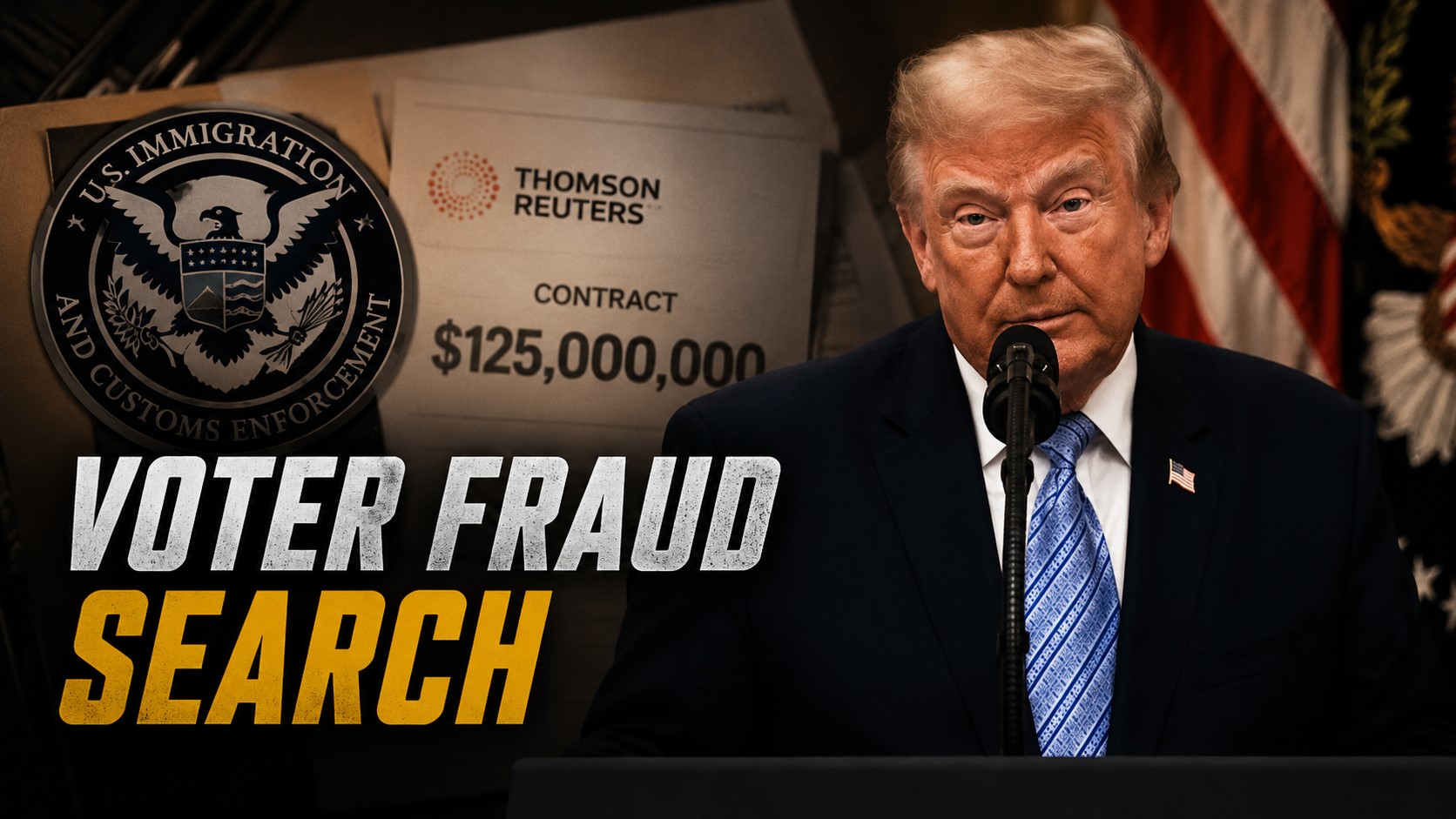
According to 404 Media, a DHS procurement document outlines a five-year deal paying Thomson Reuters Special Services $25 million annually for access to CLEAR, its investigative database. The contract language ties the arrangement to a “presidential mandate” covering voter fraud, immigration fraud, and national security. That framing matters. This reportedly marks the first time a Thomson Reuters ICE contract has explicitly included voter fraud as a use case, according to BCGEU investor representative Emma Pullman.
Your Data, Assembled Without Your Permission
The platform builds investigative profiles from records you never knowingly handed to law enforcement.
Think of CLEAR as the Spotify Wrapped of your entire life — except you never hit play and a federal agent is reading the results. The platform reportedly pulls from public and proprietary records:
- names, addresses, Social Security numbers
- phone and utility records
- vehicle registrations, license plate data
- social media posts
- geolocation
The procurement document says this data will help “validate and verify school, benefit, immigration and other eligibility requirements.”
An ICE agent with CLEAR access could theoretically assemble a detailed portrait of your movements, associations, and history without a single warrant. That gap is the operative loophole: private companies can legally aggregate dossiers that government agencies are barred from collecting on their own — and federal procurement dollars are now reportedly funding exactly that capability. This dynamic echoes concerns raised when a secretly tracking users scandal highlighted how routine data collection escapes public scrutiny.
What Thomson Reuters Says — And What It Leaves Open
The company draws clear boundaries around immigration-status targeting, but the voter-fraud mandate sits conspicuously outside those lines.
Thomson Reuters told 404 Media it prohibits using CLEAR to identify or locate noncitizens solely for deportation based on immigration status. “Immigration status is not a search field in CLEAR,” the company stated. It framed the platform as supporting investigations into:
- child exploitation
- human trafficking
- narcotics
- financial crime
These are lawful, serious use cases that are difficult to argue against.
But the procurement document now adds voter fraud to that list. Pullman says Thomson Reuters has offered “inconsistent and shifting accounts” of its ICE contracts, and that the union intends to press the company and fellow investors for clarity. Prior ICE-related Thomson Reuters contracts existed for years. The voter-fraud framing is new territory — and notably, no independent privacy-law expert or direct DHS response has been cited to contextualize it further, per available reporting. The broader pattern of government-linked surveillance app deployments against civilians underscores how such tools can expand beyond their original mandates.
What Comes Next
The outcome of this procurement will set a precedent for every legal-tech firm selling investigative tools to federal agencies.
If this contract advances, shareholders, civil liberties organizations, and privacy advocates will intensify scrutiny across the commercial data-brokerage sector. The question isn’t whether private databases will power government enforcement — they already do. The real question is who decides what counts as fraud worth finding, and whose data gets swept up in that search. International regulators have already begun drawing lines, as seen when Europe moved to restrict access to sensitive government health, financial, and legal data handled by major cloud providers.