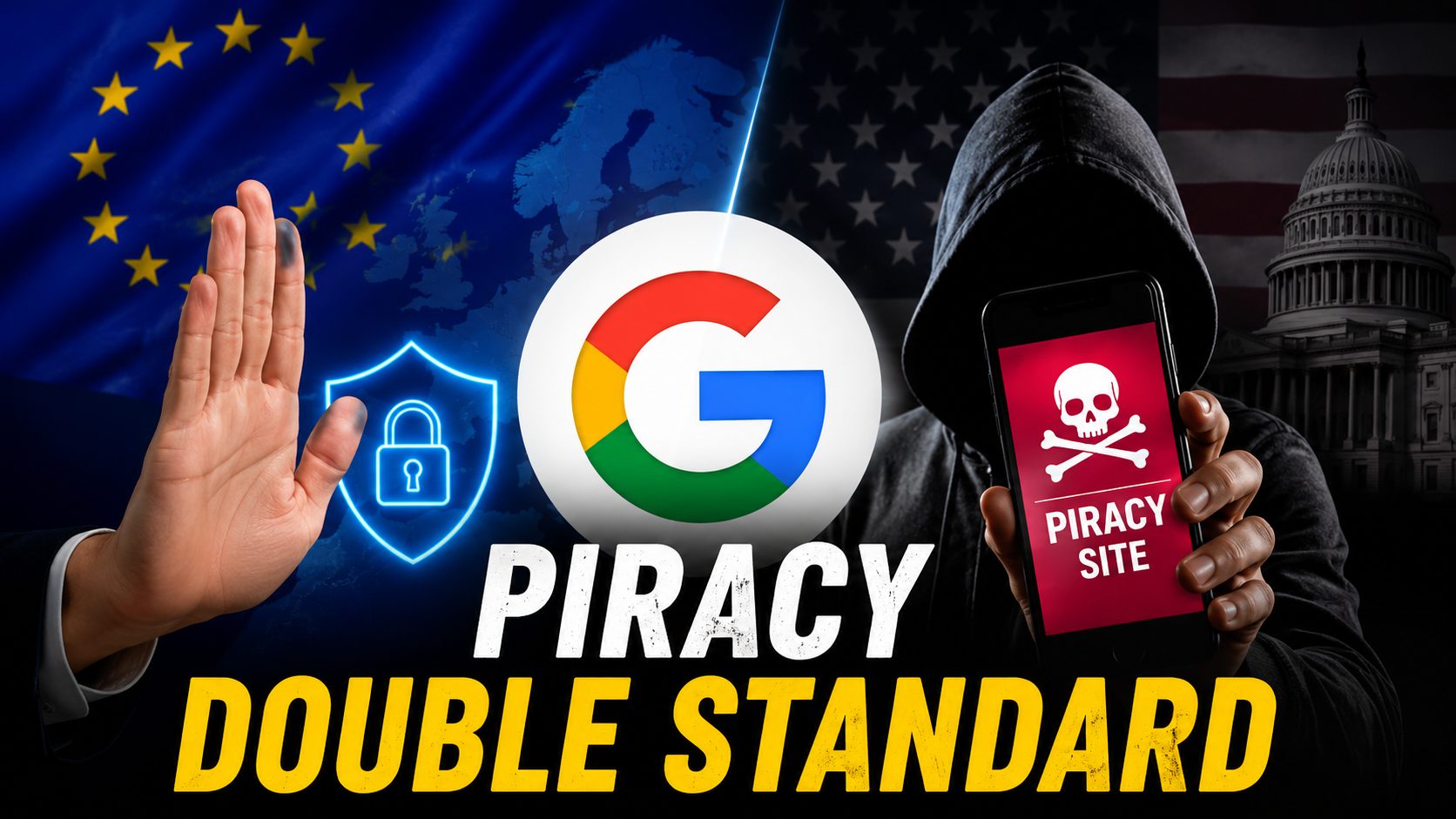
Google’s public DNS resolver (8.8.8.8) is now subject to blocking orders in France, Belgium, Italy, and Portugal — a shift that moves copyright enforcement deep into core internet infrastructure. Behind a routine anti-piracy order in Italy, something went sideways. The country’s Piracy Shield system accidentally blocked a Google Drive subdomain and knocked out Cloudflare IP addresses serving more than 42 million domains. One enforcement action, millions of casualties. That incident now anchors Google’s formal objection to the European Commission, where the company argues that DNS-level and IP-level blocking is ineffective, disproportionate, and dangerous to the internet’s basic plumbing. Nearly identical proposals are advancing through the U.S. Congress with bipartisan momentum — and Google has not said a word about them publicly.
Europe’s Overblocking Problem Is Already Documented
Google’s EU filing, labeled “Privileged and Confidential,” ended up posted publicly on the Commission’s website anyway.
More than 554,000 domains were blocked at least once during Spanish football broadcasts after a LaLiga court order, according to a study by the Open Observatory of Network Interference. The casualties included:
- Amnesty International
- UNICEF
- ACLU
- the Australian Senate
- Amazon S3 endpoints
Google’s filing is direct: blocking DNS resolvers “does not remove content at all and is easily circumvented,” the company wrote, calling the approach “disproportionate, catching lawful services, raising extra-territoriality concerns and blocking entire domains.” In France, Cisco withdrew its OpenDNS service rather than comply with court-ordered DNS blocking. Portugal’s ISPs blocked Google Cloud virtual IPs in December 2019, cutting off legitimate traffic for countless unrelated customers. Think of it as demolishing an entire phone directory to silence one prank caller — the prank caller finds another phone, and everyone else loses their contacts.
Meanwhile, Congress Is Moving Fast
Where SOPA crashed and burned in 2012, today’s bills arrive wearing judicial guardrails and bipartisan credentials.
Two proposals — Rep. Zoe Lofgren’s Foreign Anti-Digital Piracy Act (FADPA) and the Senate’s Block BEARD Act, sponsored by Senators Tillis, Coons, Blackburn, and Schiff — target foreign piracy sites through court-ordered ISP and DNS blocking. A bipartisan “four corners” effort aims to merge them into a single bill. Rep. Darrell Issa signaled imminent legislation at the June 30 House IP Subcommittee hearing, though his office had not confirmed formal bill text as of TorrentFreak’s reporting.
Google has publicly opposed these measures in Brussels. On Capitol Hill, it has said nothing.
While rights-holders cite 80–90% traffic reductions at blocked piracy sites — figures drawn from Hudson Institute analysis — the infrastructure side remains skeptical. SIIA president Chris Mohr told the House subcommittee that member companies are “genuinely split” on site blocking, stressing that any mechanism requires technical precision and robust judicial backing. The concern is concrete: shared cloud infrastructure means one poorly targeted IP block can take down thousands of legitimate services your business or daily routine depends on. Google does not oppose all blocking outright — its EU submission accepts targeted, proportionate, time-limited injunctions as a genuine last resort, but only after standard takedown measures have been exhausted and with costs shared between rights-holders and intermediaries.
Whether Congress accepts that the internet’s architecture is too interconnected to double as a blunt copyright enforcement tool — or decides the collateral damage is an acceptable price — will determine how far this next wave of anti-piracy legislation actually reaches. Watch for a merged bill text and a European Commission response on the Copyright Directive review; both will signal whether the guardrails Google is demanding have any chance of making it into law.