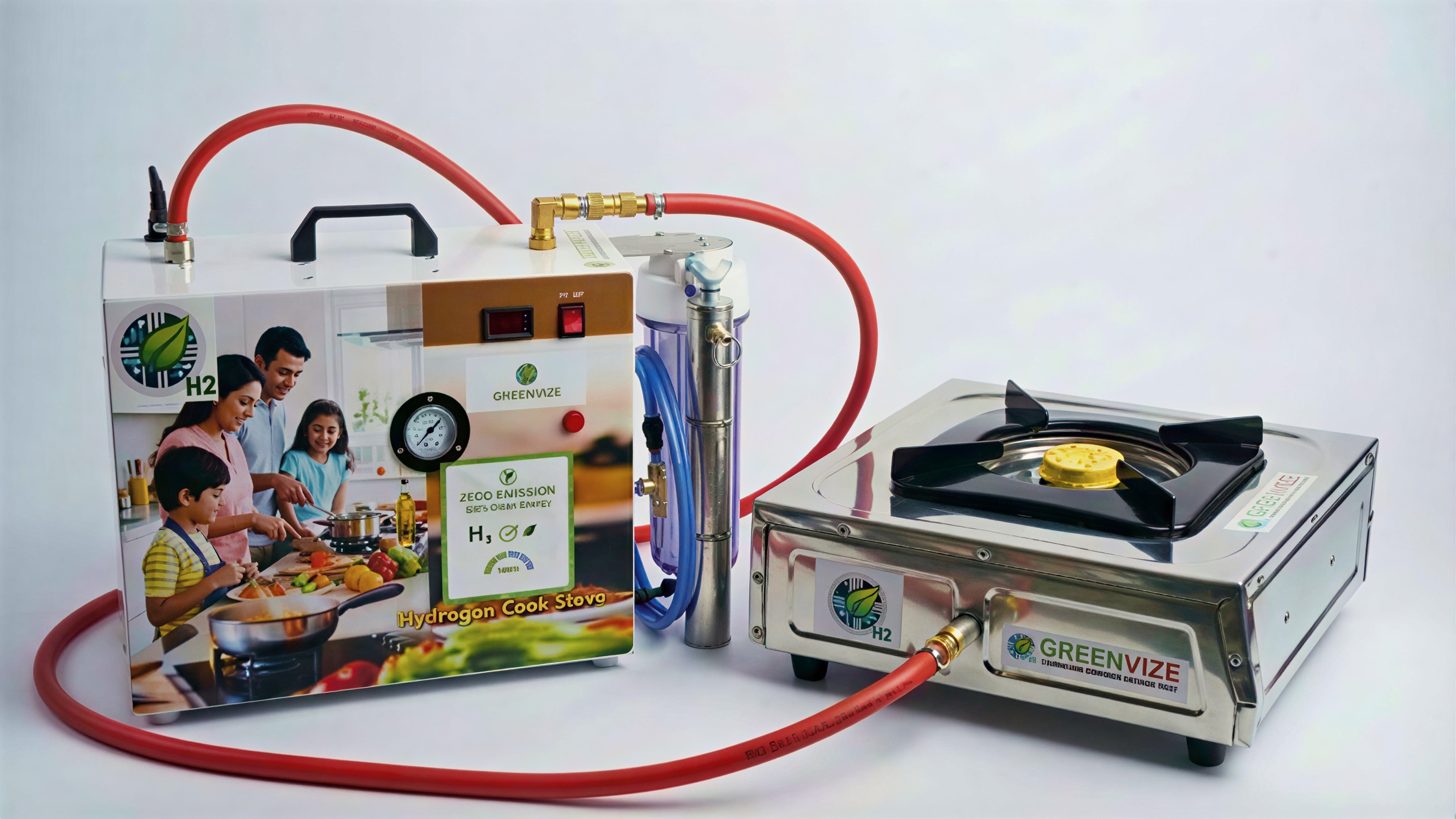
Your electricity bill keeps climbing while you’re just trying to cook dinner, but Greenvize’s hydrogen stove promises a radical solution. This Indian startup claims their plug-and-play unit consumes just 1 kilowatt-hour to deliver six hours of cooking time—compared to induction cooktops that devour 9-12 kWh for the same duration. The efficiency numbers sound too good to be true, which means they probably deserve some serious scrutiny.
How Water Becomes Your Cooking Fuel
The system splits water molecules in real-time using built-in electrolysis technology.
The magic happens through a proton exchange membrane electrolyzer integrated directly into the cooking unit. Add 100 milliliters of distilled water, plug into any standard outlet, and hydrogen generates instantly when you turn the knob. Unlike induction cooking that demands magnetic cookware, this system works with your existing pots and pans—no expensive replacements required.
Commercial Kitchens Get the Real Benefits
Hotels and community kitchens see the biggest efficiency gains from the technology.
“While both induction stoves and the Greenvize hydrogen cooking system use electricity, the efficiency, flexibility, and real-world usability are fundamentally different—especially for hotels, community kitchens, and high-demand cooking environments,” explains founder Sanjeev Choudhary. Pair it with rooftop solar panels and you’ve got completely off-grid cooking that doesn’t depend on LPG delivery trucks or grid stability.
The Price Reality Check Hits Hard
Premium positioning at $1,128-1,610 limits immediate market appeal despite efficiency claims.
Here’s where enthusiasm meets economics: the single-burner model costs ₹105,000 ($1,128), while the double-burner reaches ₹150,000 ($1,610). That’s serious money for unproven technology, especially when reliable induction cooktops start around $100. Greenvize offers customizable storage systems for hydrogen generation during off-peak hours, but you’re looking at even higher upfront investment.
Early Adoption or Expensive Experiment?
The technology aligns with India’s Green Hydrogen Mission but faces adoption barriers.
Should you mortgage your kitchen for hydrogen cooking? Probably not yet—unless you’re running a commercial kitchen where that 90% efficiency translates to meaningful operational savings. The technology works as advertised, producing only water vapor while releasing oxygen into your kitchen gadgets. For most home cooks, though, this feels like paying Tesla prices for grocery store transportation. Wait for the market to mature, or jump in if you’re committed to bleeding-edge clean tech and have money to burn.