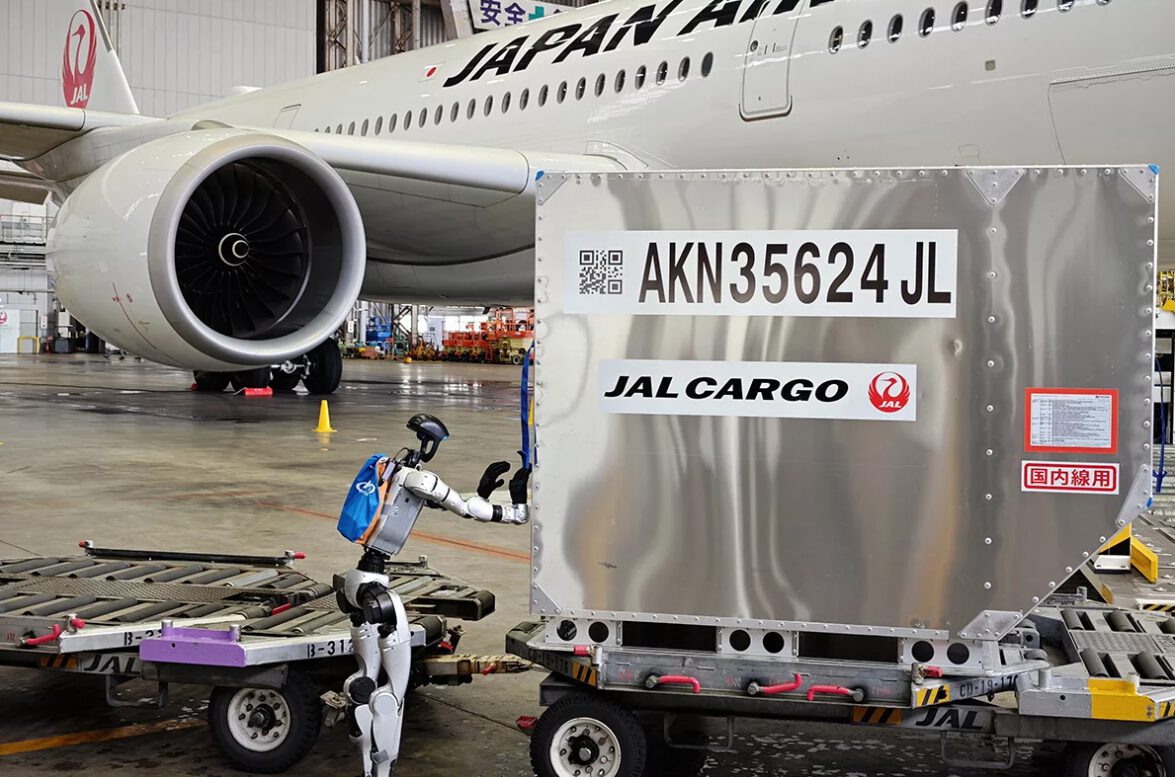
You know that sinking feeling when connecting flight boards but luggage remains somewhere in baggage claim limbo? Japan Airlines is betting humanoid robots can eliminate those travel nightmares. At Tokyo’s Haneda Airport, 4-foot-tall Unitree G1 robots are already loading bags, cleaning cabins, and operating ground equipment—turning what sounds like science fiction into practical travel reality.
These mechanical workers are redefining airport operations with impressive technical capabilities.
These compact powerhouses pack serious specs into their frames. Each robot weighs 77 pounds, moves at speeds up to 4.4 mph, and operates for two hours per charge. They’re tackling the physically demanding tasks that keep flights on schedule: hauling luggage onto aircraft, sanitizing cabins between passengers, and controlling the specialized equipment that powers planes at the gate. At roughly $13,500 per unit, they represent a significant investment in automation technology.
Haneda Airport serves as the ideal testing ground for large-scale humanoid automation.
Processing over 60 million passengers annually, Haneda provides the perfect stress test for automation at enterprise scale. Japan Airlines launched this pilot program in May 2026 through a partnership with GMO Internet Group’s AI division, directly addressing severe labor shortages and surging tourism demand. This initiative continues through 2028, generating extensive data on whether robots can match Japan’s famously meticulous human baggage handlers.
Service quality expectations remain paramount as automation transforms ground operations.
JAL acknowledges these robots must demonstrate the same care and precision that Japanese ground crews are known for—damaged luggage or delayed flights could quickly erode passenger acceptance. Traveler experiences depend entirely on whether automation enhances or compromises expected service standards. The airline faces the challenge of maintaining Japan’s reputation for operational excellence while embracing technological solutions.
This evaluation period will likely shape global airport automation strategies.
The three-year assessment will influence airport automation decisions worldwide. Airlines facing similar labor constraints are monitoring results closely, particularly as humanoid robot costs continue declining. Success at Haneda could accelerate adoption of entirely automated ground operations, transforming airports from labor-intensive hubs into showcases for practical robotics deployment across the aviation industry.