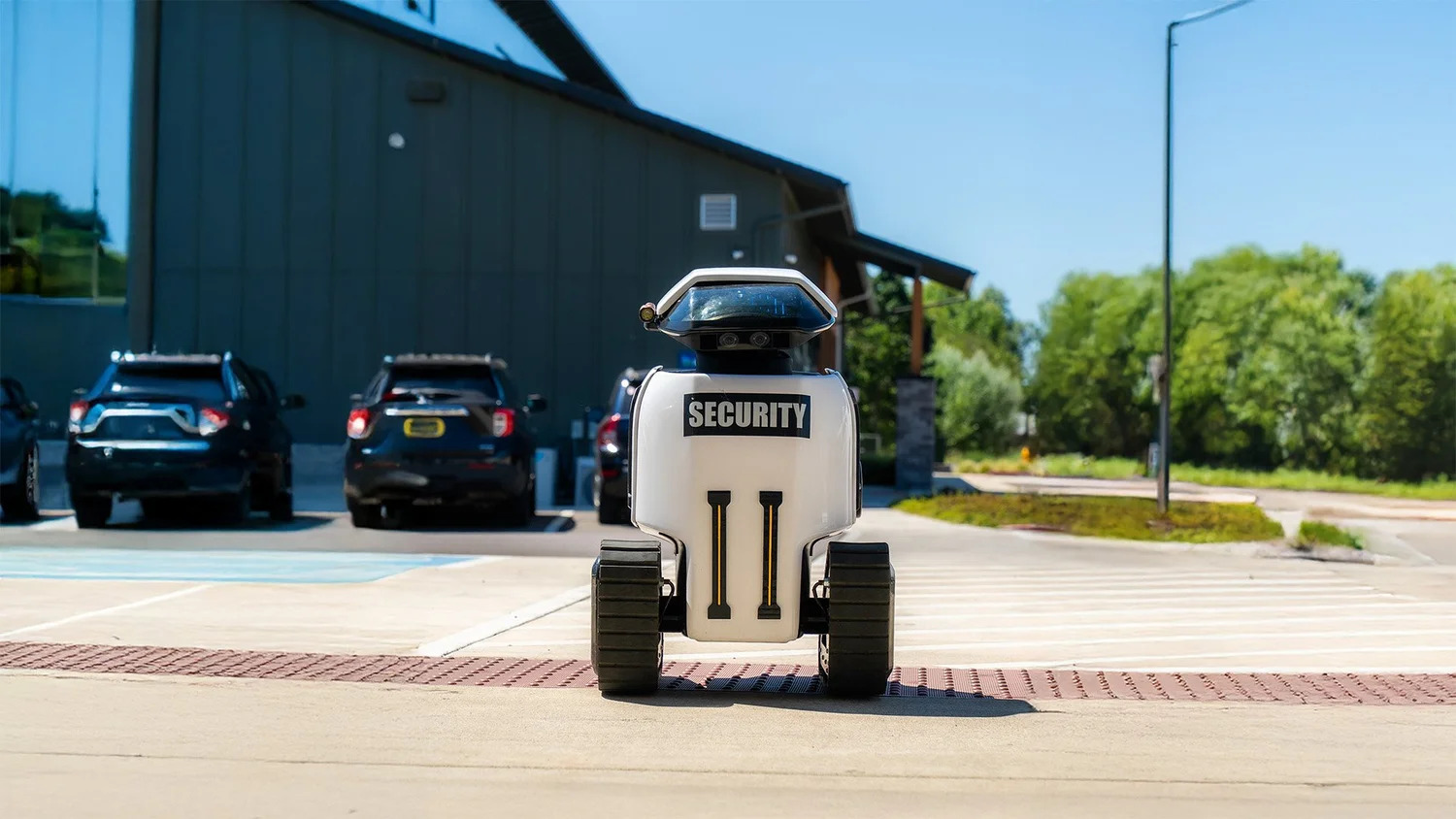
A knee-high robot in a high-vis vest rolls down your block at walking pace, sensors humming, cameras cataloguing curb ramps with bureaucratic precision — while a seven-year-old abandons a scooter to take a selfie with it. That’s actually happening. Five U.S. cities — Bangor, ME; Hoboken, NJ; Hollister, CA; Tyler, TX; and Hilton Head, SC — deployed Oregon-based Daxbot’s “Dax” robots this summer to handle ADA compliance survey work that normally lives and dies inside planning commission PDFs.
Faster Surveys, Lower Costs, Unexpected Fan Base
The same data human crews collect manually, Dax gathers faster and with considerably better public relations.
Dax stands 35 inches tall, tops out at 4 mph, runs 8–12 hours per charge, and yields to pedestrians. It uses RTK positioning, lasers, GPS, inclinometer sensors, and onboard cameras to collect sidewalk width, cross slope, running slope, vertical changes, and curb-ramp conditions — all formatted into GIS-ready inventories telling city engineers exactly where repair money should go.
The numbers do the talking:
- Bangor deployed six robots in high-vis vests, covering roughly 6 miles per day for $95,000
- Tyler’s scope covered 94.5 miles of sidewalks and trails, 122 signalized intersections, and 59 transit stops
- A human crew doing Tyler’s equivalent work would take roughly five to six weeks
- Hoboken’s deployment supports the city’s Vision Zero Action Plan and updated Accessibility Action Plan
- Cities say Dax stores zero personal information — pedestrian-infrastructure data only
Hoboken Mayor Emily Jabbour said the city has “consistently invested in making our streets work better for everyone.” City officials added that pairing Daxbot with resident feedback and accessibility advocates helps identify where improvements are needed most.
Tyler partnered with engineering firm Kimley-Horn to feed Dax’s data into a formal ADA Self-Evaluation and Transition Plan. What a field crew with clipboards would grind through over weeks, Dax handles in days.
Accurate Data, Legal Cover – and a Caveat
Cities face real legal exposure under ADA and PROWAG sidewalk standards, and standardized robot-collected data directly addresses that risk.
This is not a feel-good experiment. Sloppy survey data creates genuine liability, and Dax produces standardized, repeatable measurements built to withstand scrutiny well beyond the planning meeting.
Some residents question whether public-space robots are inherently intrusive. Cities involved say Dax collects only pedestrian-infrastructure data, stores no personal information, and operates under human supervision at all times. The camera watches the crack in the sidewalk you have been stepping over for three years — not you.
Daxbot and its city partners actively encourage selfies. Infrastructure work this unglamorous has not drawn street crowds in recent memory. Dax carries the public-relations instincts of a Pixar character wrapped around the practical soul of a city inspector.
If these deployments perform, robotic sidewalk audits could realistically become a standard tool for ADA transition planning across more U.S. cities. A three-foot robot in a safety vest, quietly logging the cracks and slopes that keep wheelchair users and seniors stuck indoors — that is not a viral moment. That is infrastructure finally doing its job.