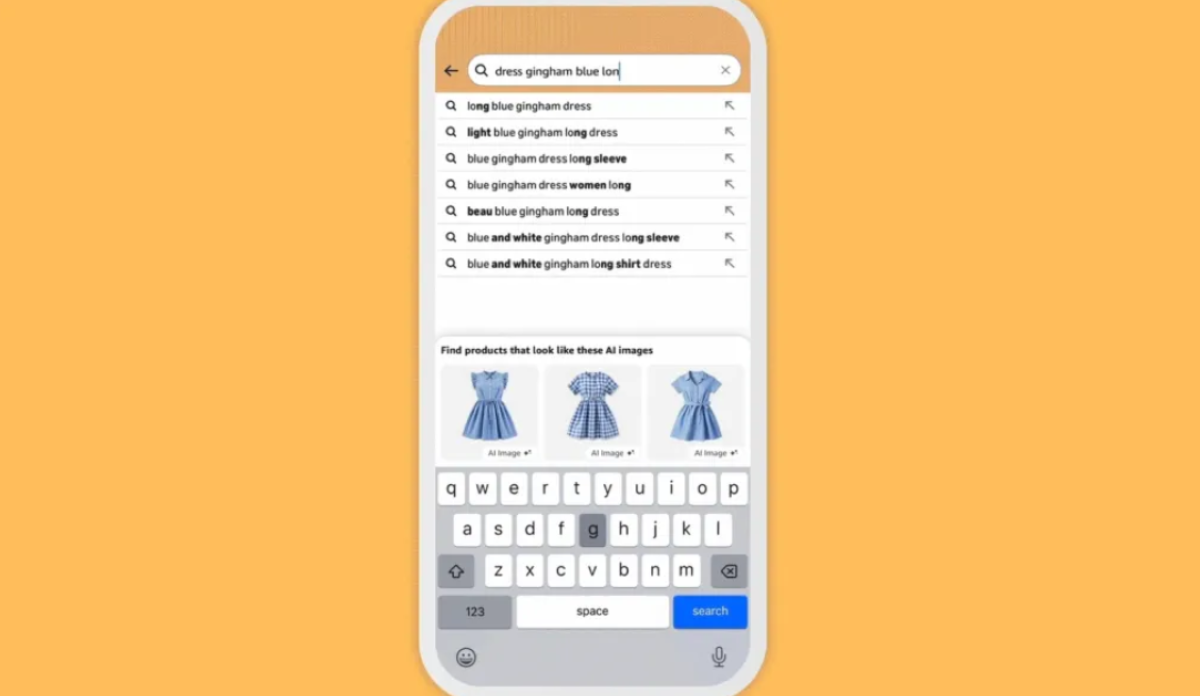
Your search for “blue gingham dress” now returns something unexpected: a carousel of AI-generated images showing dresses that don’t actually exist. Amazon’s latest shopping experiment places synthetic product photos directly into search results, turning fake items into clickable entry points for real shopping.
This isn’t buried in some experimental lab. These AI-created images appear below autocomplete suggestions in the main Amazon app, positioned where you’d normally expect to see real products or categories.
Trust Issues in Digital Aisles
Shoppers expect product images to represent actual purchasable items, not computer-generated concepts.
Amazon already operates extensive AI tools for advertisers—systems that generate lifestyle photos and product mockups for marketing campaigns. But moving synthetic imagery into the core shopping experience crosses a different threshold entirely.
The fundamental problem? Shopping interfaces have trained users that product images represent real, available items. When you see a specific blue gingham dress with particular sleeves and neckline, your brain processes it as “thing I can buy,” not “AI interpretation of my search query.”
Amazon’s Visual Vocabulary Defense
The company frames AI images as style disambiguation tools, not deceptive product bait.
Amazon’s rationale centers on bridging the gap between vague descriptions and specific styles. Users struggle to articulate fashion preferences using product terminology—few shoppers know “cowl neck” from “boat neck.” AI-generated style examples theoretically help translate “cute summer dress” into visual options you can actually evaluate.
This connects to Amazon’s broader AI shopping strategy, which includes:
- Review summaries
- Audio product highlights
- Conversational shopping assistants
The company positions these tools as reducing friction between what shoppers want and what they can actually find.
The Bait-and-Switch Risk
When synthetic inspiration meets real inventory, disappointment often follows.
The core tension lies in expectation management. AI can generate idealized, perfectly styled products that real inventory might never match. This echoes broader frustrations with social media shopping, where aspirational imagery rarely matches delivered reality.
Amazon risks normalizing synthetic products in transactional contexts—a significant departure from using AI to enhance existing real products. As shopping becomes increasingly mediated by algorithms, distinguishing between authentic inventory and computer-generated concepts becomes crucial for maintaining consumer trust.