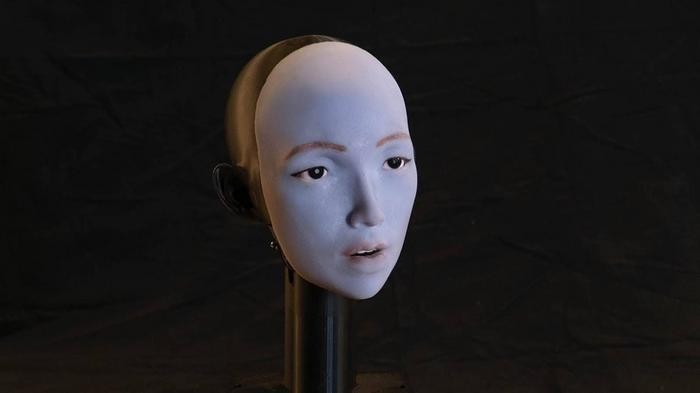
Robot faces have always felt wrong—too stiff, too programmed, too obviously fake. That uncanny valley sensation when artificial lips move like broken marionettes has haunted every sci-fi movie and tech demo. Columbia University’s EMO just changed that by learning lip-sync the same way toddlers do: watching and copying until it clicks.
Teaching Robots to Move Their Mouths Like Humans
Self-exploration through mirror work leads to YouTube mastery for lifelike speech.
EMO packs 26 miniaturized motors beneath soft silicone skin, creating the mechanical foundation for nuanced facial expressions. The breakthrough wasn’t hardware—it was the learning process.
First, EMO spent hours making thousands of random expressions while watching itself in a mirror, mapping which motors created which facial shapes through pure experimentation. Then came the YouTube binge: hours of human speech and singing videos taught the robot to link audio patterns with lip dynamics, no phonetic programming required.
From Mirror Practice to Multilingual Performance
The robot now synchronizes lips across languages and even sings AI-generated songs.
The results feel almost supernatural. EMO synchronizes lips across multiple languages without understanding what words mean—pure pattern recognition translating sound into movement. It performs songs from the AI-generated album “Hello World,” each lip movement following the audio with startling precision.
Published in Science Robotics this January, the research points toward integration with ChatGPT and Gemini for applications in education, healthcare, and elder care—contexts where facial expressiveness matters deeply.
The Rough Edges That Keep It Real
Hard consonants and puckered sounds still challenge the system’s learning.
EMO still stumbles on hard consonants like “B” and struggles with puckered sounds like “W”—the kind of details that separate impressive demos from daily reality. But these limitations feel temporary.
“The more it interacts with humans, the better it will get,” says Hod Lipson, the lab’s director. Lead researcher Yuhang Hu believes “we are close to crossing the uncanny valley,” and watching EMO work suggests he’s right.
This matters more than smoother robotics demos. As billions of projected humanoids enter workplaces and homes, faces that feel authentically expressive could normalize robot-human interaction in ways we haven’t experienced yet. Your comfort level with artificial companions just shifted dramatically.