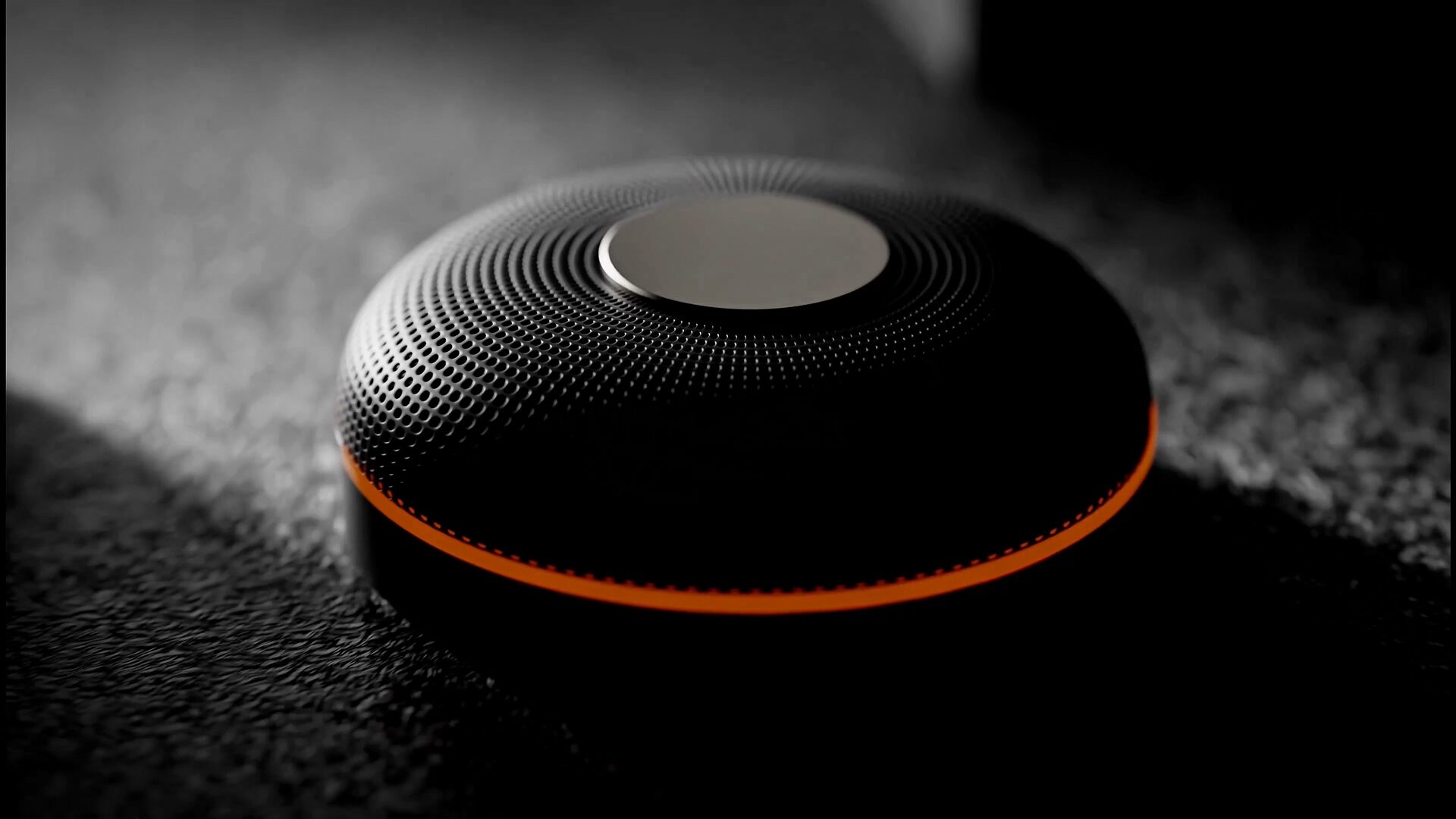
While millions celebrate what they’re calling the “cyberpunk” solution to smartphone snooping, security researchers are questioning whether Deveillance’s Spectre I actually delivers on its bold promises. The pocket-sized device racked up 3.6 million views in just 24 hours after founder Aida Baradari claimed it could detect nearby microphones and render your conversations unintelligible to eavesdropping gadgets.
The $1,200 Promise
Spectre I claims AI-powered protection within a two-meter bubble, but the science remains murky.
The device supposedly uses artificial intelligence to scan for listening devices within a six-foot radius, then generates inaudible “cancellation signals” that scramble your speech before smartphones, laptops, or Alexa can process it. Baradari positions this as the “first smart device that stops unwanted audio recordings,” with all processing happening locally—no cloud connectivity required.
Pre-orders are live at $839.99 (down from $1,199), with an August delivery target. But here’s where your skepticism radar should start pinging—that’s roughly 20 times the cost of existing alternatives that reportedly do similar things.
Technical Reality Check
Security experts suspect conventional tech dressed up in revolutionary marketing.
John Scott-Railton from Citizen Lab isn’t buying the hype. He suspects Spectre I likely uses standard WiFi or Bluetooth scanning—technology that’s neither new nor comprehensive, since many concerning microphones operate offline or in airplane mode. “Claims about detecting microphones using novel physics would require extraordinary proof if true,” Scott-Railton noted.
The researcher points out that similar audio-masking devices already exist as $50 DIY kits. Your privacy paranoia might be justified, but the premium pricing raises questions about whether you’re paying for innovation or just sleek packaging.
Anxiety Meets Opportunity
Consumer paranoia creates a market ripe for premium-priced solutions.
The viral reception taps into documented surveillance anxiety—60% of Americans believe their phones eavesdrop on conversations, rising to 74% among Alexa owners. Your privacy concerns are legitimate, but the gap between consumer fear and technical solutions creates space for products that promise more than they might deliver.
As counter-surveillance tech proliferates (think face-masking projectors and camera-defeating eyewear), distinguishing genuine innovation from expensive security theater becomes crucial. The Spectre I phenomenon reveals how desperately people want control over their digital privacy. Whether this particular device delivers that control—or just the feeling of it—remains to be proven once units ship and independent testing begins.