Grupo Seguritech has secured $1.27 billion in Mexican government contracts since 2012, building 188 command centers across 26 states while most Americans have never heard their name. This surveillance behemoth now operates Mexico’s most sophisticated monitoring network—and they’re sharing that data with U.S. border agencies through a quiet agreement that’s reshaping cross-border security.
From Alarm Seller to AI Surveillance Empire
A home security company transformed into Mexico’s dominant surveillance contractor in three decades.
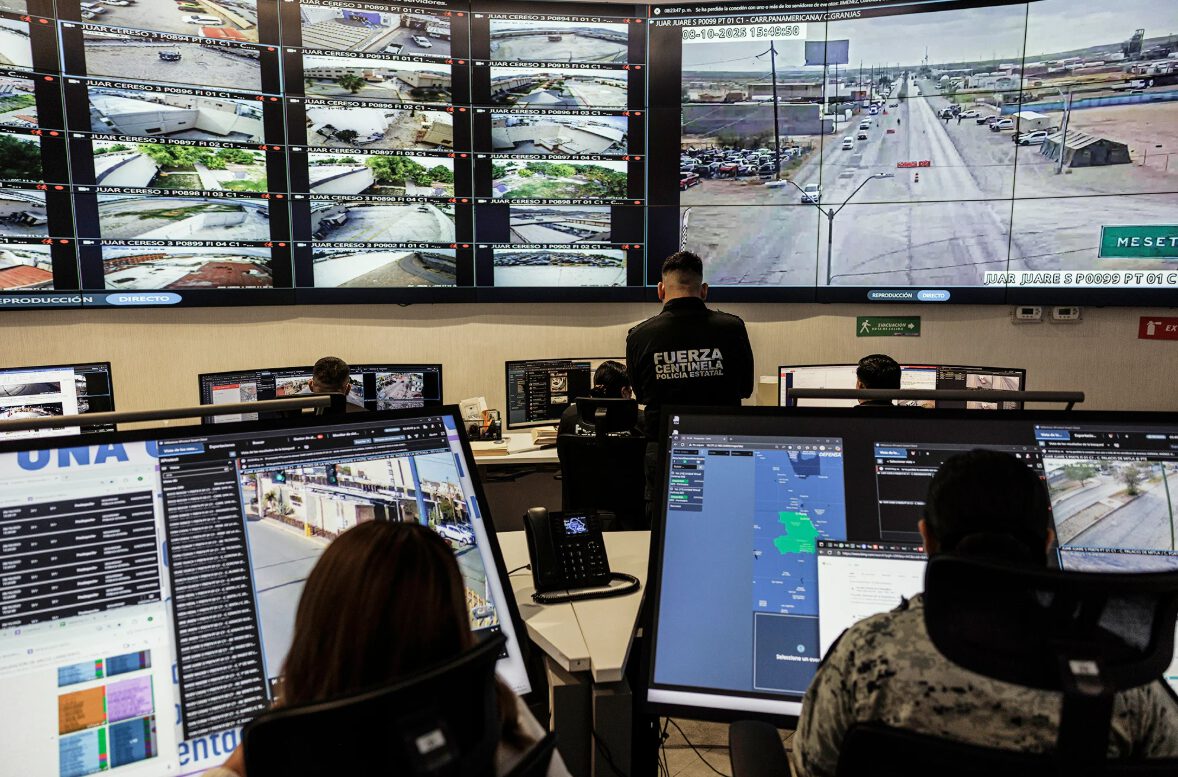
Weak border security used to mean limited intel sharing between neighboring states, but Seguritech’s Plataforma Centinela eliminates those blind spots entirely. The company evolved from selling home alarms in 1995 to operating Mexico’s most sophisticated surveillance network, integrating thousands of cameras, license plate readers, drones with facial recognition, and AI crime prediction algorithms.
Their system powers Chihuahua’s C7 command center in Ciudad Juárez, where success stories include capturing an FBI-wanted drug trafficker and tracking down a Molotov cocktail suspect in real-time. “It accelerates our investigations,” says Gilberto Loya Chávez, Chihuahua’s Public Security coordinator, describing how the platform connects dots across vast geographic areas.
Cross-Border Data Pipeline Goes Live
Texas now accesses Mexican surveillance data through a 2022 agreement most Americans missed.
Racing to stop smugglers at the border requires split-second intelligence sharing—and Texas Governor Greg Abbott’s April 2022 memorandum with Chihuahua delivers exactly that. The agreement grants Texas access to Centinela’s vehicle tracking data, while Chihuahua shares intelligence with CBP, FBI, DEA, ATF, and ICE for everything from migrant exploitation cases to missing persons investigations.
The physical manifestation of this digital integration rises twenty floors above downtown Juárez in Torre Centinela, a surveillance tower visible from El Paso that begins operations in April 2026. This centralized command post will monitor 13 cities, featuring dedicated floors for cyber intelligence and inter-agency operations—basically the Netflix headquarters of border surveillance.
Privacy Advocates Sound the Alarm
Mass tracking capabilities raise concerns about civil liberties and past surveillance abuses.
While officials celebrate arrests, privacy groups warn of surveillance overreach reminiscent of dystopian Netflix series like “Black Mirror.” “It has a huge impact on people’s privacy,” says Santiago Narváez from digital rights group R3D, pointing to Mexico’s troubled history with surveillance technology amid concerns about past abuses, including those connected to the 2014 disappearance of 43 students.
The expansion continues regardless, with Seguritech planning enhanced biometrics and anti-drone capabilities that position Torre Centinela as Latin America’s surveillance hub. You’re witnessing the emergence of a cross-border panopticon that makes previous border security look quaint by comparison.