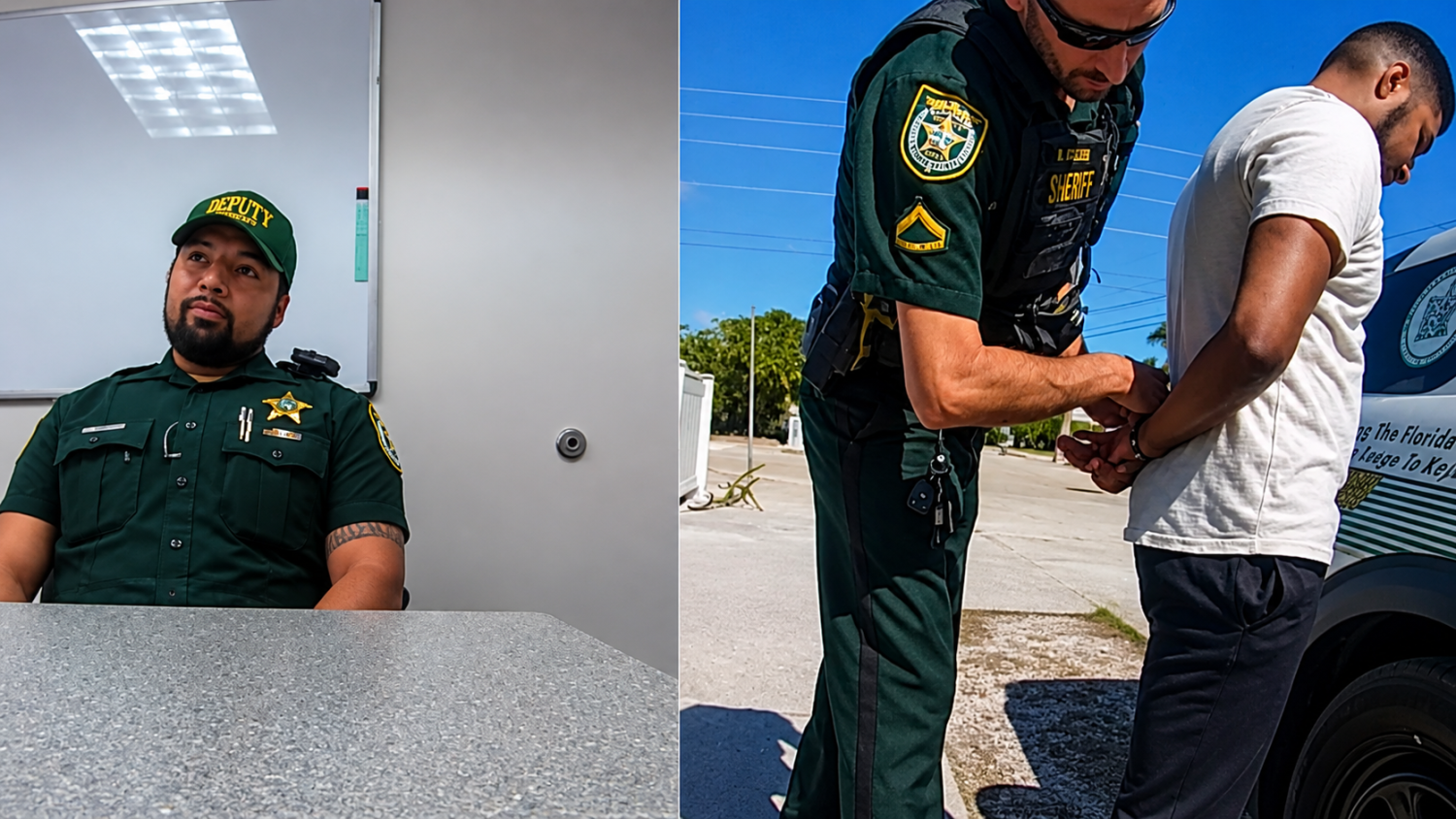
The traffic stop lasted minutes. The planning took days. Florida deputy Lamar Roman met a woman on the set of Apple TV’s Bad Monkey, pulled her personal records from two surveillance app-powered law-enforcement databases, added her license plate to an AI-powered alert system, then raced to intercept her car at high speed when the ping came through — nearly causing a head-on collision. When he finally pulled her over, he told her: “I told you I would find you and pull you over.” This isn’t just a misconduct story. It’s a blueprint.
The Surveillance Playbook Roman Used
Three tools, one stalking operation — and Roman knew it was illegal the moment he started.
Roman used Florida’s DAVID (Driver and Vehicle Information Database) and MNI (Master Name Index) to pull the victim’s address, photographs, vehicle registrations, and signature. He then entered her plate into a Guardian “hot list” — think of it as a Google Alert, except it dispatches an armed officer. When the alert fired, Roman sped to catch her car, his in-vehicle camera auto-activating once he exceeded 70 mph.
At the stop, he told her he’d hoped her boyfriend was present so he could “pull him out and give him a hard time.” Roman later admitted in recorded interviews that he knew immediately the database searches were illegal. He described it as chasing “a shiny thing.” He was charged with stalking and improper database access — and avoided jail through a plea deal.
The investigation caught the misconduct and documented how it landed internally. Lead detective Jenna Moeller told Roman “nobody’s perfect” and called the episode a “speed bump.” When arrested days later, he made phone calls on the sidewalk before being handcuffed. Moeller’s send-off: “You’ll get past this, bro.” That gap between the crime and the response is its own story.
One Case. A Hundred More.
At least 50 officers nationwide have been charged or accused of ALPR misuse — and that number keeps climbing.
Roman is not an outlier. Reporting based on police and court records identified at least 50 law-enforcement officers charged or accused of misusing ALPR systems, 46 involving Flock Safety’s network alone. The Institute for Justice has catalogued over 100 alleged abuse cases — wrongful detentions at gunpoint, romantic stalking, warrantless personal surveillance — arguing these networks “can reconstruct where people have been, when, and how often, all without a warrant.”
Flock’s CEO acknowledged the scale, saying its logs have “caught a lot of bad cops — it’s a ton, more than I ever would have hoped.” Flock has since announced new anti-abuse safeguards. Civil liberties advocates remain skeptical. Systems built to secretly tracking users every plate, everywhere, stay open to misuse when oversight is thin and consequences amount to a speed bump.
Roman got everything he needed from tools taxpayers funded to catch criminals. The question isn’t whether ALPR networks can expose bad actors. It’s whether any safeguard can outrun a culture that treats stalking like a rough patch you simply get past.