Your daily commute involves delays, transfers, and crowded buses that smell like disappointment. Atlanta’s about to test whether autonomous vehicles can fix public transit instead of making traffic worse. Glydways just broke ground on the world’s first fully automated on-demand public transit system, launching December 2026 with free rides connecting the convention center to Gateway Center Arena.
This isn’t another Tesla on autopilot—it’s dedicated infrastructure designed specifically for autonomous operation.
The Tech That Actually Works
Five AI-coordinated vehicles navigate dedicated guideways with zero human intervention.
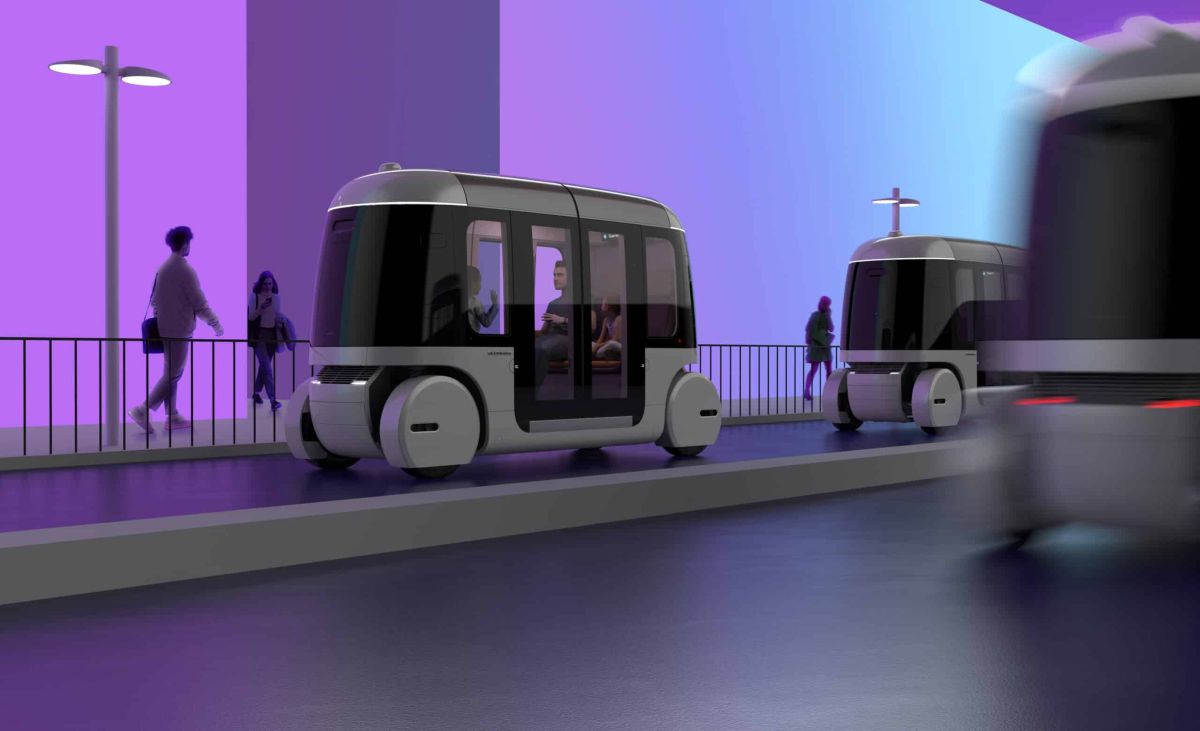
The experience resembles an elevator more than a bus. Five autonomous “Glydcars” equipped with 20 LiDAR sensors zip along a 0.5-mile dedicated guideway at 31 mph, carrying up to six passengers per vehicle. Request a ride via app, and the system dispatches your vehicle with potential ride-sharing to matched destinations—no intermediate stops, no fixed schedule delays.
The crucial difference from regular autonomous vehicles: these operate on purpose-built 2-meter-wide corridors completely separated from traffic. As Glydways co-CEO Mark Seeger explains, “Just putting autonomous vehicles on open roads doesn’t actually solve congestion. In many cities, it makes it worse.”
This controlled environment enables the tight vehicle platoons and consistent speeds that make the capacity claims possible.
The Economics Behind the Bold Claims
Rail-level capacity at bus fare costs sounds too good to be true—because it might be.
Glydways claims their scaled system can move 10,000 passengers per hour through corridors that cost a fraction of traditional rail expansion. The math relies on eliminating driver salaries (the biggest transit expense), electric propulsion, and reduced maintenance from controlled-environment operation.
The company insists unsubsidized operation at bus-fare levels is “core to the business model.” But here’s the reality check: the pilot’s controlled environment—predictable convention center and arena traffic—differs substantially from messy city-wide transit demands.
Industry observers note the underlying technology is “fairly straightforward engineering.” The real question is whether those economic promises survive contact with actual operations.
Stakes Higher Than Streaming Service Algorithms
Success means rapid global expansion; failure relegates this to expensive theme park rides.
If Atlanta’s 24-month pilot validates the economic model, expect rapid scaling to airport connections and suburban corridors worldwide. Cities could redirect infrastructure spending from hundred-million-dollar rail projects to guideway systems deployable in years, not decades.
But if the numbers don’t work—if this becomes transit’s equivalent of assembling IKEA furniture with missing instructions—autonomous transit gets relegated to controlled environments like airports and Disney World.
The Metropolitan Atlanta Rapid Transit Authority will conduct a feasibility study determining regional expansion potential. Chris Riley, Glydways’ Chief Commercial Officer, positions the stakes clearly: “What begins in South Metro Atlanta is designed for the world.”
Either way, the 2028 results will determine whether robots can actually solve urban commutes.