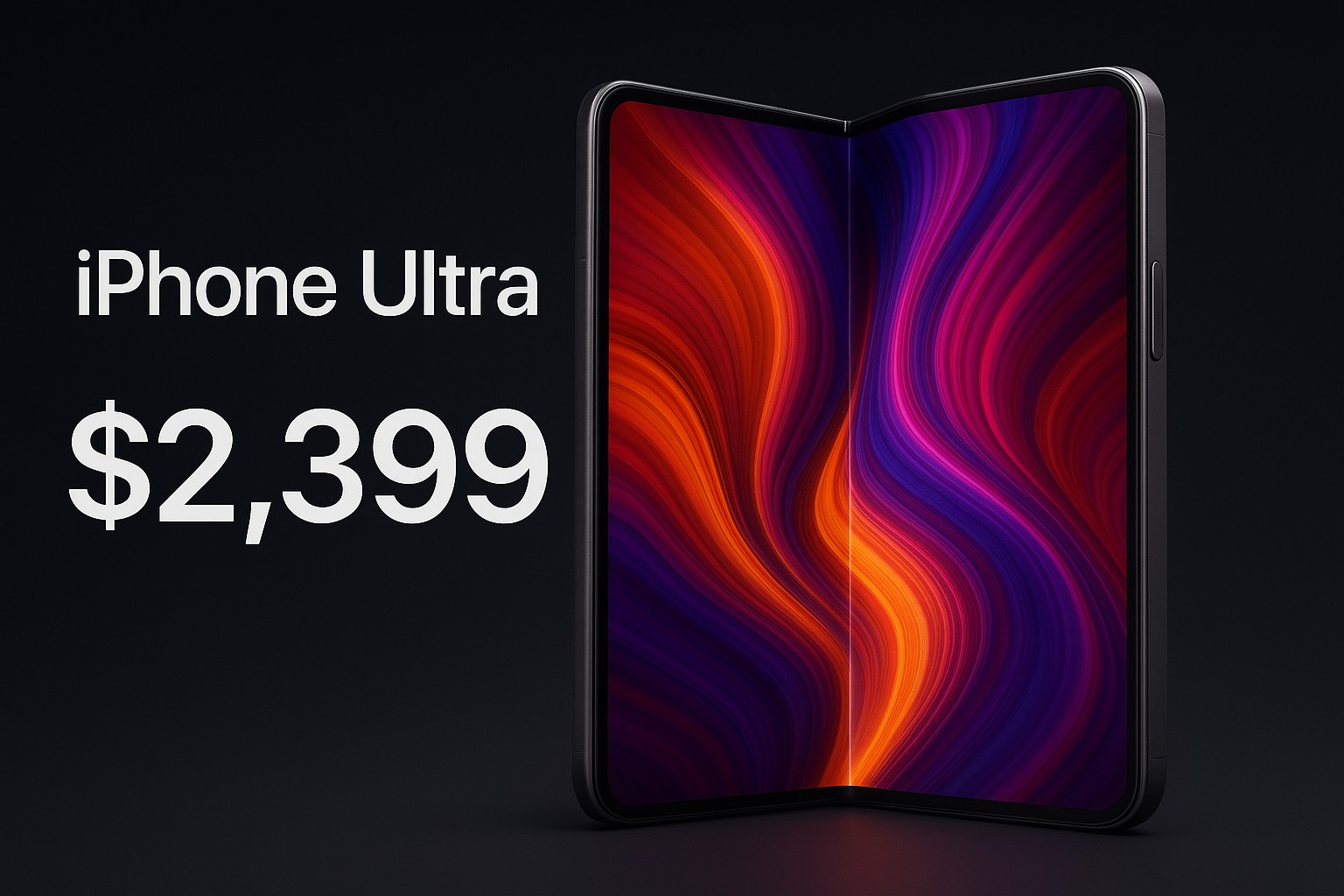
Foldable phones have struggled with one glaring flaw—that unsightly crease running down the middle like a scar on your screen. Apple’s rumored solution comes with a price tag that’ll make your wallet fold: $2,399 for what analysts expect will be called the iPhone Ultra.
That’s nearly double the iPhone Pro Max’s current $1,199 price point, according to Fubon Research estimates. You’re looking at luxury car payment territory for a phone, which signals Apple isn’t just entering the foldable market—they’re creating an entirely new category above it.
The Ultra branding isn’t accidental. Like the Apple Watch Ultra’s rugged positioning, this naming suggests Apple views their foldable as fundamentally different from regular iPhones. When Samsung’s Galaxy Z Fold 7 costs $1,999 and Google’s Pixel 10 Pro Fold runs $1,799, Apple’s charging a $400 premium for what they’re promising is breakthrough engineering.
Engineering Marvel or Marketing Mirage
Apple’s crease-free display technology could solve foldables’ biggest complaint.
The substantial price supposedly buys you something no other manufacturer has achieved: a completely crease-free foldable display. Apple has reportedly engineered unique lamination methods and materials that eliminate the fold line that plagues every current foldable device.
Samsung will supply the display panels, but Apple handles the critical material design and final assembly—the same partnership model that’s worked for regular iPhone screens. This isn’t just slapping existing tech into a new form factor; it’s reimagining how flexible displays can work without visual compromise.
If true, this addresses the number one complaint about foldables: that distracting line that appears whenever light hits the screen wrong. For users switching between phone and tablet modes throughout the day, eliminating that visual interruption could justify the premium positioning.
Market Disruption by Design
Ultra-premium pricing could reshape smartphone market expectations entirely.
Despite the sticker shock, projections suggest 15.4 million customers over the device’s lifetime will pay luxury prices for cutting-edge technology. That’s iPhone SE volume at Hermès prices—a deliberate strategy to expand the market’s ceiling rather than compete on existing terms.
This pricing strategy mirrors how Tesla initially approached electric vehicles: start with an exclusive, expensive model that funds mass-market development later. Apple’s creating scarcity through price, making the Ultra a status symbol first and communication device second.
The broader smartphone market has been declining for years, making foldables one of the few growth segments. Apple’s entry—especially at this price point—could legitimize foldables as the next evolutionary step rather than a niche experiment. Whether consumers will accept smartphone pricing that rivals laptops remains the ultimate test of Apple’s premium positioning power.